
Cllrs raise issues with Dundalk Inner Relief Rd Active Travel plans


Dundalk Municipal District September meeting
Councillors at the Dundalk Municipal District September meeting queried some of the proposals planned for Louth County Council's plans for the Inner Relief Road Active Travel Scheme.
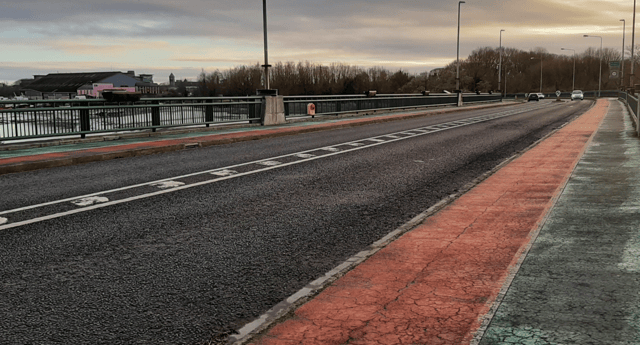
A report from the Chief Executive Joan Martin was presented to the councillors, outlining the Council's plans. The Scheme aims to install high-quality segregated pedestrian and cycling infrastructure to improve safety and promote Active Travel along the R132 Inner Relief Road Dundalk from Xerox Junction (R132, R215 intersection) heading northwards to The Tain Bridge for a length of c.4km.
The local authority plans to provide a cycle lane along Barrick St. West and St. Helenas Terrace, and to upgrade junctions along the entire route to provide safer pedestrian and cycle crossings.
It is proposed to upgrade all entrances along the route to better facilitate pedestrians and cyclists, and to provide pedestrian and cycling crossings at identified desire lines along the route. The plan also aims to connect to existing cycling facilities that interface with the route, improve landscaping and biodiversity along the full length of the scheme including sustainable urban drainage systems (SUDS).
While the report was welcomed by councillors at the meeting, and the Council was commended for its work so far, fears over challenges it may pose for some businesses in the area were also voiced.
Cllr Robert Nash highlighted concerns passed to him by businesses in relation to the slip road that joins Quay Street when driving south from the Táin Bridge on the Inner Relief Road, and fears that the slip road would be removed as part of the plans.
Cllr Nash said that local businesses told him that, lorries delivering to them drive to Junction 18 on the M1 motorway, and then head south down the Inner Relief Road to serve the Coes Road Industrial Estate. He said that if the slip road is removed that turning left from the Inner Relief Road would be a challenge for lorries.
Responding to Cllr Nash, Senior Engineer John O'Hagan, said that the junctions are in line with national guidance from the NTA but added that the junctions would also be looked more closely at in the detailed design phase of the scheme.
Cllr John Reilly also highlighted the turn onto the old Coes Road near National Tile, saying that was also difficult for lorries turning at it. Mr O'Hagan replied to say that the idea was to ensure that lorries would take the turns slowly. Cllr Nash and others said however, that this is what lorries already do at that junction.