
Dundalk IT gives sneak peak at new state of the art science building

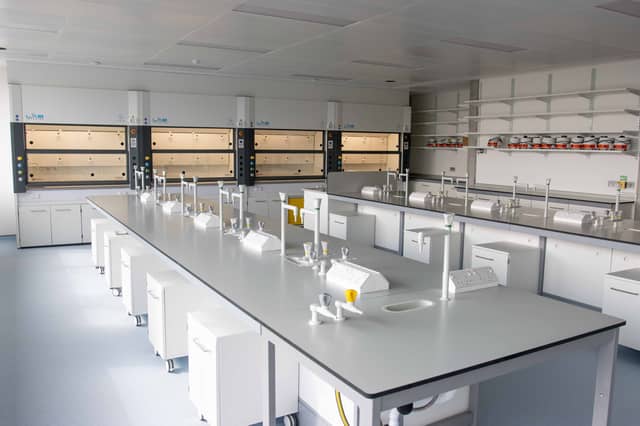

New 1,300 sqm science building completed and will be ready to welcome students this September
Dundalk Institute of Technology (DkIT) says it is "thrilled" to report that its new, 1,300 sqm science building has been completed and will be ready to welcome students this September. The excitement around the Dundalk campus is tangible, it says, as staff have started to move the latest state of the art lab equipment into the new facility.
Edel Healy, Head of School of Health & Science said: “We are extremely proud of our new Science building, this truly is a fantastic new facility for our students, region and surrounding industries.
"As the leading higher education provider in the region we are completely committed to STEM as its one of the fastest growing industry sectors both locally and nationally.
"With this investment we plan to increase capacity on Life Science, Health Science and Agri-Food programmes, helping us to meet the growing demand from employers in our region for high-quality graduates in these specialised areas”.
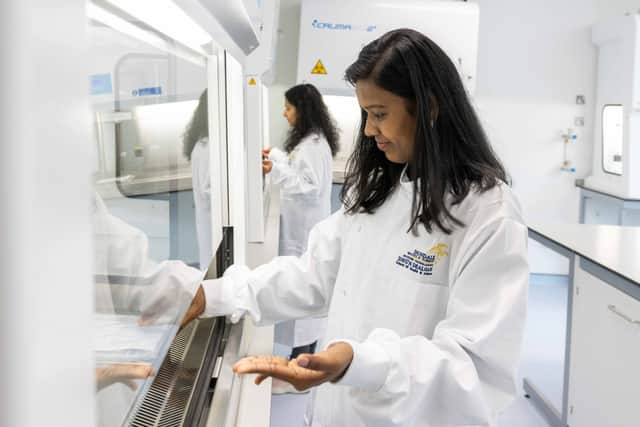
Above: Suganya Pitchiu Muthusamy in new Cell Culture Lab
Dr Healy added: “The commercial value of biotherapeutic medicines is forecasted to grow exponentially in the next few years.
"The success of the Irish biopharma industry is internationally recognised and this new Cell Culture facility at DkIT will provide our students enrolled in our Science programmes with the most up-to-date skills, training, research, and innovation opportunities for the manufacture of biotherapeutics.
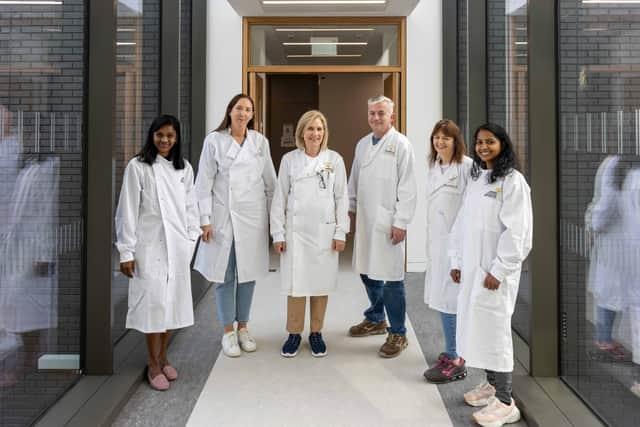
Above: Suganya Pitchiu Muthusamy, Martina Carolan, Marie McDonnell, Paddy McEntee, Fiona Finn, Athira Kuruly Rajan
DkIT says it already has an extremely strong and industry recognised reputation for the education and training of highly skilled graduates in the Science fields. Graduates of its programmes are much sought after, it says, and are renowned for actively contributing to advancements in the areas of pharmaceutical, biopharmaceutical and environmental science, sustainable agriculture, agri-food, health science, physical activity and well-being.
The Institute says it is also currently involved in "several exciting science research projects both nationally and internationally that are changing the world we live in for the better".
It adds that it trusts these new facilities on campus will future proof the Institutes student’s employability prospects whilst assisting regional and national growth in all aspects of the Science sector.