
Dundalk man urges young cyclists to wear helmets after life-changing brain injury

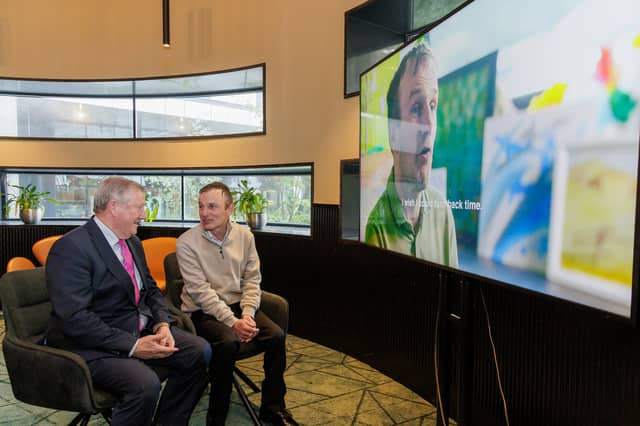

Dundalk man Niall Connor has appeared in a new video for the RSA detailing his experience
A Dundalk man who sustained a life-changing brain injury in a cycling accident at the age of 14 is sharing his story to urge young people to wear helmets, as new research highlights the barriers people with disabilities face when accessing transport across Ireland.
Niall Connor has appeared in a new video detailing his experience to warn young cyclists about the potentially life-changing consequences of cycling without a helmet. His story also features in a major new report from Rehab Group examining the transport and road-safety experiences of more than 600 people with disabilities across Ireland.
“One fall from a bike without a helmet changed my life forever,” said Niall. “I have lived with a brain injury now for 30 years. If I could turn back time, I’d wear a helmet. We can’t stop kids being fearless, but we can protect them. We only get one life, protect it,” said Niall.
Supported by RehabCare in Dundalk, Niall has become a passionate campaigner for safer cycling. He has also brought his campaign to Leinster House, where he met Minister of State for Road Safety, Seán Canney. Niall believes greater action is needed to make young people aware that one moment on a bicycle can have lifelong consequences.
Niall's experience also reflects a wider reality highlighted throughout the report: when transport systems, public spaces and infrastructure are not designed with accessibility in mind, people with disabilities can face significant barriers to independence, participation and safety in their everyday lives.
The report is being launched today and formally presented to Minister of State for Road Safety, Seán Canney, highlighting the need for continued action to address transport accessibility barriers experienced by people with disabilities across Ireland.
Niall’s experience is one of several personal stories contained in a Rehab report called Barriers to Accessible and Inclusive Transport, which draws on 90 focus groups conducted with more than 600 people with disabilities supported by Rehab services.
Drawing on the input of participants with disabilities, including wheelchair users forced into traffic and visually impaired pedestrians unable to rely on crossing signals, the report shows how unsafe journeys can begin long before a passenger reaches a bus or train.
It also demonstrates how people with disabilities are being prevented from working, attending medical appointments, accessing education and taking part in community life because Ireland’s transport system remains inaccessible, unreliable and unaffordable.
Some report being left waiting for buses that never arrive.
Others detail being forced to plan journeys at least 24 hours in advance. Others said they were charged as much as €80 a month to reach their day service because their Free Travel Pass was not accepted.
The report calls on the Government, the National Transport Authority, transport operators and local authorities to work directly with people with disabilities to create a transport network that is accessible in practice, not simply in principle.
Minister of State for Road Safety, Seán Canney, said: “I want to thank Niall for sharing his story and using his own experience to encourage young people to think about their safety when cycling. His message is a powerful reminder that the decisions we make on the road can have lifelong consequences. I met Niall last year and was very moved by his story and his willingness to take part in this very important campaign.
“This report also gives an important voice to more than 600 people with disabilities supported by Rehab services and the barriers they face in making everyday journeys. We must continue working with people with disabilities and across the transport sector to make our transport system safer, more accessible and more inclusive.”
Nuala Carey, Interim Director Partnerships & External Affairs, RSA said: “Stories like Niall's can reach people in a way statistics never will. His experience is a powerful reminder that a split-second moment can change a life forever, even when the moment that causes it lasts only seconds. We commend Niall for sharing such a personal story to help others, particularly young people, think differently about their own safety.
“Working in partnership with Rehab Group, we were proud to support the development of this video and bring Niall's message to a wider audience. None of us are invincible. We only have one life, and the choices we make on the road can have consequences that last a lifetime.”
Rehab CEO, Laura Keane said: “Accessibility cannot end at the door of a bus or train. The entire journey from leaving home and reaching the stop to boarding, travelling and arriving safely must be accessible and safe. Ireland has made clear commitments to the rights and independence of people with disabilities. What is needed now is implementation: dependable services, safe infrastructure, meaningful consultation and clear accountability.”