
Dundalk pharmacist gives tips to manage hay fever
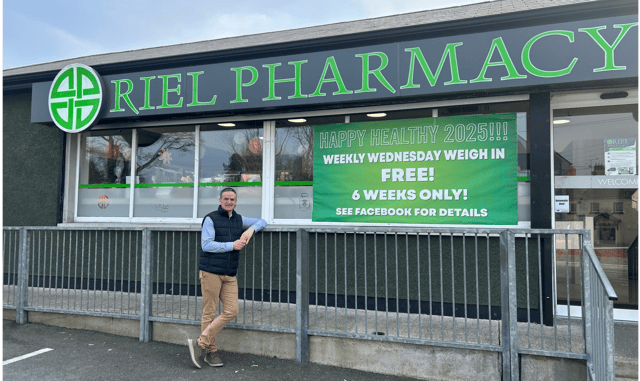

Pharmacist Paul McGivern of Oriel Pharmacy, Lisdoo, Dundalk gives top tips on how to manage hay fever symptoms
Local Pharmacist Paul McGivern of Oriel Pharmacy, Lisdoo, Dundalk gives top tips on how to manage hay fever symptoms as spring approaches.
As I look out the window it is hard to imagine that spring will soon be on the way. The thought of longer evenings, warmer days and hopefully some sunshine brings a sense of joy and new found optimism for the year ahead.
Unfortunately, as ever Irish person knows, it is a necessary trait to make sure we identify the ‘bad’ in any situation. For the purposes of this article, that ‘bad’ is hay fever.
This is a condition so bad, it has a full season all to itself. The dreaded ‘hay fever season’ brings with it a collection of symptoms including itchy red eyes, a runny or blocked nose, sneezing, coughing and, in more severe cases, can result in a loss of smell or pain around the temples and forehead. For some people, those symptoms would be classed as a ‘good day’!
The blur of lawnmowers and the smell of freshly cut grass can trigger a degree of fear and anxiety in any hay fever sufferer and there’s more bad news….even though hay fever typically begins in childhood or as a teenager, adults may also develop it even if they have no previous issues with allergies.
The image of a young child standing in front of me with eyes barely open, red, puffy and streaming whilst holding a small packet of tissues in each hand from my early days of pharmacy still remains with me to this day.
So, what to do? Apart from locking yourself inside for the next six months or emigrating, there are a range of measures and over-the-counter products that can at the very least make the symptoms more manageable. A number of seemingly simple measures such as showering regularly and closing windows can help reduce symptoms, but who wants to be stuck indoors on a good day? – god knows we have enough bad ones!
The portfolio of hay fever products available to buy in a pharmacy is vast and continues to evolve year on year.
Knowing what to ask for or use can be like navigating your way through Copper Face Jacks on a Saturday night, so I have tried to briefly explain what is available whilst also trying to highlight some general tips that might make life a bit easier.
ANTIHISTAMINE TABLETS
Antihistamines form the basis of the majority of hayfever remedies. Tablets are the most popular formulation due to the simplicity of use. Most OTC products are a simple one-a-day tablet although some require alternative dosing.
Although they tend to be classed as ‘drowsy’ or ‘non drowsy’ the truth is that the latter are actually less likely to cause drowsiness so be careful, particularly if it is your first time taking an antihistamine.
Check with the pharmacist or a member of the pharmacy team that it is safe to use with other medication (e.g. antidepressants) or if you suffer from any medical conditions (e.g. increased intraocular pressure).
TOP TIP: Ask if a generic is available. You may feel a brand works better for you and that’s fine but buying generically can represent a significant saving!!!
ANTIHISTAMINE LIQUID
Pretty much as for tablets. Although primarily used by children they can be taken by adults.
Flavours can vary so to avoid placing your child in a ‘vice-like grip’, while simultaneously trying to administer a liquid through gritted teeth – ask or check what they took last year!!!
TOP TIP: Liquids tend to be slightly more expensive than tablets. Generally antihistamines are no bigger than a tic-tac, most can be easily halved and tend to be licensed from as young as six years old!!!
NASAL SPRAYS and DROPS
These tend to be only licensed for use in those aged 18 and over and fall into two main categories: Steroid and Decongestant.
Steroid nasal sprays funnily enough work to reduce nasal symptoms such as sneezing, running or itchy nose as well as nasal congestion.
However, they will also help with other symptoms including sinus pain and pressure as well as streaming eyes. Most suggest using for no longer than 14 days if you don’t see an improvement.
Decongestant nasal sprays are more suitable when the nose is completely blocked or running heavily.
Saline based spray and drops tend to be the more suitable for children although the licensed age for uses varies so please check!
TOP TIP: A smearing of vaseline at the entrance to each nostril will help reduce the amount of pollen that gets into the nasal cavity!!!
HAYFEVER WIPES
These wipes claim to trap and remove pollen and are handy to have. Reports seem to suggest they are effective and easy to use although it would be interesting to see how they compare with standard wipes.
TOP TIP: The wipes tend to contain Tea Tree Oil and Peppermint. Before using as an emergency baby wipe, patch test on the skin.
HAYBANDS
I initially dismissed these as a gimmick, a fashion accessory – I was wrong! Whilst they don’t work for everyone, they offer a natural alternative to all of the above and generally one size fits all.
TOP TIP: These tend to be durable enough to last the entirety of the hayfever season and beyond if they are looked after representing a saving in the long term.
If you have any queries or questions, please feel free to email [email protected] or even send a WhatsApp to 087 9040413.
Ciaran Walsh who owns Castletown Pharmacy, opened the Oriel Pharmacy at the Lisdoo which is opened two years this month.