
Hill Street Views: The hidden histories of Louth Townlands
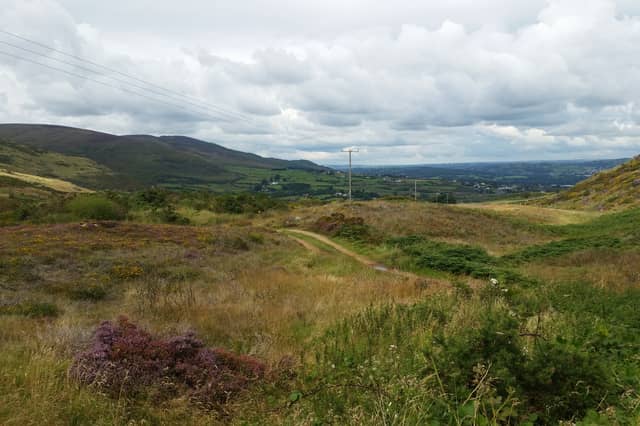

Columnist David Lynch writes about the fascinating hidden histories of Louth townlands
The patchwork quilt of townlands draped across this fine country, and indeed this beautiful county, are a wonderful thing to behold. How lucky are we to have such history and lore distilled down into sometimes a single, named field.
The auld sod is such an intrinsic part of our psyche and cultural make up – every piece of it holds a deep resonance.
Taking a drive out towards Carlingford last week my mind wandered across and over the fields and hedgerows that roll upwards away from Dundalk Bay towards the top of the Cooley mountains.
And just before Grange there’s a townland which I remembered hearing about some time ago – don’t ask me where or when.
Ballaverty lies in the parish of Carlingford. Known in Irish as Baile Uí Laibheartaigh, it’s a strange one because the English interpretation of the name is O’Flaherty’s Town, and anyone with knowledge of the origin of Irish surnames would know that O’Flaherty is not a name local to Cooley or Carlingford. Indeed, it’s much more common in the west of Ireland, particularly in the rugged lands of Connemara.
But here it is as a townland on the Cooley peninsula.
As with so many townlands, the history is hard to decipher. To the extent that no one knows who the O’Flaherty’s actually were that had this townland named after them, or if in fact they actually existed at all. There is simply no reliable record available.
The official Placenames Database traces the name through a series of historical spellings going back to at least 1550, when it appeared as Ballewtry. By 1612 it was Ballewertie, and by 1664 it was recognisably Ballaverty.
So, somewhere between the 16th century and the modern landscape, an O'Flaherty family – whoever they may have been - disappeared from the local story while their name remained behind.
Just up the road in Ravensdale is another local townland curio – Caraban.
The National Folklore Collection contains an account gathered in the area which describes Caraban as notable because it contained the “mass stone on which Blessed Oliver (Plunkett) said mass.” The same account mentions a pound said to have been built on the orders of Lord Clermont.
Plunkett, the Archbishop of Armagh who was executed at Tyburn in 1681, is one of the most famous figures associated with the history of Catholic persecution in Ireland.
The legend of a mass stone supposedly associated with him transforms this otherwise ordinary piece of the Ravensdale landscape into a reminder of the period when Catholic religious practice had to survive under severe restrictions.
However, this is not recorded historical fact, simply a story passed down through the generations. There is no recorded proof that Oliver Plunkett actually celebrated Mass on that particular stone.
Mind you for generations, people in the locality believed that this was the place where Plunkett had said the Mass. The tradition has become part of the identity of the townland.
And not far away is Doolargy or Dulargy. A name which is a common place name around the local area. Doolargy Avenue in Muirhevnamor being one such example.
Doolargy is closely associated with the Flurry River and with an area of hyper-local industrial importance centuries ago.
The National Folklore Collection contains a remarkable description of what once happened along the Flurry River.
It describes the valley as a “hive of industry in old times” and records that the waters of the Flurry turned the wheels of at least five mills.
And then it gives us a fascinating list of what those enterprises actually did.
At Annaverna Green, linen was bleached. Later, corn was ground there too.
There was Thompson's Green, Johnston's Green, and finally O'Hare's foundry, where agricultural implements including spades and shovels were manufactured.
This creates a very different landscape and our modern picture of scenic mountains, woodland, river and countryside.
This was a time of water turning heavy mill wheels. The din of machinery operating. Workers moving between buildings. Linen being processed.
Grain being ground. Iron being worked into tools. The valley was not merely picturesque countryside; it was an industrial landscape.
The resource that powered this hive of activity in Doolargy was the Flurry River. But once the mills fell silent the landscape changed again.
Today, unless you know what you are looking for, there is little to suggest the scale of activity that once took place there.
Across the country there are also some interesting examples of odd differences between the English name given to a place and the Irish version – the direct translation is not the same. One of the more famous ones is ‘Baile Atha Cliath’.
This is the accepted and official Irish name for Dublin, but its direct English translation is ‘Town on the Hurdled Ford’ and indeed Dublin itself comes from the Irish for Blackpool – Dubh Linn.
There’s a similar linguistic quirk at play just out the road at Castlebellingham.
Look at the signpost and you’ll see Castlebellingham and under it the Irish version - Baile an Ghearlánaigh. Which directly translates as Gernonstown.
Who were the Gernons? And why are two different families being used in the name?
Our old friend, the official Placenames Database records the townland's earlier forms as Germons towne in 1659, Gernonstowne around 1660 and Gernonstown in subsequent records. By 1777, the name Castlebellingham appears in the historical record.
Local folklore collected around the Kilsaran area tells the story in its own way. It remembers an older family called the Gernons, associated with Kilsaran, and says that the area was once known as Gernonstown before the arrival of the Bellinghams.
The folklore account then connects the later name with the Bellingham family.
The names preserve two stories – the Gernons who came before and the Bellinghams who arrived later. The Bellingham family inherited the landscape and history, and we have preserved both in the names attributed to the townland.
The Bellingham story is itself substantial. The family established a major landed presence in the area, and the castle became the centre of an estate that remained associated with them for generations.
Although the origins of many townlands can be sketchy at best, their permanence is undisputed. The landscape may change. The people may go. But sometimes the name refuses to forget.