
INTERVIEW: Belfast Girls sets sail for Dundalk's An Táin Theatre

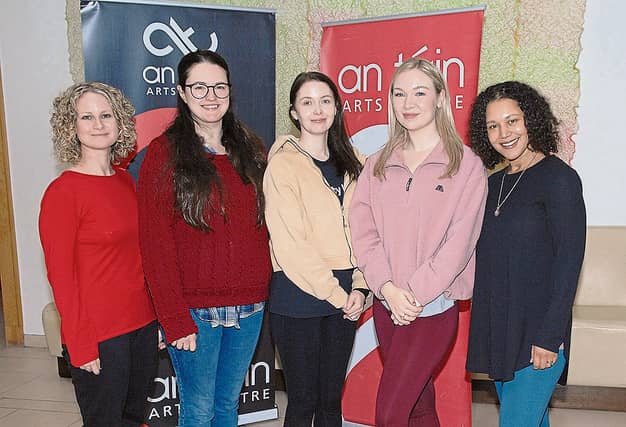

This year, An Táin Arts Centre in Dundalk is set to celebrate its 10th birthday by presenting the Irish Premiere of Dundalk writer Jaki McCarrick’s acclaimed play, “Belfast Girls.”
This year, An Táin Arts Centre in Dundalk is set to celebrate its 10th birthday by presenting the Irish Premiere of Dundalk writer Jaki McCarrick’s acclaimed play, “Belfast Girls.”
The play, set in 1850, follows the journey of five resilient young women as they confront their haunting pasts aboard a ship bound for Australia, leaving Belfast in pursuit of a brighter future.
The production is a collaboration between An Táin Arts Centre and Quintessence Theatre, known for their recent success with “The Curious Case of Albert Cashier.”
“Belfast Girls” explores the lives of these women confined in the belly of the ship, navigating the turbulent seas away from their homeland. Secrets unravel, enemies emerge, and the inescapable weight of the past looms large.
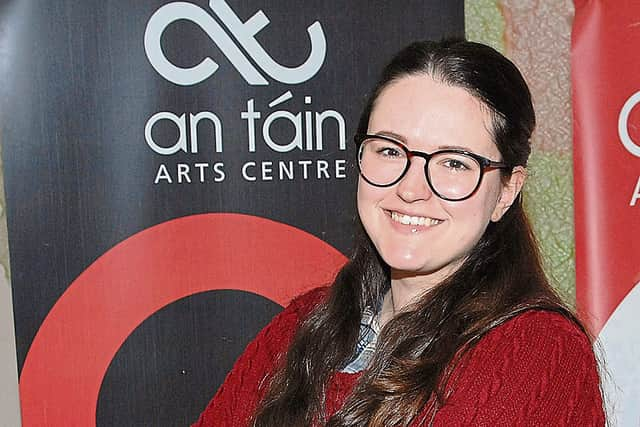
Leah Rossiter who plays Hanna in Belfast Girls
Jaki McCarrick, an award-winning playwright from Dundalk, developed the play at the National Theatre London. The production premiered in Chicago in May 2015, receiving critical acclaim.
Since then, it has been staged internationally, with recent premieres in Australia, Sweden, and New York. McCarrick has also completed the screen adaptation of the play.
Paul Hayes, Director of An Táin Arts Centre, expressed his excitement about bringing “Belfast Girls” to their stage, highlighting the significance of this production for the centre’s 10-year anniversary.
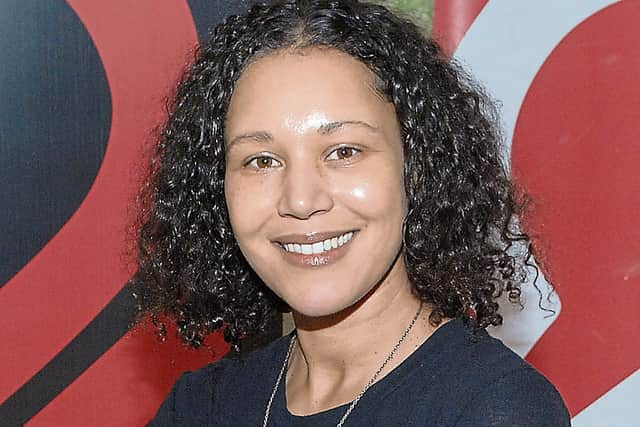
Donna Anita Nikolaisen who plays Judith
“This is by far the biggest production An Táin Arts Centre has ever produced and it’s a fitting way to celebrate our 10-year anniversary.
“New theatre of this import rarely gets made outside of our cities; it will be a great honour to finally bring this play home to Dundalk.”
The play is directed by Anna Simpson of Quintessence Theatre and stars Donna Anita Nikolaisen as Judith, Leah Rossiter as Hanna, Carla Foley as Sarah, Siobhan Kelly as Molly, and Fiona Keenan O’Brien as Ellen. Set and costume design are masterfully crafted by Sinéad O’Donnell-Carey, with Sophie Cassidy handling the lighting design.
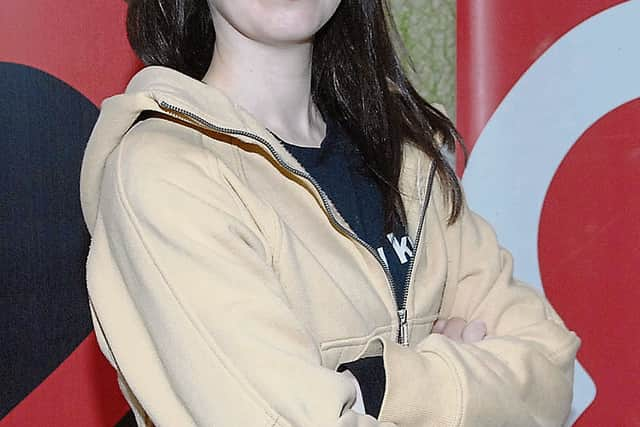
Siobhan Kelly who plays Molly in Belfast Girls
Leah Rossiter, who plays Hanna, spoke of the challenging aspects of the play:
“I think they’re all very challenging characters since they’re so, I guess, full rounded characters.
“So I think every character in the play, although it’s five women, they all have a really unique, interesting backstory that we’re all going to bring to life. And then there’s also the action that happens within the play, which is, I don’t want to give too much away, that is very tragic as well.

Carla Foley who plays Sarah
For Donna Anita Nikolaisen, who plays Judith, the role is one that is close to home and brings a level of emotional intensity:
“For me, for the character of Judith, she’s mixed race, and she was adopted into a family in Larne. And on some level, I can kind of identify with that in a way because I am mixed race, and I was adopted, not into a family in Larne, but I felt some sort of connection with our character on that level.
“But I suppose the fact that they all had their dreams. Judith had her dreams and wanted to go to Belfast because it was the city of ships and linen and mills.
“And she actually, quoting her now, she says, the Athens of the north. But then when she goes there, her dreams are kind of squashed. So she falls in hard times. And I think all of them, because of circumstance and because of the famine, have fallen on really hard times.
“I think, for me, doing this play has really gotten me into the mindset of what it was actually like to live there, you know bodies in the field, that kind of thing.
“Just the harshness of Belfast and the fact that, for me, just understanding that when they got on this ship and left Ireland; Judith, my character says at one point that we’re never going to leave and we’re never coming back. And that finality and having to say goodbye to everything.”
The cast discussed their research process, acknowledging the wealth of information provided by the writer and director. They spoke of the emotional challenges of performing scenes depicting the characters’ pasts, highlighting the tragedy and the occasional moments of humour that emerge from the strength of the human spirit.
For Siobhan Kelly, who plays Molly: “All the characters have their own moments of revealing their backstory, secrets that they’re holding, either their hopes and dreams or their fears.
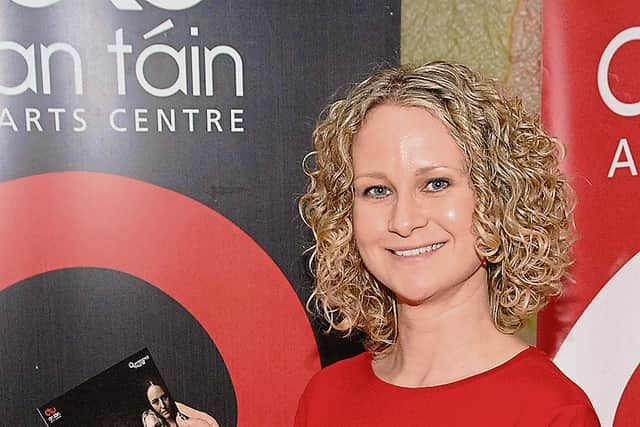
Anna Simpson Director of Belfast Girls
Director Anna Simpson spoke of the challenges of adapting a script that she describes as “a really powerful, very cinematic play.”
She said that one of the primary challenges lies in the play’s setting—all on a ship and explained the delicate balance required to represent this on stage convincingly, especially as the narrative shifts from below deck to above deck.
“You’ve got the challenge of how do you represent that on a stage in a way that’s believable, but that doesn’t lock you down too heavily because it moves from below deck to above deck as well.”
This logistical challenge, she says, adds a layer of complexity to the storytelling, requiring innovative solutions to maintain both realism and fluidity.
As the director of Quintessence Theatre, a company known for its physical ensemble style, she also shed light on the concept of physical theatre. She explains that it involves prioritising storytelling through the body, movement, and sometimes an absence of words.
“It’s inspired by the poetry of the play, really,” she notes, emphasising the aim to bring the poetry from the script into the bodies of the actors.
The physical theatre approach offers a unique perspective, transforming the play into a visual spectacle. She elaborates: “It’s bordering into dance, nearly sometimes what we’re doing, which really... It’s inspired by the poetry of the play, really. You take the poetry from the page into the bodies of the actors as well.”
One of the most intriguing aspects of “Belfast Girls” is its portrayal of violence. Simpson reveals that staging violent events has been one of the biggest challenges in her directing career. She shares: “There’s some violent events that take place as part of the plot that definitely have been, for me, as a director, one of the biggest challenges to date I’ve had to stage.”
In addressing this challenge, Quintessence Theatre takes a symbolic approach to the violence, telling it through movement. This not only maintains the dark reality of the characters’ experiences but also, Simpson hopes, adds a layer of beauty to the storytelling.
As the play nears its premiere, Simpson shares her hopes for audience reactions. She wishes for the audience to not only enjoy the play as entertainment but also to be moved emotionally and intellectually.
“I hope audiences first and foremost enjoy it. It’s entertainment, and it’s a fantastic, powerful story. I hope they’re moved by it. I hope it makes them think a little.
“Because although it’s set in the past, a lot of the themes in it, some of the things these women have been through are still very relevant to today, the themes it explores.
“So I hope it makes people, through the lens of history, look at the now and that, how some of these problems still perpetuate. We may be 170 years, or whatever it is, further on, and yet we haven’t solved some of these problems.
“The refugee crisis, Ireland’s history of emigration, that still continues to this day. I think that the human cost of that is explored really beautifully, powerfully in the play.”
Belfast Girls” is scheduled to run from January 25th to 27th at An Táin Arts Centre before transferring to the Lyric Theatre, Belfast, the Droichead Arts Centre, Drogheda, and Solstice Arts Centre in Navan.
The production is presented in association with The Lyric Theatre, Belfast, and The North East Network.
For a captivating experience that combines history, emotion, and a powerful narrative, secure your tickets at www.antain.ie or visit An Táin Arts Centre’s Box Office on Crowe Street or call 042-9332332.