
Louth Disability Cycling Club gets namechecked at United Nations

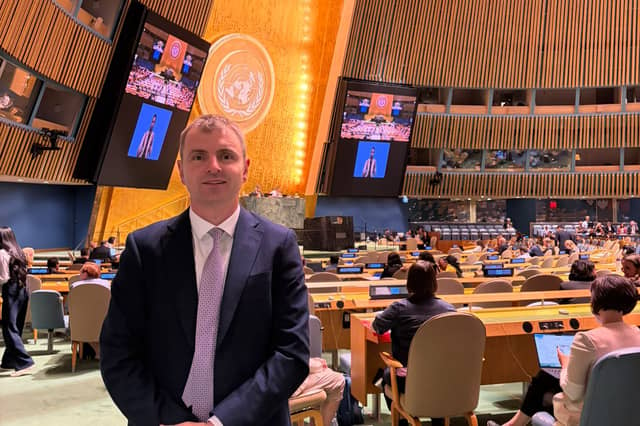

Louth Sinn Féin TD Ruairí Ó Murchú told delegates at a special conference on disability at the United Nations in New York about Louth Disability Cycling Club
Louth Disability Cycling Club got namechecked at the United Nations in New York last week when Sinn Féin TD Ruairí Ó Murchú told a special conference on disability about the Dundalk-based club.
The Louth deputy was at the UN for the Conference of States Parties to the Convention on the Rights of Persons with Disabilities (COSP19) and told delegates from all over the world about the innovative project that allows those with disabilities to take part in fun cycling events in the community.
Deputy Ó Murchú, who is a volunteer cyclist with the club, said the organisation provided ‘fun, useful and enjoyable events for people to do which puts them at the heart of their communities, allows them to spend time doing something fun with their families and friends and empowers them.
“If there is one takeaway, it is the fact that we need to find best practice that works for people, empowers them and ensures they can live the fullest life possible”, he told the conference.
The Dundalk TD also spoke about the need for in-school therapies in mainstream schools for children with disabilities, particularly autism.
He said: “The thrust of the conference is the idea of mainstreaming supports, reasonable accommodation and universal design to facilitate as much as possible those with disabilities in education, in the community and in life”.
He said autism assessments, the huge waiting lists for therapies and the lack of services for people with autism is ‘a huge political issue in Ireland’.
He also spoke about his own experience with his 17-year-old son Toirleach, who is a student at Ó Fiaich College. He told the conference: “The biggest issue when you are talking about children who have disabilities is the need for there to be reasonable accommodation for them and that needs to be available throughout the entire system. We need to be at the point where this comes naturally.
“When there is inclusive education in schools, this needs to go hand in hand with in-school therapies and these need to go hand in hand with assistive technologies, that have been proven to be extremely beneficial for those who use them and for those teaching people.
“Assistive technology has proven benefits and needs to be used and promoted throughout the entire system to make it easy for people to access it and for it to become second nature”.