
Louth psychiatric unit faces high-risk findings in report

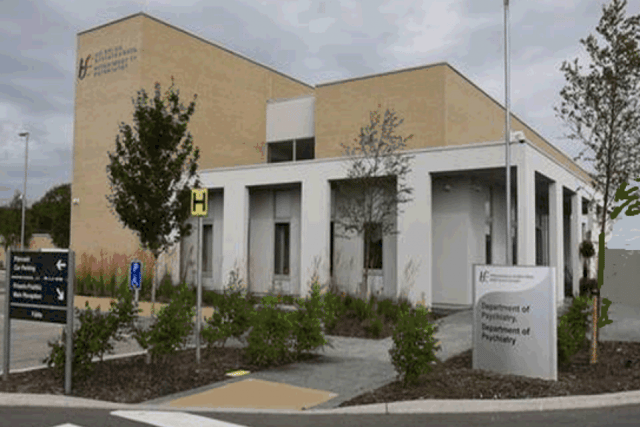

The Drogheda Department of Psychiatry was found non-compliant in 10 areas
The Mental Health Commission’s 2025 annual inspection report, published on June 22, found that the 46-bed Drogheda Department of Psychiatry was non-compliant in areas including consent to treatment, staffing, risk management, privacy, medication, seclusion and physical restraint.
The inspection took place over four days, from June 17 to June 20, 2025. The unit provides acute adult mental health and psychiatry-of-later-life services for people from Louth and Meath.
At the time of the inspection, all 46 registered beds were occupied, with 15 detained patients and six residents who had been in the unit for more than six months.
The report said the service’s overall compliance rate remained at 71 per cent, unchanged from the previous year. It found 10 areas of non-compliance, the same number as in 2024, with six recurring from the previous inspection.
Inspector of Mental Health Services Professor James V Lucey said the inspection team was “particularly concerned” about a breach involving consent to treatment.
The report also identified “a significant training deficit amongst medics in relation to the provisions of the Mental Health Act”.
Inspectors examined the file of a patient who had been in the unit for more than three months and who had been receiving medication continuously.
The patient had not consented to medication and had been assessed by a consultant psychiatrist as unable to consent. However, inspectors found that a Form 17, used to authorise medication for an involuntary adult patient unable to consent, had been “inadequately completed”.
The form did not include the name of the prescribed medication, while continued administration of medicine had not been authorised by a second consultant psychiatrist after referral from the treating psychiatrist.
“This issue was immediately highlighted to the medical team and corrected during the inspection,” the report states.
The report found high-risk non-compliance in risk-management procedures, citing shortcomings in fire-safety arrangements.
Inspectors said fire safety was “not adequately monitored” because records of fire-alarm tests and weekly fire-safety checks were not consistently maintained.
They also found that personal emergency evacuation plans had not been completed for people with mobility impairments and that only one fire drill had taken place during the previous year.
The report states that fire-safety risks were “not adequately assessed, treated or monitored” and said there was “an inadequate number of staff trained in fire safety”.
Although the report found that staffing numbers and skill mix were sufficient to meet residents’ needs, it identified training gaps across a range of mandatory areas.
While all healthcare staff were trained in safeguarding, not all staff had completed training in basic life support, fire safety, management of violence and aggression, the Mental Health Act 2001 and Children First requirements.
The report said difficulties releasing staff from duty to attend training had contributed to the deficits.
Inspectors found that residents’ privacy was not maintained at all times because two treatment rooms on the main corridor had windows without blinds or opaque glass.
The service was also found non-compliant in relation to premises after inspectors said ligature anchor points had not been reduced “to the lowest practicable level” based on risk assessment.
In relation to medicines, inspectors found 21 occasions across three medication records where the administration of medicines had not been recorded. The service’s policy also did not contain a process for prescribing high-dose antipsychotic treatment.
The report found high-risk non-compliance with rules governing seclusion and with the code of practice on physical restraint.
Inspectors reviewed three episodes of seclusion and found that not all staff who might participate had received appropriate training. In one case, a consultant psychiatrist did not sign the seclusion register; in another, documentation did not state whether continued seclusion had been ordered or for how long.
The report also found that, in three episodes of seclusion, individual care plans had not been updated to reflect the outcome of debriefs and residents’ preferences regarding restrictive interventions.
On physical restraint, the report found that not all staff involved had completed appropriate training. In one episode, the clinical practice form was not signed by a consultant psychiatrist within 24 hours.
The report also highlighted areas of good practice and improvement.
It said service improvement was “most notable” in the completion of general health assessments for residents who had been admitted for more than six months.
The unit was found compliant with its safeguarding condition, while the report said it had shown a continuing commitment to safeguarding and quality initiatives.
Residents who spoke to inspectors were broadly positive about the service.
“Overall, residents were complementary about the care and treatment provided,” the report states. “Residents reported that the staff were helpful and available to talk.”
Most residents said the food was very good and that menu choices were available, while residents were satisfied with the premises, according to the report.
The Mental Health Commission held a regulatory compliance meeting in July 2025 after preliminary findings showed 10 areas of non-compliance, seven of them high risk.
The Commission said it had reviewed a response from the service but was “not assured with the response provided to date”.
Corrective action plans included replacing the glass panels in the two treatment rooms with privacy vision panels, removing wardrobe doors and bedside lockers in response to ligature concerns, and developing a high-dose antipsychotic treatment policy.
The report notes that the corrective and preventative action plans were submitted by the registered proprietor nominee and approved by the Mental Health Commission.