
Louth TD raises incident in Dáil where man was knocked off bicycle in Dundalk


Asks Minister to give assurances that the Government will address antisocial behaviour
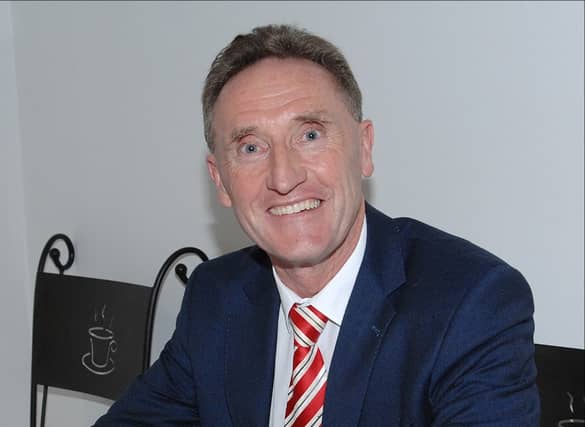
Louth Independent TD, Peter Fitzpatrick, brought up in Dáil Éireann this week, the incident that took place in Dundalk last weekend where a man in his 50s was knocked off his bicycle, in what Gardaí are calling an incident of endangerment.
Deputy Fitzpatrick told the Dáil that "a video showing a cyclist being deliberately knocked off his bicycle in Dundalk by a motorist who recorded the incident has gone viral. You can hear the driver laughing as he deliberately clips the cyclist before speeding away from the scene", and said that antisocial behaviour and the use of phones while driving are issues that both need to be tackled.
Highlighting existing legislation available to An Garda Síochána to tackle antisocial behaviour, including the public order Acts and the reduction-in-assault strategy, the Louth TD said that "ongoing enforcement operations must be put in place that are aimed to tackle antisocial behaviour to reassure the public Dundalk is a safe place to live and work.
"I ask the Minister to give assurances that the Government will address this issue. We have a collective responsibility to make our communities safe for all. What additional measures can the Government introduce to protect the many vulnerable people affected by antisocial behaviour?
Deputy Fitzpatrick went on to say that "we need the Garda more than ever" but added that "gardaí are not happy. I have spoken to many gardaí. This week, 92 new members started training in Templemore. Why only 92? The Garda is having serious issues in the context of pay and conditions, pensions, paperwork, rostering and antisocial working hours. In view of recent assaults on gardaí, when will members of the force be trained in the use of body cameras?"
He added "when an incident happens, the first people on the scene are gardaí. We have to make sure our gardaí are being looked after and trained properly but there is a bad feeling in the Garda at present. I met many gardaí in the aftermath of the recent incident in Dundalk.
"I could not believe the level of their frustration. Whether it is the Minister for Justice or some other Minister, can reassurance be given to gardaí that the Government has full faith in them and that they will be given proper training, that they will be protected and that they will have access to the necessary facilities?"
Responding to Deputy Fitzpatrick, Minister Pascal Donohoe said "I can answer his final question directly and state that the Government has full faith in the ability of An Garda Síochána to do all that can be done to keep our roads, streets, towns and cities safe."
He went on to say that "what the Government will deliver are the resources we can make available to continue with the recruitment plans and the support it needs to make difference when it comes to the behaviour that is so appalling to the Deputy and me." The Minister added that "200 more Garda recruits will enter Templemore College every three months."
Deputy Fitzpatrick replied to the Minister to say that "only 92 new members of the force started in Templemore this week. The Minister mentioned a figure of 200. Gardaí are not happy with their pay conditions, pensions, paperwork or rosters. Nearly everybody in this Chamber and outside it has, at some stage, relied on the assistance of the Garda.
"We in Dundalk have probably relied on their assistance more than most because, in recent years, we had the murders of Adrian Donohoe, Tony Golden and others. However, our gardaí want to know that the Government is behind them. Of all the Ministers I speak to, I really trust the Minister for Finance because he is a man of his word.
He added "I will go back to Dundalk at the weekend and talk to these gardaí. I want the Minister to say that the Government is going to look after them. A number of gardaí were assaulted recently. In that context, body cameras are very important. The Garda wants resources.
"The cost-of-living crisis is also affecting gardaí. They work unsocial hours and, as far as I can see, they are not being looked after. I ask the Minister to give them the resources and training. If we did not have the gardaí in our area, we would be in a very serious position. I would be in a more serious position than most.
"I come from a Border town and, with everything else at the moment, it is good to know that gardaí are there and have reinforcements. To reiterate, I ask the Minister to give confidence to the Garda that he, as Minister for Finance, will look after resources and training for these gardaí."
Minister Donohoe in his response said that An Garda Síochána "are public servants who are out first thing in the morning and last thing at night, frequently putting themselves on the front line and at risk to keep the rest of us safe."
He went on to say that " It is because we want to support our gardaí and public servants that the Minister, Deputy McGrath, came to Government while we were grappling with a pandemic and, with the support of Government, said we would put in place a further public wage agreement at a time of great uncertainty in our public finances. That wage agreement was put in place because of the work that our nurses and gardaí do.
"I know that when these agreements are put in place, there are always legitimate cases for more wages, changes in pensions and overtime. We appreciate that, but we need resources to provide overtime and for recruitment, while also responding to the needs of pay and pensions Deputy Fitzpatrick referred to.
"Our message is unambiguous: we will do all we can to support gardaí in the exceptional work they do because of the incidents Deputy Fitzpatrick referred to and the value we all place on the work of An Garda Síochána."