
4 simple but effective ways to boost teenage girls’ confidence


A former GP turned confidence coach says improving body language, recognising strengths and changing mindset can really improve teens’ self-belief
Confidence can be something teenage girls are sadly lacking, despite repeated attempts by parents to boost their self-worth.
A Girlguiding survey last year found 83% of 11–21-year-old girls want to build their self-confidence, and 75% say they don’t fit other people’s ideas of what a girl ‘should be’.
The huge confidence crisis endured by many teenage girls was brought into sharp focus for former GP-turned-confidence-coach Dr Claire Kaye after she helped mid-life women improve their own confidence and many then asked if she could do the same for their daughters.
So the mother of three teenagers asked a group of teens what they thought, and consequently reshaped the confidence coaching she gives to older women into the Glow Up series for teenage girls.
“I wanted to create something that allowed teenage girls, particularly at that key point of 16 to 21, to be able to walk into rooms without second-guessing themselves, to own their opinion, to be able to speak up in a way that was aligned with their personality, and to feel like they fitted in,” she explains.
“Teenagers tell me they want to stop overthinking, stop comparing themselves to everyone else, make friends more easily, feel more confident walking into a room, or trust themselves more.”
To help teens build their confidence, Kaye has created two short courses – about 15 minutes online a day for seven days – Glow Up Your Confidence and Glow Up Your Strengths, as she says girls recognising their own strengths is a major part of building their confidence.
But the former GP stresses that confidence isn’t about being the loudest person in the room.
“It’s about being so aligned with who you are that you can use your voice in a way that works for you,” she says, explaining that the aim isn’t to change girls’ personalities or to make them louder, it’s simply to help them feel more comfortable being themselves, able to speak up more confidently, and to stop holding themselves back as much.
She says: “Whether you’re an introvert or somebody that’s loud or quiet, it doesn’t matter. It’s that thing when you walk into a room going ‘Actually, I matter, I belong here, and I can do it in a way that fits with my personality.’
“Confidence is a skill that you can learn.”
But how can it be learned?
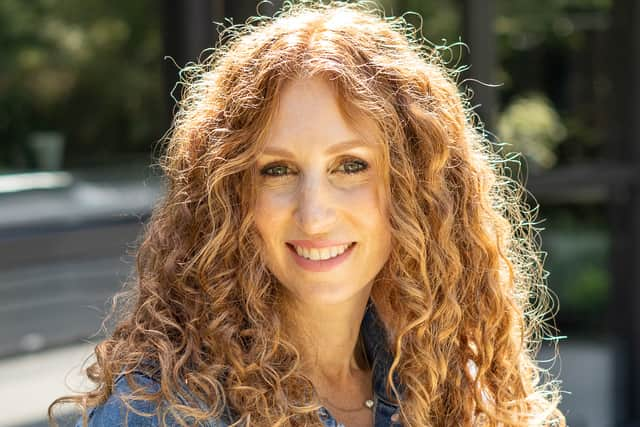
Kaye says it’s important to focus on practical confidence tools, including reducing negative self-talk, using your voice, thinking about your body language, taking small risks, and building confidence through action rather than waiting to suddenly feel confident.
She says some of the main ways to improve confidence in teenage girls are…
1. Improving body language
Kaye says a lot of confidence-building is about giving teenagers simple techniques that really help, like encouraging them to think about their body language and what it conveys to others.
She says under-confident body language often looks like making yourself smaller, looking down, avoiding eye contact, folding your arms, hunching your shoulders, fidgeting, or standing on your own.
Confident body language, on the other hand, isn’t about being loud or the centre of attention. “It’s about looking comfortable in your own skin – standing tall, keeping your shoulders relaxed, making eye contact, smiling naturally, speaking clearly and taking your time rather than rushing because you’re worried about what people think,” she says.
She encourages girls to notice how they enter a room, as many walk in almost hoping not to be noticed. “Simply lifting your head, slowing your pace and looking around the room instead of at the floor can make a huge difference, not just to how other people respond to you, but to how you feel too.
“Teaching a girl how to walk into a room when they’re feeling really wobbly inside is really a very simple thing that makes a massive difference. It’s not about pretending to be confident, it’s about using your body language to reinforce the confidence you’re building on the inside.”
2. Changing girls’ brain messaging

Kaye points out that while girls can often easily list all the things they’re not good at, they may find it hard to identify the things they excel at.
“So starting to change the conversations that we have in our brain, noticing the wins, even the small ones, starts to reframe the internal narrative that we have,” she explains.
She suggests parents sit down with their daughters and go through what they’ve done in the last week that’s been difficult and what’s worked for them.
“Take that and then say they can start to shape how they become more confident based on what they’ve done in the past,” she advises.
So, for example, if they’ve managed to go to a concert they were really scared about going to, what did they put in place that helped them attend?
“And then look at the process of that, and translate it into different situations,” Kaye suggests. “So it might be that it was easier because she was with a friend, or because she reminded herself that she can do hard things, and those mantras really helped.
“She might think it was easier because she practised how she was going to feel, and then knew when it came up that she’d be able to manage that.”
3. Tackling strength blindness
“It’s just something that we do,” she says. “So it might be that everyone comes to a girl for advice about boys, or that she’s the one that organises the nights out. These are skills girls just don’t see.
“So breaking down strength blindness and starting to see what you’re naturally good at is a massive thing to be aware of, and it helps you start to shape your life and your future around those things, and that massively feeds into confidence.”
4. Practise your new skills
Kaye stresses that confidence can be learned, and points out: “We just think that we’re either born confident or we’re not, but it’s a bit like reading or riding a bike – you can learn to do that skill.
“So once you have the skills on board, you practise them. So you go into rooms and instead of thinking ‘Oh my God, they’re all looking at me’, it becomes less of a thing because the other voice in your head says use this tool, or remember what you bring, or think about how this has worked for you in the past.
“All those things start to become second nature the more you practice them, so it’s not really about switching that ‘they’re looking at me’ bit off, it’s about switching something else on.
“You just keep practising, practising, and practising it.”
She adds: “It’s not about a shy person becoming loud, it’s just a shy person being comfortable in who they are. It allows teenagers to be themselves and to have the self-belief that they matter.”