
Autumn budget: How changes will affect first-time buyers

Key announcements include a new First Time Buyer ISA and Your First Home scheme, to help people get on the property ladder.
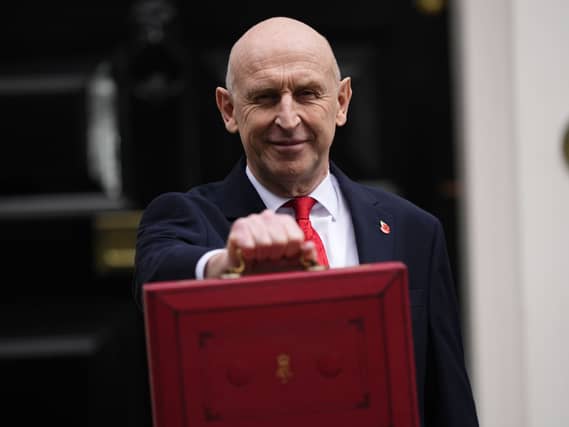
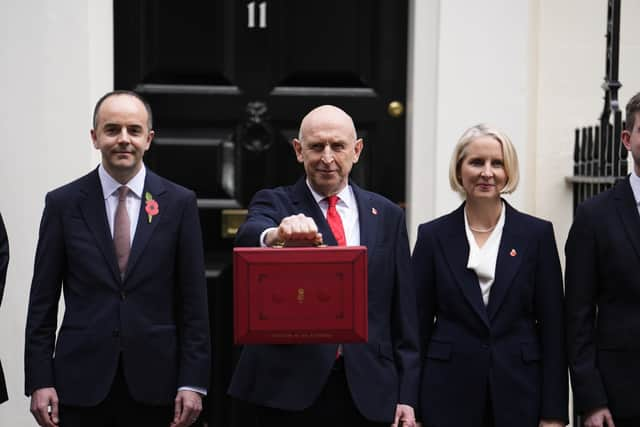
Chancellor of the Exchequer John Healey stood outside Downing Street on Wednesday, posing with the iconic red budget box, ahead of delivering his autumn budget statement in the House of Commons.
While many of us watched closely to see how the government plans to tackle the economic challenges ahead, aspiring homeowners might have been particularly keen to hear any announcements that could affect their chances of getting onto the property ladder.
Here’s a breakdown of the key housing announcements and what they could mean for first-time buyers.
What changes concerning first-time buyers were announced during the autumn budget statement?
The Chancellor announced that he was “taking action” and reaffirmed his commitment to helping first-time buyers in the House of Commons on Wednesday by announcing the move to a new First-Time Buyer ISA scheme.
Healey said: “For every young person who’s working hard, saving what they can, and dreaming of their first home, I’m taking action. I’m announcing that a First-Time Buyer ISA will replace the Lifetime ISA.”
He also addressed a limitation of the current Lifetime ISA (LISA), which is that if the property exceeds £450,000, using the Lifetime ISA triggers the 25% penalty.
“From today I’m dealing with the LISA penalty, so that if the home you want costs more than the limit, you will get back at least what you put in,” he said.
Healey also officially announced that the Your First Home scheme, for “first-time buyers who don’t have the bank of mum and dad behind them”, will commence next spring. However, he didn’t go into much detail about what this scheme will actually involve in his speech.
He described it as “an equity loan scheme” which will be funded by £4.7 billion of government-backed lending.

However, the government website offers more details on this scheme.
It states that Your First Home is a new government scheme to help first-time buyers purchase a new-build home with a smaller deposit and mortgage.
Eligible buyers will be able to purchase a home using:
– a deposit of at least 2.5% of the purchase price
– a repayment mortgage from a participating lender
– a government equity loan worth 20% of the purchase price, interest-free for five years
The scheme is expected to open for applications in February 2027.
What are the current challenges facing first-time buyers and to what extent do you think this budget helps address them?
Ryan Etchells, chief commercial officer at specialist mortgage lender and financial provider Together, said that there is a triangle of challenges currently facing first-time buyers: getting the deposit in the first place, the ability to pay the mortgage, and a lack of housing in the UK for people to actually live in.
“The First-Time Buyer ISA and Your First Home Scheme is aimed at helping saving for that deposit, which is arguably the hardest part of the equation,” said Etchells.
“This is a big positive, so it was exciting when these schemes were first announced a couple of weeks ago. However, the details of how this will work didn’t seem to be mentioned much in this budget statement which was disappointing.
“The new First-Time Buyer ISA will hopefully take away some of the limitations and rules of the current Lifetime ISA to encourage more people to start using it.”

Etchells notes that the ability to pay a mortgage challenge was partly addressed through Healey’s policies around the cost of living. For example, the energy bills support package which will cost £2.6 billion and around 20 million households in council tax bands A to D will receive £100 from the government this winter to help with bills.
“Affordability and the cost of living challenges was a big focus of the budget today and Healey spoke about various measures that aim to help reduce people’s expenditure around gas, electricity and water etc – which in theory should help alleviate some pressure from people paying their mortgage,” says Etchells.
“However, his statement did highlight how a lot of these things are outside of the Government’s control. For example, the pressures on inflation are coming from external factors such as the ongoing crisis in Ukraine or the war in Iran, which is pushing up energy costs.
“So, it’s good that the government has been spending time and energy to provide some relief on this, but it will be interesting to see when that relief will come and what impact it will have.”

To address the housing shortage issue, Healey announced that the government would be “drawing the line on constant changes to building regulations”. For example, removing biodiversity requirements for more brownfield sites.
He also announced that to get more council homes built, he would be “extending cheaper borrowing for councils and making all land sold to social housing providers VAT free”.
In addition, he revealed that an additional £1.5 billion will be put towards the social and affordable housing program.
However, Etchells doesn’t think the budget has gone far enough in addressing the housing building issue.
“House building seems to be the challenge that the government has had a real problem with, and we really need to get some house building going because that’s what’s putting a lot pressure on people being able to buy property,” says Etchells.
“It’s all well and good helping people get deposits and making the cost of living in a better position so that people can afford the mortgage payments. But if there’s no houses to purchase, or there’s a lot of houses that are being held up by people in a later time in life who are not moving out of these big properties, then there still won’t be enough properties for them to move into.”
Do you think the budget statement announcements will help people feel more positive about buying their first house?

“It looks like there should be more hope coming out the back of that budget, and you see that in the OBR’s [Office for Budget Responsibility] upgrade on forecast for the next year,” says Etchells.
“I hope that people will be feeling more positive after today because that sentiment turns into activity, which is what we should be looking for.
“But, only time will tell. It’s not just going to all happen in one budget or overnight. We’ve got to get that positivity and optimism back into the economy because that’s what’s been severely lacking over the past two to three years and has made conditions so hard for first-time buyers.”
Scott Clay, director of private clients at Together, agreed and added: “Confirmation of an income cap of £110,000 per household outside of London for the Your First Home scheme means the initiative has more of a shot at being effective, with more aspiring homeowners standing to benefit.
“That said, there’s still a geographic disparity in the number of potential beneficiaries of the scheme. The income cap may come to bite for those living in the London commuter belt, who miss out on the capital’s £140,000 income cap while having to contend with the higher house prices of the south-east.
“Buyers will need to decide for themselves whether a new-build home – which comes with a premium – with a government-backed equity loan is the best route to homeownership. Other routes onto the housing ladder could include shared ownership, which can also offer a valuable alternative for those priced out of buying outright, so long as the full costs are understood.”
What advice would you give first-time buyers?
Etchells recommends focusing on building that deposit first.
“Think about how you can put yourself into a position where you can put a deposit down on a property. When the new schemes come into effect, have a real strong look at them and see how that government-backed loan might be able to help minimise your deposit contribution,” advises Etchells.
Then he recommends speaking to your finance provider.
“Speak to your finance provider, whether it’s a broker, a bank, or a lender like Together than can help you,” recommends Etchells. “They can help you understand how the property purchasing process works.”