
Black bears, mountains and the Sasquatch: A 600-mile train ride into the Canadian Rockies

Rosie Shead explores the wilderness of western Canada on a two-day trip aboard the Rocky Mountaineer train.
“Bear!” I shout, leaping up from my seat and pressing my face against the train window.
I watch as the small black creature creeps along the side of the track, its dark outline sharp against the pale rocks, before disappearing below the riverbank seconds later.
My fellow passengers rush to the back of the carriage to try and catch a glimpse, but it’s too late. We are whisked away, deeper into the wilderness of western Canada.
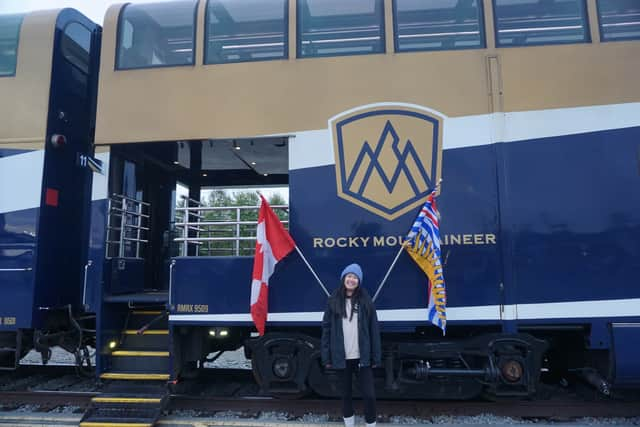
We had left the city of Vancouver to a chorus of bagpipes earlier that morning, waving goodbye to a line of uniformed station staff as we set off on our two-day journey to Banff, in the Canadian Rockies.
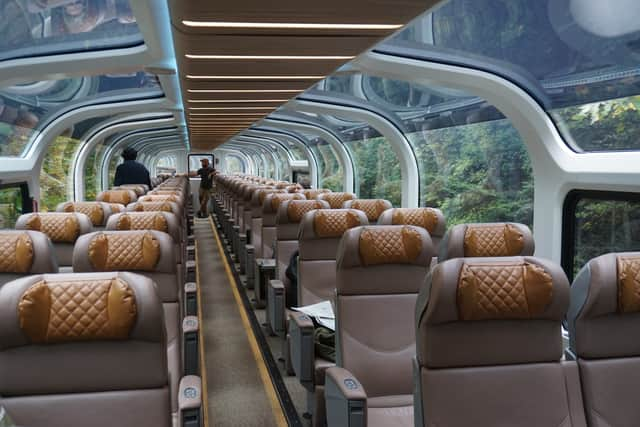
It is a crisp autumn day and golden sunshine streams through the glass-domed carriage roof as the train winds its way out of the city, through flat farmland dotted with big red barns and carpeted with rows of sunflowers.
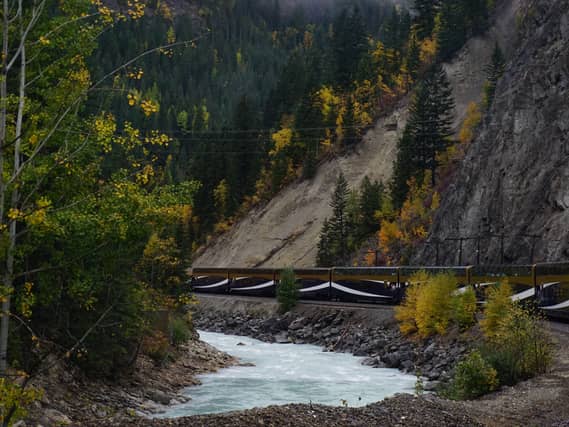
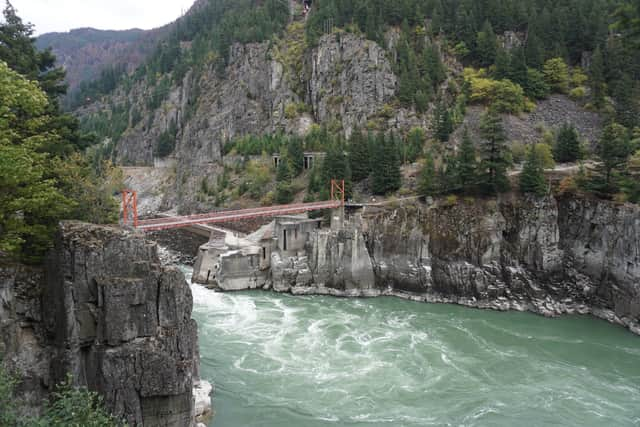
Soon, we are meandering through the Fraser Valley as the Fraser river thunders along beside us.
Dark evergreens line the track, punctuated by bright yellow larch trees – famous for their golden foliage which draws thousands of hikers and photographers to the region at this time of year.
Our route – First Passage to the West – on the Rocky Mountaineer train retraces the historic Canadian Pacific Railway which first connected British Columbia to the rest of the country more than 125 years ago.
“Since we can’t export the scenery, we’ll have to import the tourists,” the rail company’s general manager Sir William Van Horne is said to have remarked upon seeing the alpine beauty of Banff.
Built in the 1800s, in part by Chinese labourers who faced discrimination, poor pay and unsafe working conditions throughout the project, the track is now solely used by freight trains and tourists.
Travelling at an average of 30mph across the two days, the almost 600-mile journey is completed during daylight hours only so that passengers do not miss a moment of the majestic landscape.
As I had been told to expect to spend around 12 hours on the train each day, I had brought a book with me for entertainment.
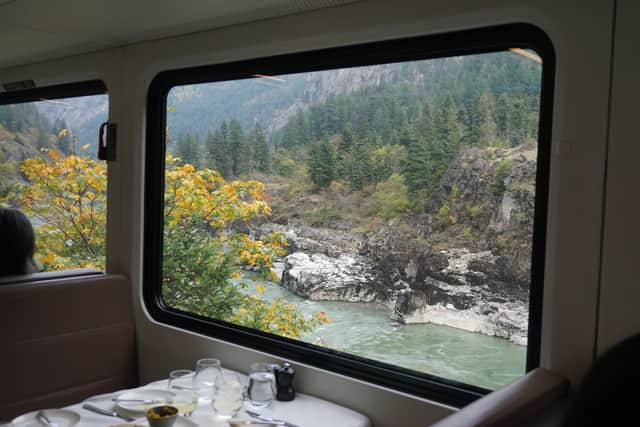
Surprisingly, however, each time I pick it up my eyes are torn back to the views unfurling around us and the satirical murder mystery eventually lays forgotten on my tray table for the rest of the ride.
Instead, I recline on my heated seat, indulge in the parade of snacks and drinks being served and gaze out of the window.
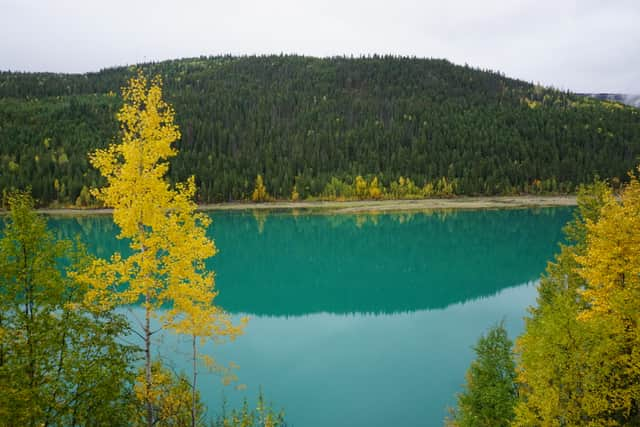
The first day sees us passing over swirling rapids, along the shores of sparkling turquoise lakes and through semi-arid grasslands.
Our onboard hosts Eliza and Michelle keep us amused with stories from the railway.
We are travelling through the home of the Canada’s most famous cryptid, the Sasquatch – a large, hairy and human-like creature, commonly known as Bigfoot, that legend says inhabits this region.
Some First Nations people believe the Sasquatch has the ability to move between spiritual and physical realms, with a sighting viewed as a gift, explains Eliza.
The British Columbia region has also captured the imagination of filmmakers – providing the perfect backdrop to scenes in the Twilight saga.
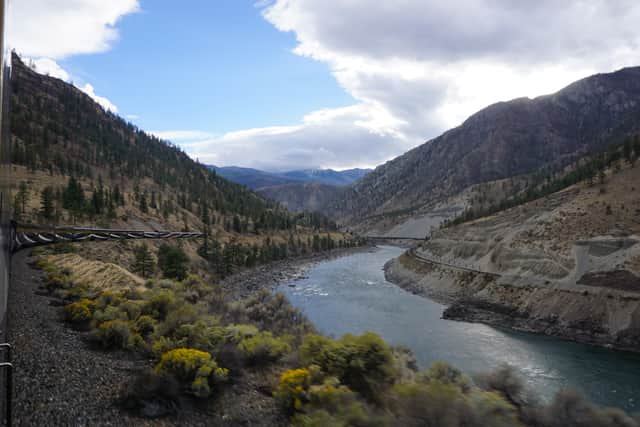
As I look around and admire the tumbling waterfalls and misty forests, it’s not hard to imagine a vampire leaping among the canopy or a werewolf stalking along the stony riverside.
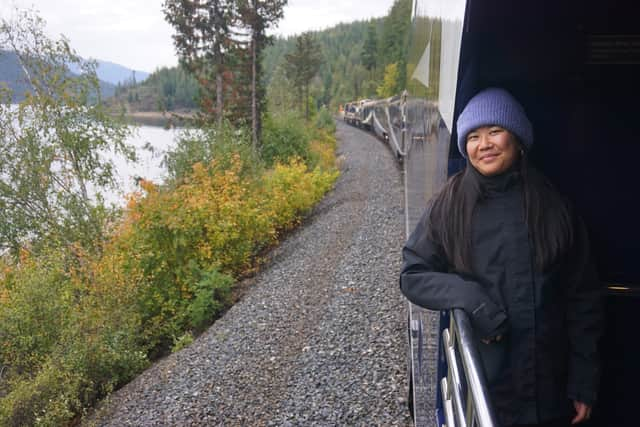
Eager to spot any wildlife, real or mythical, I wrap up warm and venture onto the train’s outdoor viewing platform.
Here, my companions and I have to raise our voices to be heard over the rumbling of the train over the tracks. The chilly wind whips through my hair as I poke my head over the railings and watch the navy, gold and white Mountaineer train coaches snaking along behind us.
As the daylight begins to fade, we spot a bald eagle perching proudly upon a tall post directly next to the railway, its iconic features illuminated perfectly by the last of the golden sunshine.
After an overnight stop in the small city of Kamloops, me and my fellow 900-odd passengers are ushered bleary-eyed onto a coach for the short drive back to the train at 6.15am the next morning.
I am particularly excited for breakfast after the early start – with steaming stacks of pancakes and maple syrup, hot croissants and buttery scrambled eggs served up on the train.
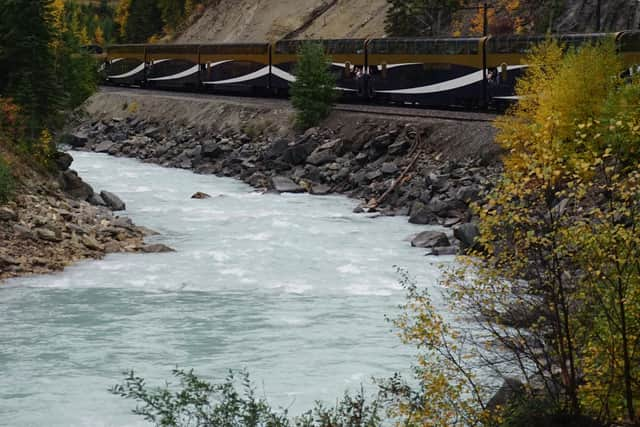
Throughout our journey, we are treated to locally sourced culinary delights freshly prepared by the onboard chefs.
Lunch options include baskets of warm focaccia followed by pan-seared king oyster mushrooms, steak or seafood ravioli with a rich chocolate tart for dessert.
That afternoon – on the second day – the Rockies finally come into view.
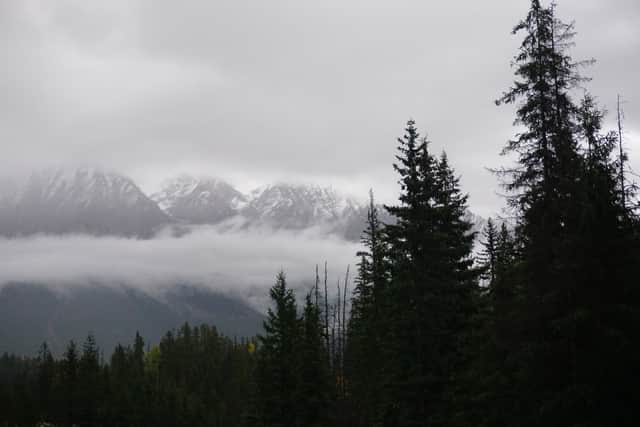
I congregate with a group on the viewing platform, briefly speechless as the mountains tower over us, their snowcapped peaks hidden by layers of soft white cloud.
As we near the end of our journey, I am get chatting to Michelle who has worked on the train for 25 years and hear her thoughts on what makes rail travel so special.
“I think it’s slower and it’s kind of romantic in a way,” she says.
“It kind of got lost in translation for a little while and now it’s come back.
“People like to just take their time, take it all in, have a sip of wine, just forget about life and soak up all the scenery.”
Despite having made around 500 trips aboard the Rocky Mountaineer, she still gets excited about new discoveries she spots along the way and observing the flow of the seasons from the train.
“I love this time of the year because I love the colours of the rivers – they just blow my mind,” she says.
“I love watching the salmon make their way up the river – and that’s typically when we see the ospreys and the eagles catching all the salmon and the bears down there.”
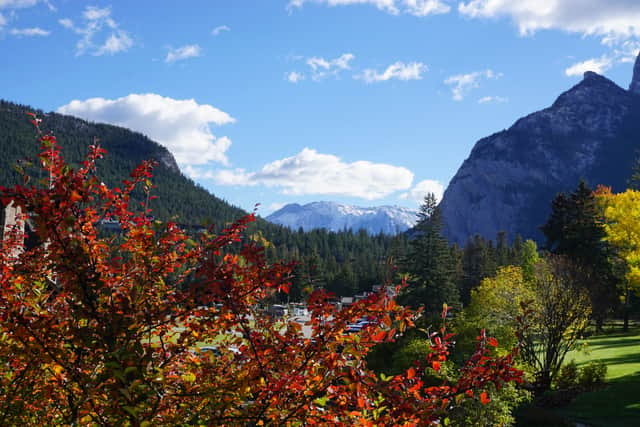
We arrive in the alpine resort town of Banff, famed for its natural hot springs and ski routes, well after nightfall and therefore blind to our surroundings.
The next morning, I draw back my bedroom curtains at the Rimrock Banff hotel and am awestruck by the postcard-perfect scene that greets me.
A snow dusted mountain range lines the horizon, its peaks ablaze with the morning sunlight.
Below it, rows of dark green conifers and golden larches complete the wintery wonderland as steam billows up from the hotel’s deserted outdoor infinity pool.
No one else has woken up yet, it seems, as I reach for my camera and swimming costume and rush outside.
How to book:
Rosie Shead was a guest of Rocky Mountaineer on ‘First Passage to the West’. The five-night journey from Vancouver to Banff via Kamloops, and vice versa, departing between mid-April and mid-October in 2027, costs from £1,532pp (if booked by December 3, or £1,807pp after) in SilverLeaf Service and from £2,258 per person (if booked by December 3, or £2658pp after) in GoldLeaf Service.
It includes two days aboard, with one night of accommodation in Kamloops and two nights in Vancouver and Banff, as well as all meals onboard rail station transfers and activities as described.
Book at rockymountaineer.com or call 0800 088 5541.