
Day of the Dead comes alive in San Antonio

Hannah Stephenson visits the city in Texas to see the biggest Día de los Muertos festival in the US.
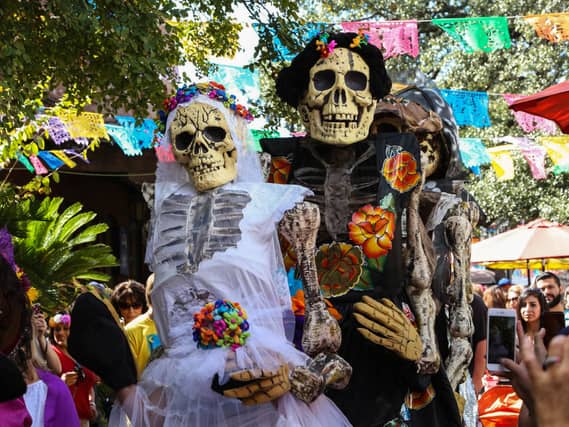
Walking amid giant skeletons and elegant Catrinas in classic black, deep red and purple dresses, lace ruffles, colourful headbands and elaborate wide-brimmed hats, you could be mistaken for thinking it’s the Day of the Dead in Mexico City.
But I’m in its neighbour, San Antonio in Texas, 150 miles from the Mexican border, which stages the biggest Día de los Muertos festival in the US every autumn.
In fact, it’s thanks to the opening scene of the 2015 James Bond movie Spectre – where 007 weaves his way through a fictional Day of the Dead parade in Mexico City – that the event has become such a huge extravaganza.
The following year, the tourist board ensured fiction was turned into reality, staging carnival processions and colourful floats, and in 2017 San Antonio, which has a 64% Hispanic population, with people of Mexican descent making up the majority, did its own version.
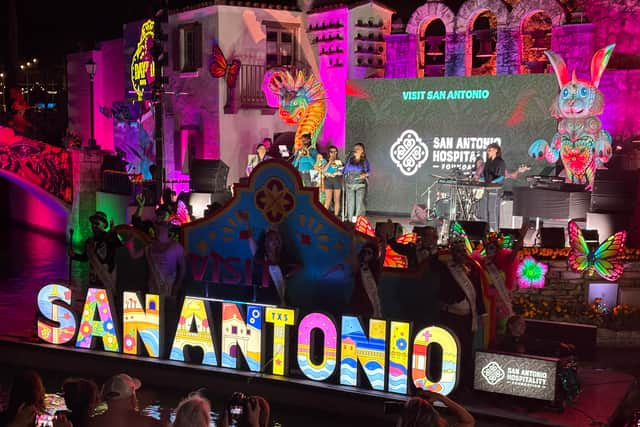
It has grown and the three-day Day of the Dead festival in San Antonio (the second largest city in the state behind Houston) is now the biggest in the US. It attracts thousands to its dazzling River Parade, a night-time procession of elaborately decorated barges, where performers dance, sing and play instruments to entertain the crowd.
Yet Día de los Muertos had been marked with much less of a fanfare for 3,000 years, rooted in a mix of Aztec and Mayan indigenous cultures in Mexico that celebrate death as a continuation of life, honouring deceased loved ones by treating death without fear and dread.
During Day of the Dead, the souls of the deceased are said to be allowed to temporarily return to visit their living families.
Before Spectre, families honoured their departed loved ones in the privacy of their own homes or at their graveside in much more low-key surroundings.
While San Antonio’s other claim to fame is The Alamo – once an 18th century Spanish frontier mission, later a fortress and most famously the site of the 13-day siege during the Texas Revolution in 1836 – now history buffs can barely ignore the Día de Los Muertos slice of history.
It’s a huge deal in this friendly, relaxed city where a sense of community is everywhere, from the hundreds of volunteers who help with the festivities to the vibrant café culture.
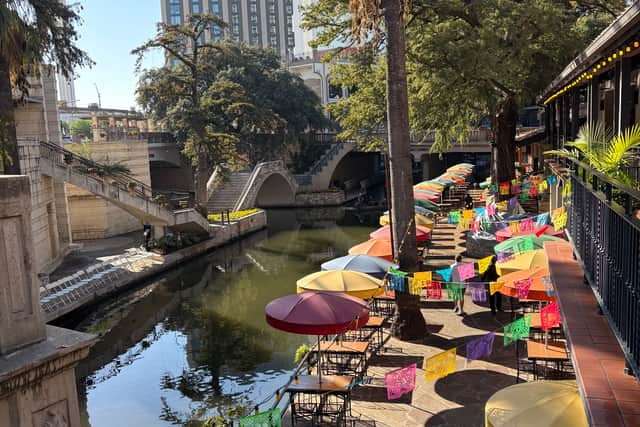
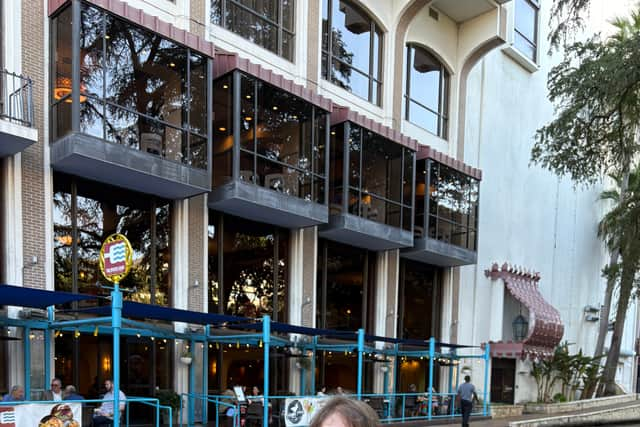
Friends gather in the bars and restaurants on the River Walk, the city’s jewel in the crown, a pedestrianised area nestled 20ft below street level which winds under bridges and from where visitors can admire statues, theatres and other cultural hubs along the San Antonio River or take a boat ride to view the attractions from the water.
Festivities begin in late October, when Catrina-style costumes in orange, red, purple and other colours of the rainbow are dusted off and families, artists and community organisations create ofrendas – altars to honour their dear departed or any famous departed, it seems.
We see shrines dedicated to music icons Dolly Parton and Bonnie Tyler in the lobby of our hotel, The Gunter, bathed in marigolds, photographs, candles and and other ephemera, music-orientated like the hotel itself, which has an award-winning speakeasy, a recording studio and a record player in each room plus a vinyl library where you can borrow from the specially curated collection.
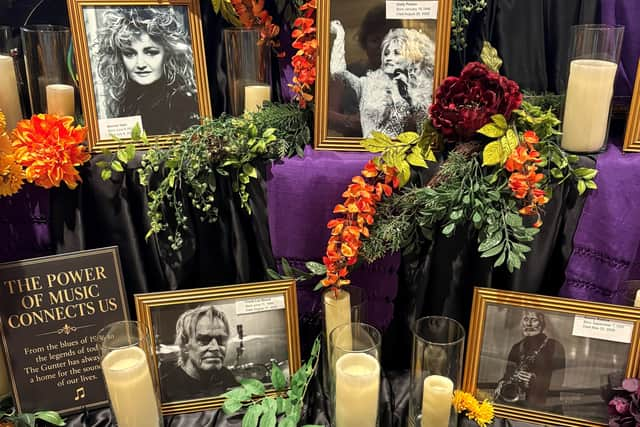
There are multiple events downtown that take place over a month, from the more exclusive fashion show catwalk at the high-end Monarch Hotel where models adorned in floral wonders honour their Mexican heritage, to the colourful processions in the historic market square.
Faces are painted with the bony features of La Calavera Catrina, the elegant female skeleton created by Mexican illustrator Jose Guadalupe Posada between 1910 and 1913 as a satire to mock wealthy Mexicans accused of rejecting their indigenous roots to imitate European fashions. But the event should not be associated with ‘Mexican Halloween’, locals stress.
In pedestrianised areas there are brightly coloured alebrijes, Mexican folk-art sculptures inspired by animals, mythical creatures and the artist’s imagination – and for the wellbeing-conscious there’s even the Calaverita 5k run and a mile-long family walk designed to blend fitness with cultural remembrance.
The biggest event, though, is the illuminated signature River Parade of floats which takes place the week before the Day of the Dead key dates of November 1 and 2. On November 1, Mexicans honour the Día de los Angelitos (Day of the Little Angels), for deceased children, and on November 2, Día de los Muertos, for departed adults.
Yet, far from spooky, death is seen as a natural part of life and this reality is approached with humour and celebration.
There are constant nods to the monarch butterfly, on floats, in parades, in artwork – there’s even a hotel named after it – as it makes a migratory pitstop in San Antonio, in the autumn, on its way south for the winter. In Mexican tradition, butterflies symbolise the returning souls of loved ones who have passed away.
Chefs and bakers all get involved, as food is very much a part of the memories of flavours and dishes passed on from generations before.
Every autumn, San Antonio master baker David Caceres makes endless trays of sugar-coated pan de muerto – bread of the dead.
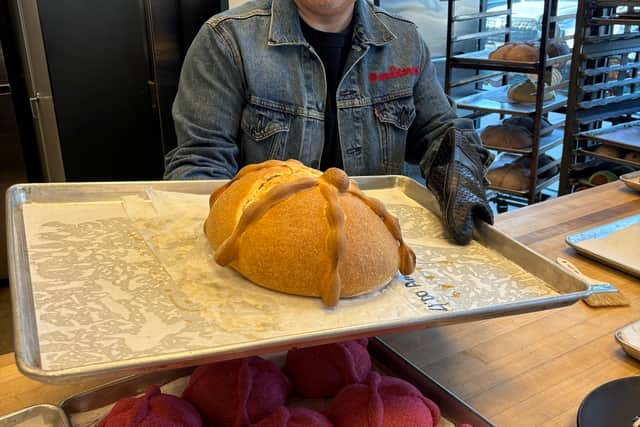
The surprisingly light and fluffy sweet loaf, similar to brioche, flavoured with orange essence and traditionally dipped in hot chocolate, brings back memories of his mother, a baker in Mexico City, where he grew up, before the family moved to San Antonio in search of a better life.
“I didn’t get to see her that much and everything revolved around pan dulce (Mexican sweet baked goods). It was the glue of my family,” says Caceres, who now owns La Panaderia, a chain of upmarket bakeries and cafes in the city.
The domes of dough represent the circle of life, while narrower strips placed on top the bread symbolise the bones and a small circle of dough on top signifies the calavera, or skull.
Elsewhere, we experience an array of Tex-Mex, from slow-cooked Texas barbecue brisket and great racks of finger-licking ribs and spicy sausage, to lighter ceviches, shrimp tacos and sophisticated flautas de pollo, moles (sauces) and salsas.
Away from the Downtown hubbub, there’s time for a quieter moment on a bike ride along the riverside cycle paths, where we stop to admire herons, turtles and cormorants cooling off in the water towards the quieter south side of the city, through the San Antonio Missions National Historical Park.
Further north, it’s worth taking a breath in San Antonio Botanical Garden to wow at vast swathes of bright orange and rich yellow marigolds and larger-than-life Catrina sculptures crafted from thousands of living plants by a local artist, representing different elements of Mexican history.
Back in the heart of the city, there are banks of seats along the River Walk in preparation for the floating parade and a sense of anticipation as we have our faces painted and choose floral head-dresses before venturing into the happy throng, some of whom are festooned with butterfly ephemera, calavera masks and marigold accessories.
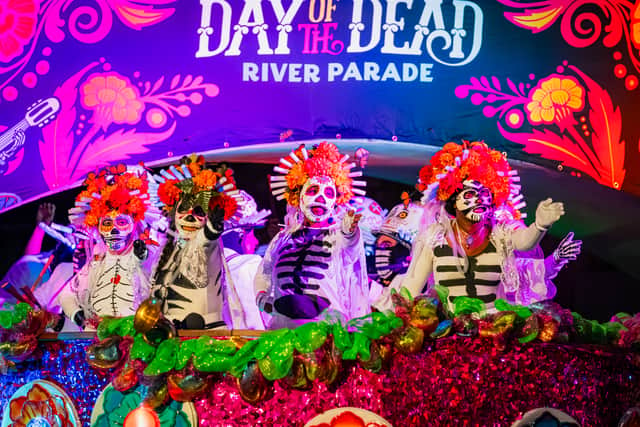
As we sit (you can book a riverside seat at thesanantonioriverwalk.com – tickets for this go on sale in May 2027), oversized skeletons wave to the crowd from a footbridge and as the sun goes down the lights come up in a kaleidoscope of colour as more than 20 barges travel wind their way through the downtown area, each highlighting different elements of Dia de los Muertos through traditions tied to remembrance.
San Antonio loves an excuse to dress up and celebrate – there’s Diwali festival of lights, river parades at Christmas, St Patrick’s Day, Spring Festival and Pride.
But above all, Day of the Dead demonstrates the sense of community and optimism in the face of adversity.
Caceres reflects: “When my mother died, her very important legacy was not the recipe, but the resilience that she taught me. We all want to belong to something.”
How to book:
Hannah Stephenson stayed at the Gunter Hotel Riverwalk, San Antonio.
America As You Like It (020 8742 8299) offers a four-night break to San Antonio from £1749 per person, including return flights on United and four nights room only at the Gunter Hotel Riverwalk.
For more information go to visitsanantonio.com.