
Does my child have asthma? 5 signs to look out for


Childhood asthma symptoms are often very subtle and can easily be mistaken for a lingering cold or allergies.
Asthma often flies under the radar, and a leading charity has warned that children with the condition could be at risk of avoidable emergency hospital visits due to a lack of testing.
The National Institute for Health and Care Excellence (NICE) recommends FeNO, a test that measures nitric oxide levels in the breath, as a first-line diagnostic tool for children over five with suspected asthma. However, new data obtained by Asthma and Lung UK through Freedom of Information requests suggests that this test is not routinely commissioned in many GP surgeries.
Of 42 local health bodies surveyed, 59% of those which responded (22/37) reported that they did not commission FeNO testing in primary care for children to the extent that the whole region is covered.
NHS England has been approached for comment.
Dr Matt Swallow, clinical lead at Asthma and Lung UK, said children’s access to timely and accurate asthma diagnosis “should not depend on where they live”, warning that insufficient diagnostic capacity could leave children vulnerable to serious asthma attacks and avoidable hospital visits.
Childhood asthma symptoms are often subtle, so Swallow has highlighted five key signs that every parent should look out for and has also offered advice on when to seek professional help.
1. Persistent or recurring cough

“A persistent or recurring cough, particularly a cough at night time or early in the morning or after exercise, is a common sign of asthma,” highlights Swallow.
2. Wheezing
“Wheezing, which is like a whistling or musical sound when you breathe out, is another sign for parents to look out for,” says Swallow.
3. Tight chest
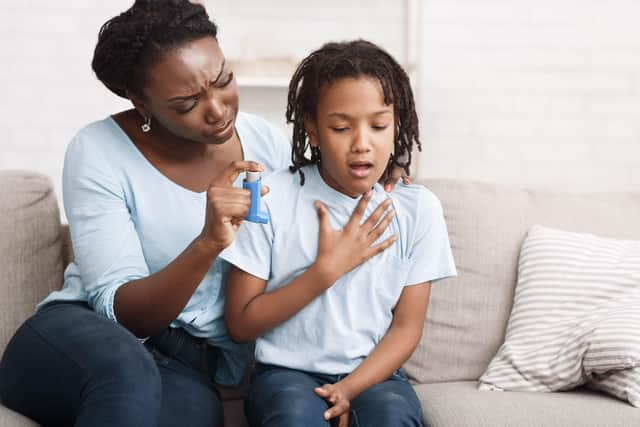
“Chest tightness or discomfort is a symptom that young children might find difficult to describe,” says Swallow. “They might suddenly stop playing football, for example, because they experience chest tightness and breathing difficulties.”
4. Breathlessness
“Breathlessness is another sign for parents to look out for,” notes Swallow.
The Asthma + Lung UK’s website explains that if your child is breathless they might breathe more quickly, wheeze or find it hard to take big breaths, move their body more when they breathe, have trouble talking, eating or playing or be out of breath for a long time after crying or laughing.
5. Symptoms that coincide with triggers and tend to be worse at night
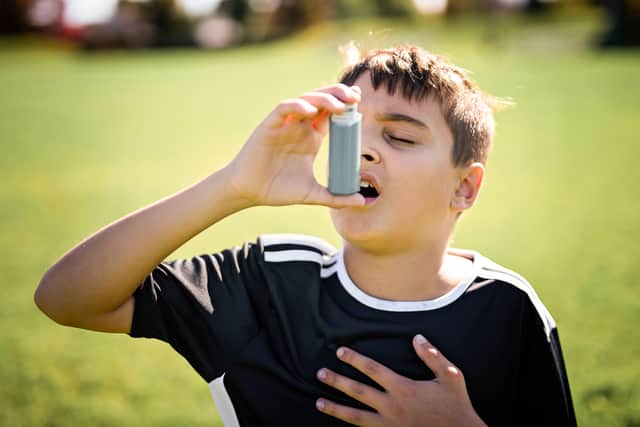
“Asthma symptoms come and go in response to triggers such as exercise, viral infections, cold air and allergens like dust, pollen or smoke,” says Swallow. “Symptoms also tend to be worse at night.”
Why is asthma often missed?
“I think one of the reasons that asthma is often missed, especially in children, is because the symptoms are variable,” says Swallow.
“By definition, asthma is a variable condition, so there will be periods where a child is well and is not symptomatic.”
In addition, asthma symptoms can be attributed to many other things.
“For example, young children, in particular, can get a viral-induced wheeze that isn’t asthma,” says Swallow.
Does asthma run in families?
“You can still have asthma even if you don’t have a family history of it, but it does tend to run in families,” says Swallow. “So, if you’ve got a family member who has got asthma, a parent who has got asthma, then you’re more likely to have asthma.”
When should parents take their child to the GP about their symptoms?

“With asthma, people tend to have more than just one trigger. So, if your child gets wheezy when they have a viral illness and also get wheezy when they’re exposed to dust, pollen or damp, cold environments, you should flag up this pattern with your GP,” advises Swallow.
Taking notes in a symptom diary can help.
“It can be tricky to recognise these patterns, so writing symptoms down when they happen can be really useful,” says Swallow.
The doctor also encourages parents to trust their instincts.
“I always say to parents that they are the expert of their own child and know their child best because they spend the most time with them, so therefore will know what is normal for them,” says Swallow.
“So, if you are concerned that there’s a pattern of a wheeziness or night time symptoms, it’s really important to go to your doctor to get that checked out.”
Why is it important that asthma is picked up in children earlier rather than later?
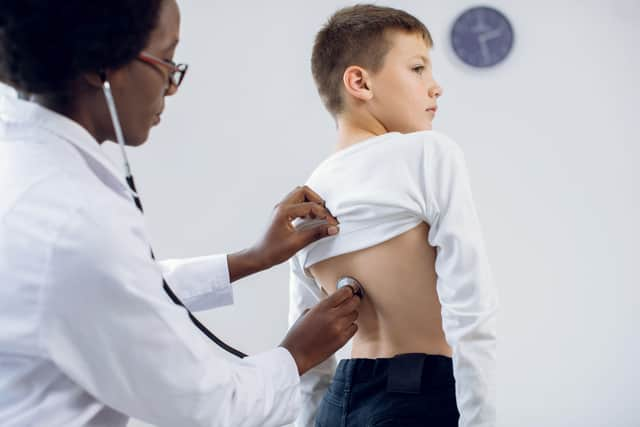
The doctor explains that benefits of earlier diagnosis of asthma is earlier treatment and better outcomes.
“It’s really important that we treat airway inflammation in children who have got developing airways so that they’re able to function normally,” says Swallow.
“The vast majority of children who are on appropriate treatment for asthma should be able to do sports and normal activity with no restriction whatsoever. However, if asthma isn’t well treated, the child might start limiting their activity and avoid running around in the playground, for example.
“This is really sad because they shouldn’t have to do that because we’ve got effective treatments that we can use if asthma is picked up.”
What symptoms require emergency medical assistance?
“Unfortunately, a lot of children do present with asthma for the first time as an acute asthma attack, so it’s important that people do know when to get help,” says Swallow.
“If your child is struggling to breathe, is breathing really quickly, is not able to speak normally in full sentences, is not able to eat and drink normally because of the breathlessness and / or starts to become tired, sleepy, confused or has any colour change in their lips, then that’s an emergency and you need to call 999 and follow their asthma action plan if they have one.”