
Exploring the isolated Kerlingarfjöll mountains and hot springs in Iceland’s highlands
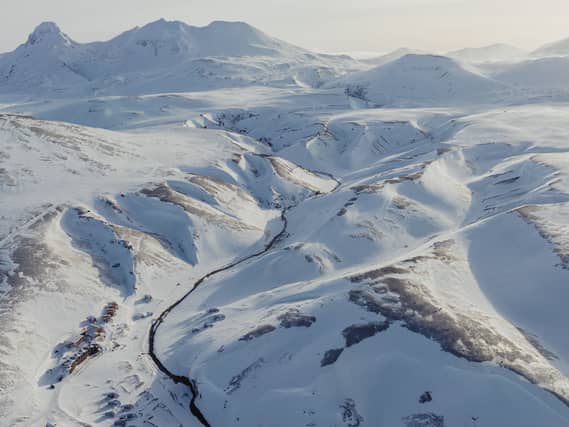

Josie Clarke heads to Highland Base Kerlingarfjöll to find extreme landscapes and an ‘end of the Earth’ feeling.
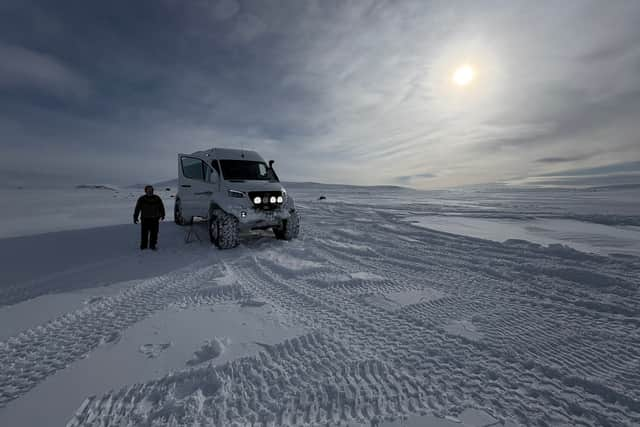
It’s well over an hour since the ‘impassable’ road sign disappeared into the blizzard behind us. Since then, gales blasting snow at the windows of our 4×4 ‘super jeep’ have cleared to allow fleeting views of an other-worldly expanse of white as far as the eye can see. We haven’t seen another soul for miles, and we won’t for another five hours.
We are venturing into the central highlands of Iceland, final destination Highland Base Kerlingarfjöll, some 200km from the capital Reykjavík.
The hotel does gently warn its guests that the journey in is all part of the experience, and as our ever-cheerful and highly skilled professional driver hops out to undertake “a little bit of digging” to free us from the first of many snow drifts we are beginning to realise why.
Covering 150 square kilometres, Kerlingarfjöll is a circular mountain range with peaks reaching up to 1,500 meters, where the sweeping vista of the highlands is punctuated by the grand glaciers Hofsjökull and Langjökull, presenting adventurers with spectacular serenity amid the raw power of the volcanic landscape.
By the time we arrive at the hotel – an adventure that has frequently resembled an extreme episode of Top Gear – we feel like we’ve reached the end of the Earth.
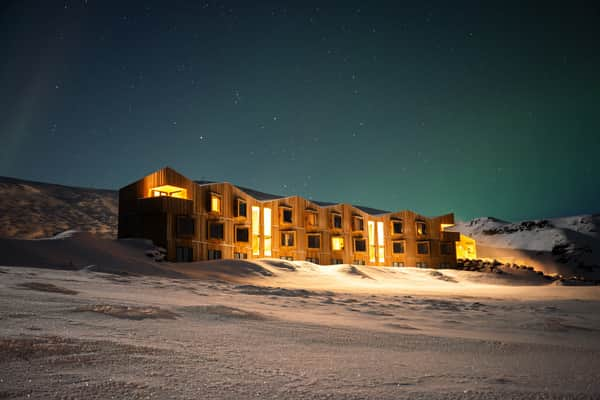
Opened in 2023, the luxury hotel offers a base for only one of two areas in the world where adventurers can explore an active geothermal landscape – the the other being Japanese resorts such as those in Hakuba Valley or Niseko.
At lower elevations, icy rivers converge with the steaming valleys and scalding streams of the Hveradalir geothermal area, forming pulsating fissures, boiling mud pools and hot springs.
Come the summer, it is a hiker’s paradise of trails ranging from one to 50 kilometres, allowing visitors to explore this extreme landscape whatever their level of experience and skill.
In summer, Highland Base Kerlingarfjöll offers guided hikes through Hveradalir and Hverabotn, geothermal valleys, and guided glacier hikes exploring ice formations and crevasses, as well as opportunities to scale the Snækollur summit, the highest peak in the Kerlingarfjöll mountains.
For those who prefer wheels, there’s also off-road buggy or e-bike touring.
But summer it most definitely is not. We step out of the jeep into 140km/h wind gusts and stagger inside the hotel to be welcomed with a roaring fire, cosy restaurant and a longed-for glass of red wine, excited by the snow rapidly banking up outside.
Unexplored for centuries, Kerlingarfjöll remained an untamed wilderness until the 1930s when pioneering naturalist and entrepreneur Guðmundur Einarsson started offering mountaineering classes at the site.
Over another glass of wine, the hotel’s shift manager Klaudia Ral explains that a ski school and accommodation opened on the current site in 1961. Thousands of Icelanders had their first adventures on the slopes here, having made a journey in eight to 10 hours on two buses.
For a long time, there was enough snow here to ski year-round, but at the turn of the millennium, faced with the reality of receding snow fields, the ski school ceased operations.
Now, the short summers instead reveal orange and red rhyolite mountains with vegetation and glacial streams.
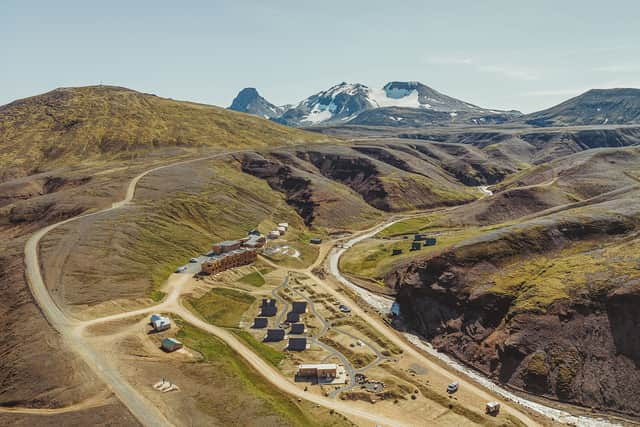
Rebuilt on the original site, Highland Base now lays claim to being the most isolated hotel of its standard in Europe.
With accommodation ranging from luxury suites with their own private geothermal hot tubs to a riverside campsite in summer, the hotel has been carefully designed to welcome every type of visitor.
Ral explains: “We are keeping it as close to how it was before. There’s no TV in the rooms. And we wanted to keep it accessible for locals; it’s still open to everyone 24 hours, like a shelter.
“We needed to keep the heart and the spirit of the place – it’s the least we can do.”
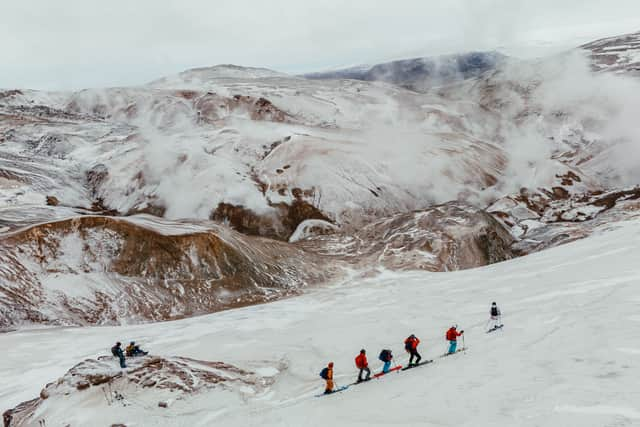
The next day, the wind having blown itself out and thick, untouched snow as far as the eye can see, we have a lesson in attaching fabric skins to the bottom of our skis in order to ascend the slopes before skiing down (known as skinning or ski touring). There are no chairlifts – making your way up the mountain is achieved entirely under your own steam. It’s more tiring, of course, but the still silence is breathtaking.
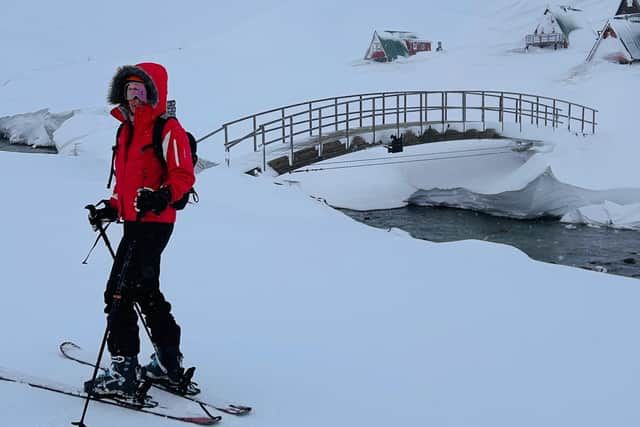
I look up and see an Arctic fox running across the crest of the hill, apparently lured in our direction by the smell of cooking coming from the hotel. It’s thrilling to be the only humans in this vast expanse of wilderness, and we glide quietly over the snow feeling re-connected with the natural world.
In true Icelandic (winter) fashion, our hours out in the mountains are brought to a natural end as another blizzard blows in. We make our way back to the hotel in time for afternoon waffles served with strawberry jam, whipped cream, syrup and hot cocoa.
Skinning has used a whole set of muscles we didn’t know we had, and the hotel’s hot pools are calling. Despite the howling snow storm outside, the staff don’t bat an eyelid at our plan to recover with a soak, shovelling new snow off the steps down to the hotel’s cascading series of baths and recommending we wear a hat and goggles.
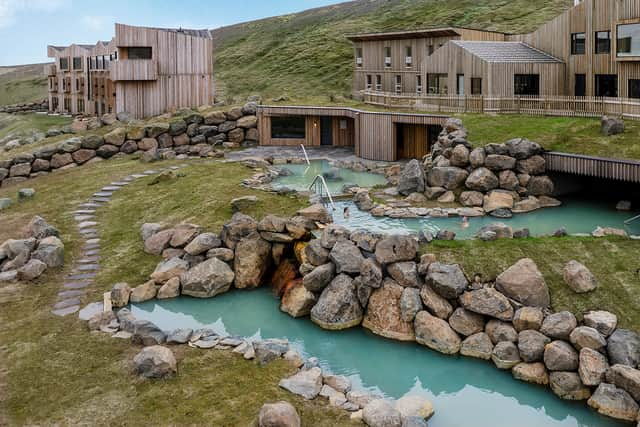
Dressed in bathing costumes and Arctic-level headwear, we brace ourselves before walking the few metres barefoot through stinging snow before sinking into the blissful 38-degree warmth of the mineral water, drawn from beneath the earth and brought to the surface in nearby Ásgarður valley.
The water, which renews itself around every two hours, is free from added chemicals like chlorine and has a low pH level comparable to that of freshwater.
Considered to be a panacea for the skin, the water also soothes our aching bodies. Our hats and goggles allow us to let the blizzard swirl around us, and it’s exhilarating to raise our shoulders up and into the wind-chilled minus 24C temperature before sinking back down again.
Later, on clear nights, the hotel’s specially designed limited outdoor lighting allows for spectacular stargazing, and catching sight of the Northern Lights in winter is not uncommon. While in summer, expect endless light, with the sun barely dipping below the horizon, and mild temperatures.
Highland Base feels like a rare and magical part of the planet, leaving me feeling both restored and energised.
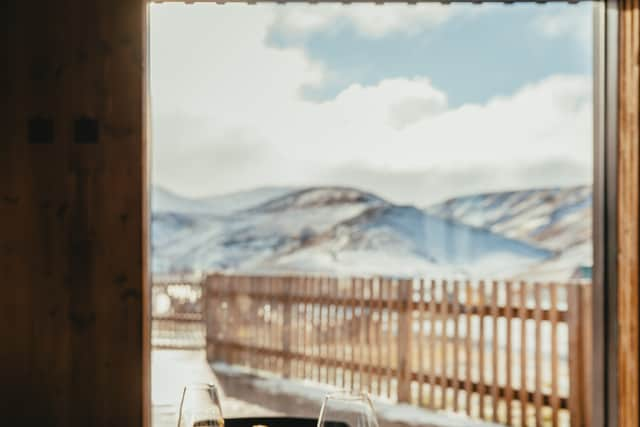
We end our day dining on local lamb and salted Icelandic cod, unable to draw our eyes away from Mother Nature at her most extreme just outside the restaurant’s huge picture windows.
How to book:
A Standard Family or Twin Room in the Highland Base at Kerlingarfjöll starts from around £326 per night, with lodges starting at £713 and huts for two at £145. Highland Base no longer operates individual winter trips – from 2027, the hotel’s general opening season will run from 1 June to 31 October. It remains available to hire for events and full buyouts over winter.