
Gucci brings back chunky belts and pencil skirts as Nicki Minaj and Romeo Beckham sit front row
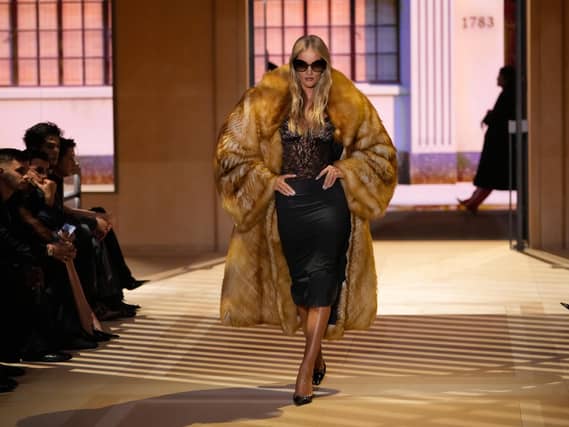

A 2010s business-casual revival was made at Gucci’s Milan Fashion Week show to a star-studded front row.
Chunky belts, pencil skirts and enormous fur coats returned to the runway at Gucci’s Milan Fashion Week show, as Nicki Minaj, Romeo Beckham and more watched the Italian fashion house revive the ostentatious glamour of the 1980s.
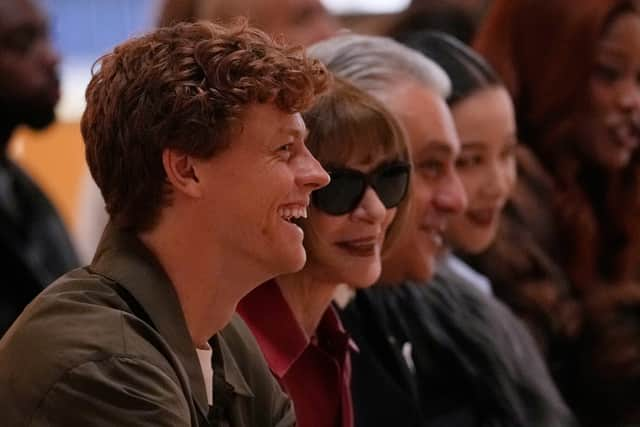
Minaj arrived in a capacious white fur coat, joining model Romeo Beckham, Canadian singer Shawn Mendes, a Gucci ambassador, and tennis stars Jannik Sinner and Aryna Sabalenka on the front row of the spring/summer 2027 show on Friday.
Sinner, who has become something of a fashion fixture since becoming a Gucci ambassador in 2022, was seated alongside Anna Wintour, the former editor-in-chief of American Vogue.
British model Rosie Huntington-Whiteley and former Victoria’s Secret Angel Candice Swanepoel were among those taking to the runway, which was transformed into a Gucci boutique for the occasion.
Models walked in from what appeared to be the street, passing jewellery cabinets, clothing rails and shoe racks, while some stopped to admire themselves in full-length mirrors or adjust their sunglasses.
It was an appropriate setting for a collection entitled The Store Show, which creative director Demna described as the first to present his complete personal vision for the Italian fashion house.
The Georgian designer, who took over Gucci after a decade at Balenciaga, made his runway debut for the brand in February with a star-studded show featuring Kate Moss and Emily Ratajkowski.
This season, however, the designer appeared less interested in the overtly sexy, body-conscious dressing that dominated his debut, instead exploring the different personalities who might walk through the doors of a Gucci store.
And if there was one thing Demna seemed determined to revive, it was the ostentatious glamour of Gucci’s past.
There was something distinctly Eighties about the broad-shouldered jackets, enormous sunglasses, nipped-in waists and oversized fur coast – a wardrobe that would not have looked entirely out of place in the 2021 film House Of Gucci, starring Lady Gaga and Adam Driver.
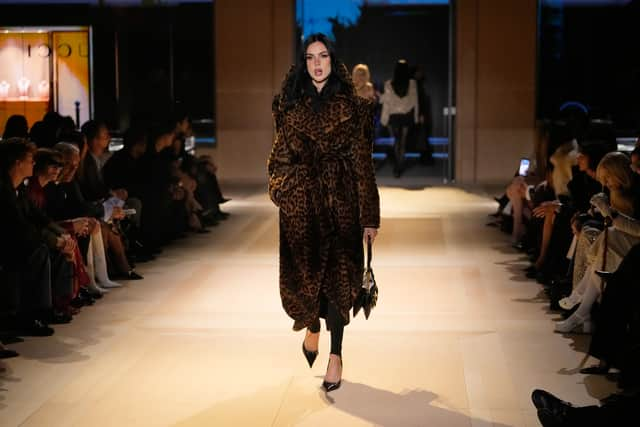
But Demna was not simply recreating the wardrobes of wealthy Italian socialites.
The collection appeared to explore what happens when the carefully maintained appearance of wealth begins to unravel, taking the runway from country club to nightclub.
The opening looks were almost entirely black, with sharply tailored double-breasted jackets, popped collars and Gucci’s signature loafers.
Male models walked in white suits, wax jackets, rugby shirts and quarter-zips, while the womenswear touched on the house’s equestrian heritag,, walking out in white jodhpurs, knee-high riding boots and structured jackets referencing the horsebit hardware that has become synonymous with Gucci’s accessories. It seemed to poke fun at the kind of old-money dressing that has become increasingly popular on social media.
It was as though Ralph Lauren had spent a night at Berghain. The familiar signs of Demna’s aesthetic soon began to emerge, however, with glossy leather bomber jackets, oversized coats and baggy trousers disrupting the preppy looks.
Denim shirts and deliberately dishevelled layering undermined the more conservative styling, while chunky belts – either one large one or three layered together – brought Gucci’s famous interlocking GG logo back into focus.
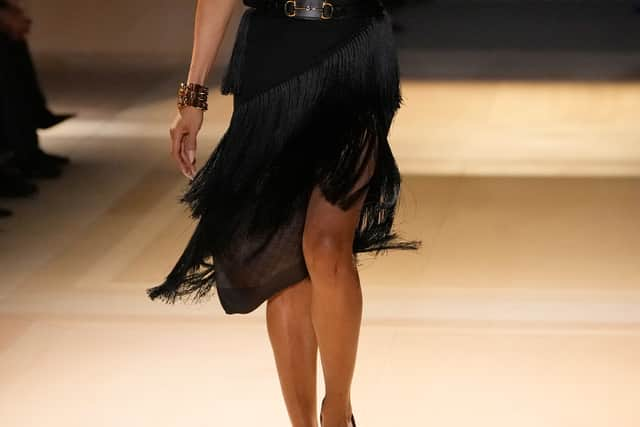
The womenswear, in particular, brought the collection’s Eighties influences to the fore.
There were sharply cut coats, pencil skirts and cigarette trousers, with models carrying structured top-handled handbags at their sides.
Double-breasted wool coats and trench coats had something of Princess Diana’s style about them, while pussy-bow blouses, tweed two-pieces and structured handbags brought a distinctly old-school sensibility to the runway.
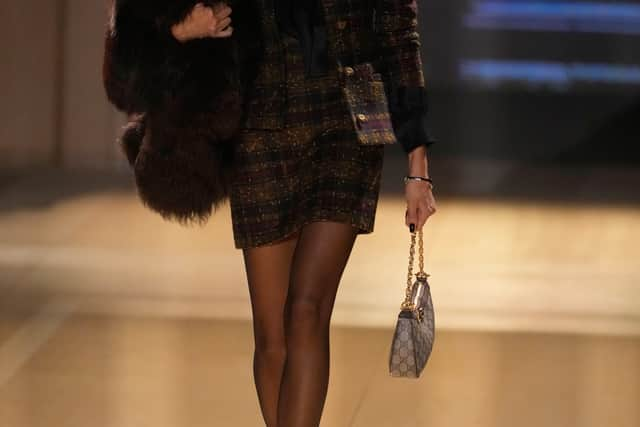
The exaggerated shoulders and tightly belted waists recalled the power dressing of the Eighties, when the corporate wardrobe was very much about projecting wealth and authority.
Older female models appeared throughout, wearing everything from tailored shirt dresses to sharply constructed coats, reinforcing the idea of a wardrobe built around different generations of Gucci customers.
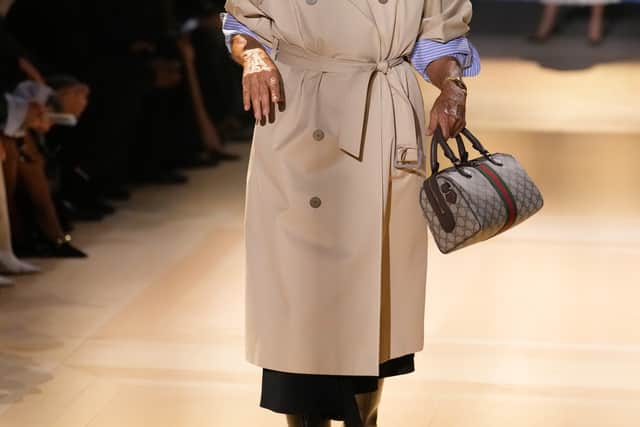
The silhouettes reinforced a trend that has been gathering momentum throughout fashion month: the return of business casual.
At Prada’s spring/summer 2027 show earlier in the week, knee-length skirts, low-slung tailoring and exposed bras challenged conventional ideas of smart dressing.
Gucci offered its own interpretation, with cigarette trousers, pencil skirts and sharply nipped-in blazers suggesting the corporate wardrobe is undergoing another reinvention.
But then came the Demna we are more familiar with: tartan, leather bomber jackets recalling the punk-influenced dressing of the Eighties, leather skirts, tightly belted jackets and glossy minidresses – all of which began to dismantle the more conservative wardrobe.
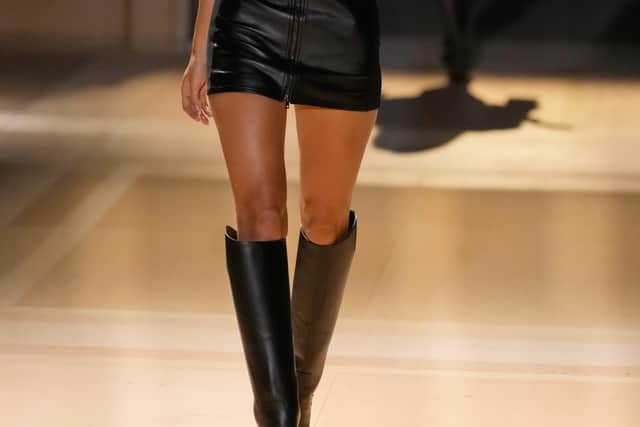
Demna, like his autumn/winter collection last season, was clearly influenced by Tom Ford, who was at the helm of Gucci in the Nineties – making the label synonymous with sex appeal, slinky dresses and glamorous eveningwear.
And as this show progressed, that more provocative side of the house began to emerge.
Tight leather minidresses, sheer fabrics and thigh-skimming hemlines replaced the conservative silhouettes, with oversized coats of an almost comical extravagance.
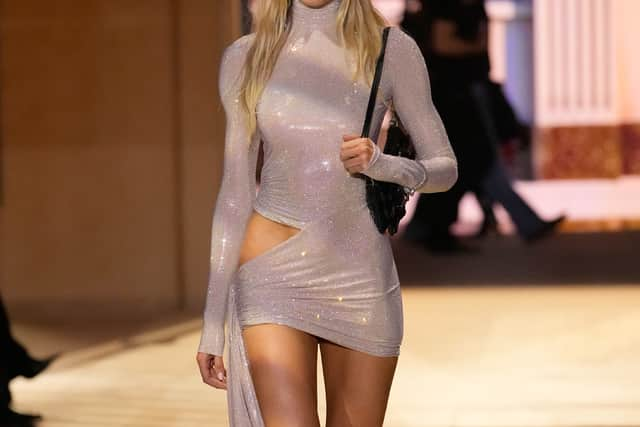
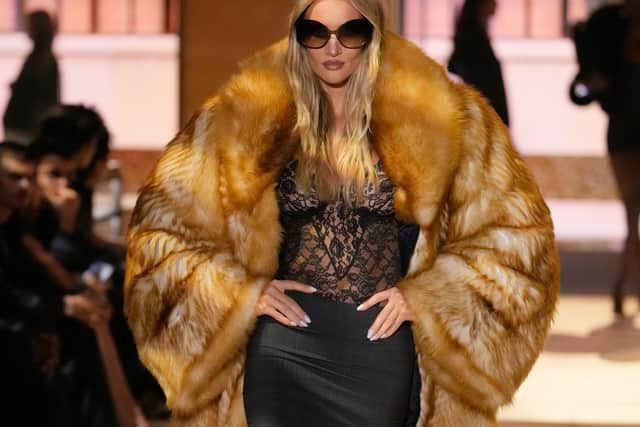
Huntington-Whiteley emerged in a particularly enormous fur-style coat with a black lace body and pencil skirt underneath, while Swanepoel appeared in a shimmering silver sequinned minidress.
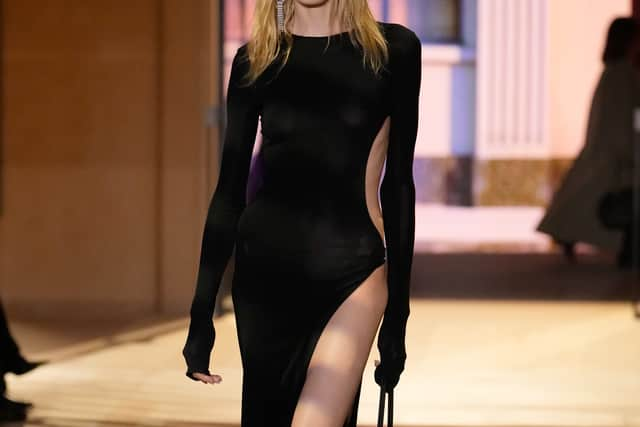
American model Alex Consani took the collection’s more irreverent styling a step further, walking in a cut-out black bodycon dress while chewing gum.
Writing on Instagram ahead of the show, Demna said the brand was rooted in the desire to belong to a more glamorous world, and in the freedom to remake that world in one’s own image.
“Gucci is about luxury that wants to be seen,” he wrote.
“It is about the tension between propriety and sensuality.”
He added that the house’s history moved between “aristocracy and pop culture”, as well as “belonging and rebellion”.
It was a sentiment reflected in a collection that seemed to have little patience for fashion’s recent obsession with quiet luxury.
Demna emerged for his bow wearing a black T-shirt and baggy jeans, his hands tucked into his pockets before blowing kisses to the audience.
For a designer whose first Gucci runway show was dominated by the brand’s overtly sexy past, this season offered a broader picture of who the Gucci customer might be.
The preppy rugby shirts, riding boots and double-breasted coats might have belonged to the country club, but the leather minidresses, sequins and smudged eye make-up suggested their owners had considerably more interesting plans for the evening.
Gucci’s old-money woman was still very much present – she had just decided to go clubbing.