
How to make more money selling your clothes second-hand, according to a top reseller


From the brands worth digging out to the mistakes costing you money, a professional reseller shares her tricks of the trade.
Selling your unwanted clothes online should be – or at least used to be – relatively straightforward. Take a few pictures, upload them to Vinted or eBay, name your price and wait for someone to buy them.
Except, as anyone who has tried to sell a £150 dress for £30 will know, it’s rarely that simple.
Between the low offers, endless favourites that never materialise into sales and clothes that sit gathering dust for months, making money from your wardrobe can sometimes feel like more trouble than it’s worth.
But according to professional reseller Michelle O’Beirne, owner and founder of Fox Black, there is an art to getting the best possible price for your second-hand clothes.
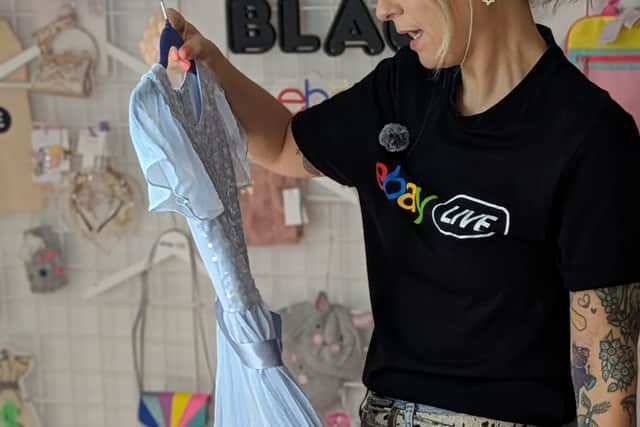
O’Beirne started selling fashion on eBay during the Covid-19 pandemic while juggling a corporate job and looking after her young daughter. Since then, she’s generated over £350,000 in revenue, meaning O’Beirne and her husband have quit their job to resell on a full-time basis.
“This year we are on target to hit £200,000 in turnover for the year,” she says.
And while most of us aren’t looking to make a career out of clearing our wardrobes, a few small changes to how we list our clothes could make a considerable difference to what we earn.
Don’t assume designer labels are worth the most
You might expect luxury labels to fetch the highest prices on resale platforms, but O’Beirne says some of the most profitable pieces usually come from high-street brands.
“Marks and Spencer is actually one of the most-searched brands on eBay,” she tells the Press Association, recalling a statistic she learnt around a year ago.
The retailer’s reputation for quality, combined with the familiarity of its sizing and styles, makes it really appealing to second-hand shoppers.
O’Beirne says there’s also a market for people trying to replace old favourites that are no longer available in shops.

“Maybe people did buy something five years ago and they love it, and then they wear it to death,” she explains. “They know that eBay [might have it] so they go on to try and search for the exact same thing to rebuy it.”
Trends also make previously overlooked items suddenly desirable again.
O’Beirne gives the example of a bohemian-style M&S midi skirt, which might cost £2 in a charity shop but could potentially resell for £25 to £30 if the style is currently on trend.
So before dismissing something because it’s five years old, consider whether its silhouette, fabric or print has come back into fashion.
Research what people are actually paying
One of the biggest mistakes sellers make is pricing their clothes according to what they originally paid for them.
A dress that cost £100 five years ago isn’t necessarily worth £80 today, even if you’ve only worn it once.
Equally, something you bought cheaply could now be worth considerably more than you think.
O’Beirne says sellers tend to fall into two camps: those who massively overprice their clothes and those who unknowingly sell desirable pieces for a fraction of their value.
Her advice is to research comparable sales before deciding on a price.
On eBay, this means searching for your item and selecting the ‘sold items’ filter, which allows you to see what similar pieces have actually sold for, rather than what other sellers are hoping to get.
Resellers call this checking ‘comps’, short for comparables.

For example, a black satin M&S midi skirt might have sold for £45 with its original tags attached, while another went for just £2 at auction. Looking at several sales gives you a more realistic idea of its value.
And whatever you do, don’t blindly accept the price suggested by the selling platform.
“Never go with that price,” O’Beirne says. “I personally would never ever go with that price.
“We all know that’s AI based, right? So it could be factoring in loads of different things such as items that are faulty and being sold for much less or auctions – it’s kind of just pulling in an average of everything.”
Instead, she says to take a few minutes doing your your own research. It could be the difference between selling something for £5 and £30.
Your pictures can matter more than your item
If there’s one thing that can make an otherwise great item look decidedly bad, it’s poor photography.
O’Beirne says there’s no need to invest in professional lighting, a mannequin or an elaborate backdrop, she emphasises that it’s getting the basics right.
“Literally, you just need a plain background. It could be the back of a white door. It could just be a white wall,” she says.
Natural daylight is usually enough, and clothes can be photographed on a hanger or laid flat on a clean floor.
There are, however, three things she recommends keeping out of the frame.
“No feet, no animals, and no beds. Those are my three things.”

As she points out, nobody particularly wants to see someone else’s feet in a listing, or imagine the pet hair that might come with their purchase.
And she says clothes photographed crumpled on a bed can suggest the seller hasn’t made much effort.
For pieces that don’t hang particularly well, such as asymmetric tops or one-shoulder dresses, an inexpensive hanging mannequin bust can help show their shape, if you want to go beyond a floor lay out.
Photographs of clothes being worn can also be useful, particularly if you already have pictures from an event that demonstrate how something fits.
But O’Beirne doesn’t think it’s necessary to model every item yourself, especially when it can make the selling process considerably more time-consuming.
Think like a buyer when writing your title
You might describe something as a ‘black dress’, but that’s unlikely to help it stand out among thousands of other black dresses.
O’Beirne says one of the most overlooked parts of a listing is the title, particularly on search-led platforms such as eBay or Vinted.
Rather than simply naming the item, think about the different ways someone might search for it.
Include the brand, size, length, style and relevant descriptive words.
“On eBay, for example, in your title you get 80 characters and I always just say just fill it,” says O’Beirne.

“Even if you feel like you’re writing words just for the sake of writing words, there will be someone out there who actually doesn’t care about the brand and they just want a ‘party maxi dress’ and they’ll probably search ‘party maxi dress’.”
Descriptions should provide useful information, but there’s no need to turn every listing into an essay.
While O’Beirne includes measurements in her own listings, she doesn’t consider them essential for casual sellers who simply want to clear some space.
The important thing is to make the process manageable enough that you actually get around to listing everything.
Leave room for negotiation – but know when to stand firm
Anyone who regularly sells on Vinted will be familiar with the buyer who offers £5 for something listed at £30.
But O’Beirne says negotiation is simply part of second-hand selling, and it’s worth accounting for it when setting your initial price.
“Everyone loves to think they’re getting a bargain,” she says.
In her experience, an offer around 10 to 20% below the asking price is generally reasonable.
That doesn’t mean accepting every offer that comes your way, however, and the amount of interest a listing attracts can be a useful indication of whether you’ve priced it correctly.
“If you list something and literally within five minutes you’ve had like 20 likes on it, then maybe just check your price,” she says.
A sudden flurry of favourites, messages or watchers could mean your item is particularly desirable – or that you’ve listed it too cheaply.
In those circumstances, she recommends holding firm rather than upping your price or immediately agreeing to a discount.
On the other hand, if something has been sitting unsold for several days, sending an offer to interested buyers could help turn those favourites into an actual sale.
Choose the right platform for your clothes
While Vinted and eBay might appear to do much the same thing, O’Beirne believes shoppers use them quite differently.
“Vinted is very visual. Whereas eBay, I think, is more searchable,” she says.
On Vinted, shoppers often scroll through suggested items, saving things they like and discovering clothes they weren’t necessarily looking for.
This makes attractive pictures particularly important.

eBay, meanwhile, can be better suited to buyers searching for something specific, whether that’s a particular brand, an older collection or an exact replacement for a much-loved item.
“If I have something really, really specific that I want, I will go to eBay and try and specifically search for the piece,” she says.
O’Beirne primarily uses eBay and Vinted for conventional listings, alongside TikTok auctions as part of her wider reselling business.
For occasional sellers, the lesson is to consider how somebody is most likely to discover the piece you’re trying to sell, rather than assuming every platform works in exactly the same way.
Timing can make a difference
It turns out that when you list your clothes might be almost as important as how you list them.
O’Beirne generally prepares her listings in advance, saving them as drafts before publishing them when she believes shoppers are most likely to be online.
Her preferred time is the evening. “People have done the school run, they’ve had their dinner, and now they’re just sat in front of the telly, chilling, scrolling on their phone,” she says.
At weekends, she tends to stagger listings throughout the day.
Her reasoning is that newly listed items benefit from greater visibility as opposed to older items, although the precise workings of reselling platform algorithms aren’t publicly known.
But if scheduling uploads is too much, the best way to increase your visibility according to O’Beirne is consistency whenever works for you. “The main thing I always say to anyone when they ask me for any tips about reselling is consistency.”
That means listing regularly, responding to messages and keeping your account active rather than uploading 20 items in one afternoon and forgetting about them for six months.
After all, buyers may be reluctant to purchase from someone whose profile suggests they haven’t logged in for months.
Don’t keep reducing your prices
When something hasn’t sold after a week, it’s tempting to start knocking pounds off the asking price.
But O’Beirne suggests being a little more patient, particularly with pieces that might appeal to a very specific buyer.
She still has stock from last year because, as she puts it, “it just takes that one person who really, really wants it”.
For older listings, she will end and relist items after around 90 days, which she believes helps revive their visibility.
Otherwise, O’Beirne occasionally reduces prices on items she has multiple examples of, sometimes knocking off £5 every couple of months to see whether that generates interest.
Of course, most people don’t have the luxury of storing thousands of garments while waiting for the perfect buyer, she notes, but the principle is worth remembering: a lack of immediate interest doesn’t necessarily mean something is worthless.