
‘I was saved from homelessness as I battled mental illness – I want others to know that help is out there’
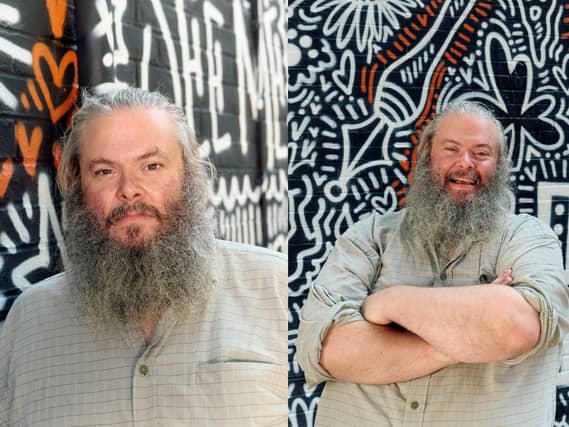

After PM Andy Burnham pledged to end rough sleeping, a man who was homeless while suffering borderline personality disorder tells his story.
A man who returned to the UK to seek NHS mental health support after living in America for more than a decade found himself experiencing homelessness after ending up with “nowhere to go”, couch-surfing with friends and sleeping rough before receiving life-saving support from homelessness charity St Mungo’s.
Lee, 54, who did not wish to share his surname, is now living in private rented accommodation in Lewisham, south-east London.
However, when he returned to London in March this year to seek mental health treatment for his borderline personality disorder (BPD) and support for his autism, he was forced into homelessness and lived in a hostel for more than a month after couch-surfing with friends.
With support from homelessness charity St Mungo’s, Lee was able to find his feet and get a stable roof over his head, and is determined to show other people experiencing homelessness that there is a light at the end of the tunnel.
“Every person who’s homeless has got some kind of trauma, otherwise they wouldn’t be there,” Lee told PA Real Life.
“I don’t know someone else’s situation. I don’t know what they’ve been through. But I do know potentially where they could get to with a little bit of help.
“I want other homeless people to think about how their experiences may not have been great the first time around, getting help, but it can work and give it another go.”
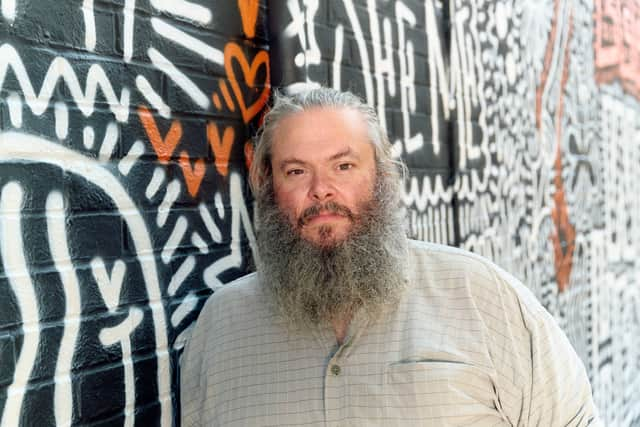
In 2014, Lee moved to the US and made it his home for the next 11 years, but following life-long battles with BPD – a mood disorder that can have symptoms including emotional instability, cognitive distortions, and impulsive behaviour – as well as autism, he decided to seek mental healthcare in his home country because of the prohibitive cost of treatment in the US.
Flying on a ticket paid for by a friend, Lee arrived in London in March, hoping he would be able to access in-patient treatment. Instead, he found himself with “nowhere to go”.
Initially, Lee couch-surfed with friends, but he said “you can only do that for so long”. After resorting to sleeping rough, Lee was able to get a referral to Streetlink, a service which connects people experiencing homelessness to support, which arranged for a St Mungo’s outreach worker to contact him.
Lee explained that to use a Streetlink referral, you have to remain in the same location for up to three days so that outreach teams know where to find you but “you have to be very careful how you do that because that can really make you vulnerable to theft and attack”.
Lee waited at an A&E department to stay safe and warm, and he said he was “incredibly lucky” that after four hours a St Mungo’s outreach worker arrived and arranged for him to stay in a shelter in London Bridge.
“It was basically a mattress on a floor, sharing a room with 12 other guys, and I was there for about four weeks,” Lee explained.
“It was emotionally very tough, because you don’t know these other people. You don’t know that you can trust them. Can you trust them to not steal your stuff, not attack you when you’re asleep? You’ve got to be aware of that,” he added.
“That didn’t really go away until I moved on from the hostel. Even though the reality is there was no actual threat of any of that stuff, because everybody’s in the same boat.”
While his basic needs were taken care of, Lee found the long days with nothing to do difficult to endure.
“I knew if I wanted to have a future, I had to get involved in the process,” he said.
“So I went and looked for places to go that were low cost or free to have things to do during the day.”
Lee stumbled upon a church that did outdoor services in the garden where he now volunteers helping to care for the garden. He found theatres that offered low-cost tickets for people with financial struggles, and kitchens where he could get a meal and socialise “for the human connection … because that’s what I really lost”.
“You really do feel invisible, and that’s horrible, and it’s incredibly hard to break out of,” he said.
After four weeks in the hostel, Lee was moved into single-person accommodation for another three weeks, after which time he was offered private rented accommodation in Lewisham.
“I’m currently living in a house of multiple occupancy, and those places tend to not get very good press, but my place is lovely,” he said.
Lee was also able to access the mental health support he needed, and has been prescribed medication to help with his symptoms.
While he still awaits more comprehensive mental health support, Lee has begun volunteering with St Mungo’s to give back for all the help they gave him when he had nowhere else to turn.
“I’ve been so lucky, and I’ve had so much help, and I desperately want other people to have that experience,” Lee said.
“I like talking to people, and I just want to drop that spark into the back of someone’s mind that maybe there is a bit more to my life than this.”
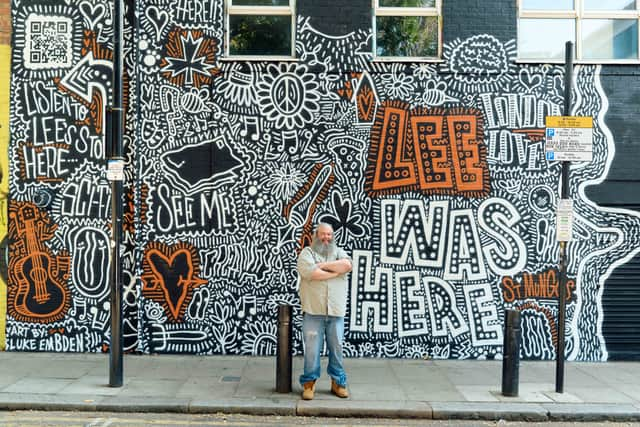
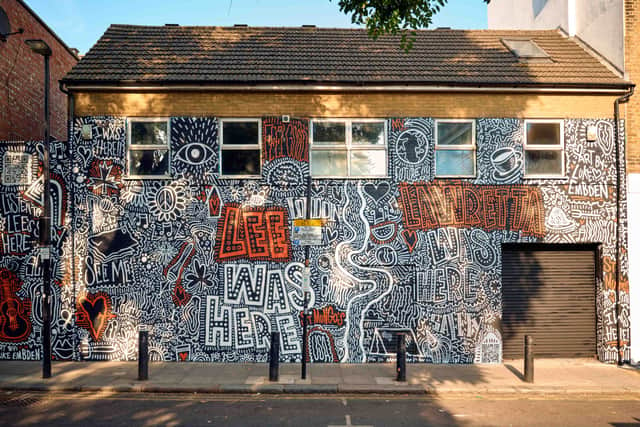
After Prime Minister Andy Burnham used his first speech in office to launch a national drive to end rough sleeping, St Mungo’s has on Tuesday launched its street art campaign ‘I Was Here’, created by artist Luke Embden, which shows real-life stories of recovery on the front line of the homelessness crisis at locations in London, Bristol and Reading.
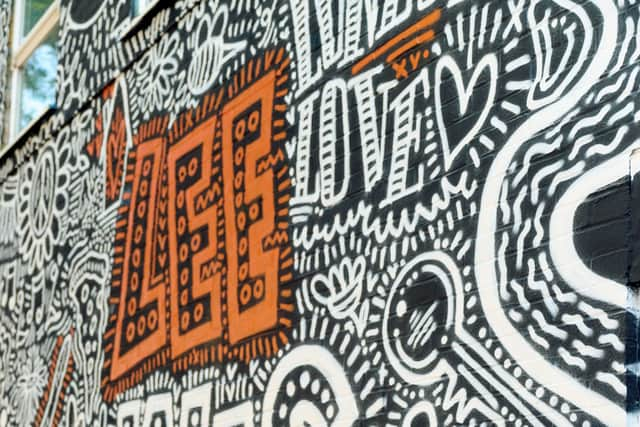
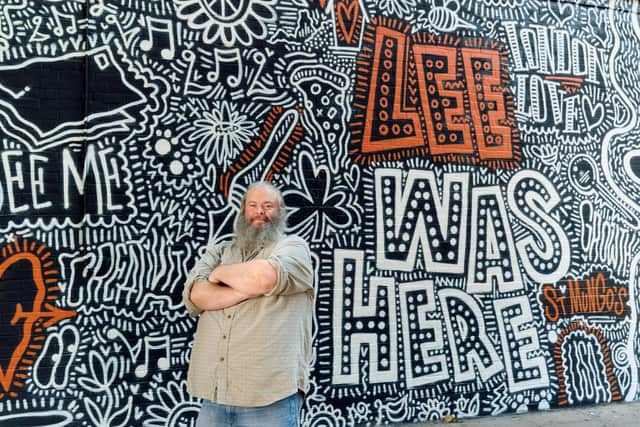
Lee’s story has been featured in a huge mural at 220 Bethnal Green Road in east London.
“On this wall are all these different little things that I like to do, and things that are important to me,” Lee explained.
“I play the ukulele as a means to help focus myself when I’m in the midst of a depression – that’s on the mural somewhere. The fact that I like cooking is on there. The fact that I had four cats in America is on there. The fact that I like science fiction is on there.
“The mural is amazing.”
Drawing from his experiences volunteering with St Mungo’s, Lee said he would eventually like to go into care and support work.
For now, he is focusing on building his home in Lewisham, helping other people who experience homelessness, and raising awareness of the lived realities of life on the streets.
Last autumn, it is estimated that 4,793 people were sleeping rough in England on a single night, a rise of 171% since records began in 2010, according to St Mungo’s.
However, 77% of the people the charity helped off the streets in 2025 were not seen to have returned to rough sleeping.
Lee said: “I think what was important was that St Mungo’s offered these opportunities. It was up to me to take them.”