
‘It’s like a ticking time bomb’: Parents say son, 2, could be using a wheelchair by 12 because of progressive condition
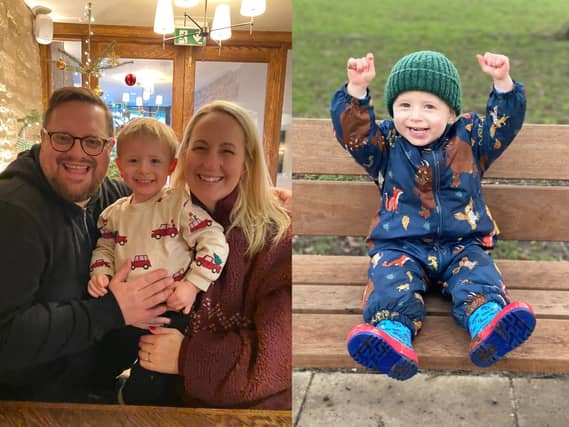

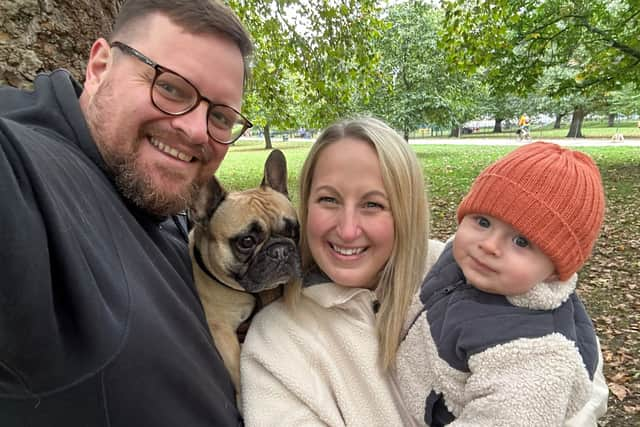
Amy and Steve Baker said their son Wilf did not take his first steps until he was 21 months old.
The parents of a two-year-old boy with a progressive condition that could leave him using a wheelchair by the age of 12 and which can cause serious heart, breathing and feeding problems say it feels like a “ticking time bomb”.
Amy and Steve Baker, both 41 and living in west London, said their “cheeky chappy” son Wilf was slightly delayed in sitting and crawling, and by 18 months had still not started walking.
They said they took him to their GP, followed by appointments with a paediatrician and physiotherapist, who reassured them there was “nothing to worry about”, and Wilf eventually took his first steps at 21 months.
In September 2025, Amy said she suffered a miscarriage and testing showed she was a carrier for Duchenne muscular dystrophy (DMD), a genetic condition that causes progressive muscle weakness.
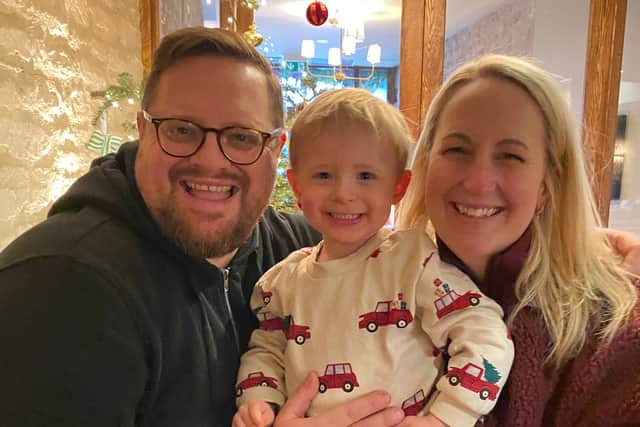
They said Wilf was tested and was diagnosed with DMD in February 2026, and doctors told them he could begin to lose mobility at the age of eight.
Most people with DMD will reach adulthood but they are more likely to die from heart or respiratory failure before or during their thirties, according to the NHS.
Amy, a branch merchandiser, and Steve, a commercial director, are fundraising for a £2.4 million gene therapy treatment in the US, which they hope could slow the progression of the condition.
Steve told PA Real Life: “You almost bury your head in the sand to carry on, and it’s a weird situation because currently Wilf’s progressing – he’s walking, running and doing well at nursery.

“But we know what’s going on in the background and what will eventually happen.
“I think we’re still trying to process that, I’m not sure if we ever will.
“It feels like the situation is a ticking time bomb.
“My mind is split between feeling hopeful and hopeless.”
Amy and Steve said they noticed Wilf was “slightly delayed” when it came to crawling and sitting up independently, and by 18 months, in May 2025, he had still not started walking.
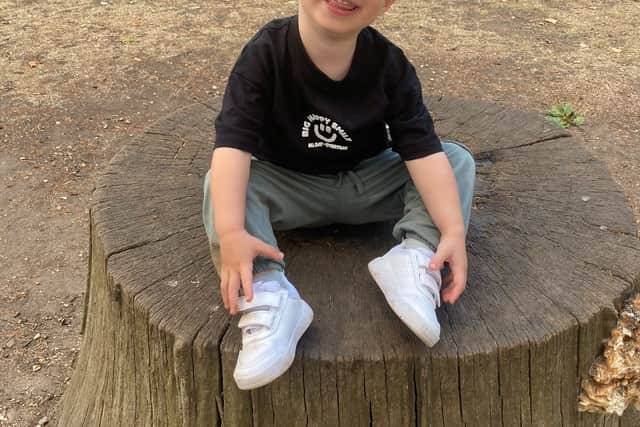
According to the NHS, the average age for children to start walking is 14 months.
Amy said: “Doctors tell you not to compare your children to other children…and part of us was putting it down to his personality – we were trying to work out if he didn’t want to walk or he couldn’t walk.”
Amy and Steve said they took him to the GP about this in June 2025, and he was referred to a paediatrician.
Wilf began walking at 21 months old, in August 2025, and when he saw the paediatrician at the end of the year, Amy and Steve said they were “reassured” that it “might just be a bit of a delay”.

Amy and Steve said he was referred to physiotherapy, where they were told there was “nothing to worry about” besides him having flat feet and flexible ankles.
In September 2025, Amy said she suffered a miscarriage at eight weeks, and testing of the pregnancy tissue showed it had the genetic variant linked to Duchenne muscular dystrophy (DMD).
Further testing in January showed Amy was a carrier for the condition.
DMD is a genetic condition which causes progressive muscle weakness, most commonly in boys, according to Great Ormond Street Hospital.
It is caused by a variant in the X-linked DMD gene, and this leads to a lack of a protein called dystrophin.
This causes muscle fibres to break down and be replaced by fibrous or fatty tissue in muscles across the whole body, leading to gradual deterioration of muscle strength.
Amy said: “When I was told I was a carrier, the difficulty was I never had heard of it, and once we researched it, it raised a lot of alarm bells for us because there were a lot of symptoms we thought Wilf had.”
Steve added: “You sort of hope for the best, but you’re starting to fear the worst.”

The NHS says symptoms for DMD can include difficulties walking, running, jumping, climbing stairs and getting up from the floor.
At their final paediatrician appointment in January 2026, Amy said she mentioned her results, and Wilf had a blood test to check his protein levels, followed by a full genetic blood test.
He tested positive for DMD in February, and Amy said it “felt like our world was falling apart”.
As far as they are aware, no other family members have the condition.
In the weeks that followed, Steve said they were “just going through the motions”, trying to “act normal” around Wilf while “falling apart behind the scenes”.
They had their first appointment at Great Ormond Street Hospital in March, which Steve said “brought it all home” and made it “feel real”.
They said the appointment included discussions about how his condition would eventually decline.
Amy explained: “They said he’ll continue progressing, but be behind his peers, until he gets to about age five or six, and that’s when we’ll start seeing the decline.
“They said at age four he’ll start taking corticosteroids to try to slow down the progression of the disease, and he could be in a wheelchair by age 12.”
He is being monitored every six months, but this will increase over time.
According to the NHS, people with DMD may also need a machine to help them breathe, and a gastrostomy tube to help with feeding.
They can develop bladder and bowel problems, muscle weakness, scoliosis and dilated cardiomyopathy – where the muscle walls of the heart become stretched and thin.
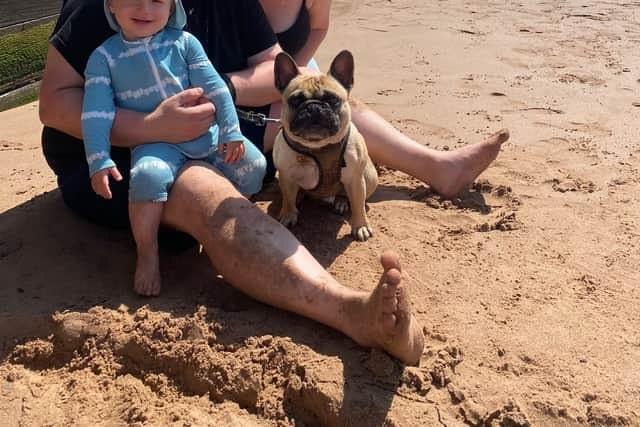
Day to day, Wilf is running around and “enjoying life”, and Steve and Amy are trying “not to fixate” on the future.
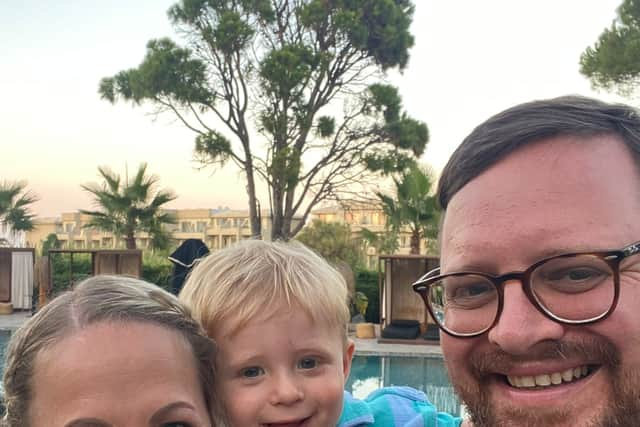
Steve said: “Our family and friends have been amazing, but being around other people is sometimes hard and isolating as Wilf’s diagnosis has profoundly changed us and our outlook on life.”
They have looked into private gene therapy options across the globe, including one in the US, which they say costs £2.4 million (3.2 million dollars), excluding hospital costs and travel.
They have set up a fundraiser, which has raised more than £18,800.
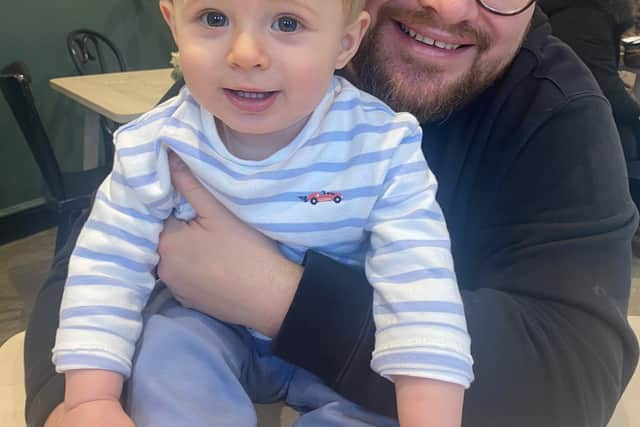
Amy said: “We just want to do everything we possibly can for him and I don’t want to look back, or more importantly him look back, and think we could have done more.”
“We’re desperate to do anything for our son, we couldn’t just sit here and do nothing,” Steve said.
Steve said that they would like to raise awareness about the condition itself, while recognising that the progress in research today would not be possible without the families before them who shared their stories and took part in trials.
They want to continue that momentum to help other families avoid going through what they have.
To donate to their fundraiser, visit: gofundme.com/f/wilfs-warriors-support-wilfs-battle-against-dmd.
To follow along with Wilf’s journey, visit: instagram.com/wilfs_warriors.