
‘I’ve had a debilitating autoimmune condition since I was a teenager – medical cannabis helps with the constant pain’
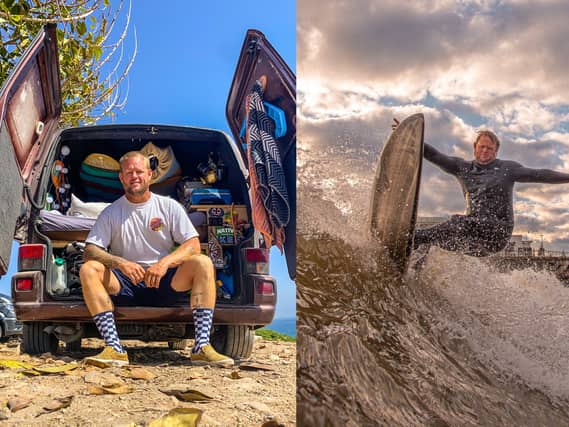

Richard Inskip lives with ankylosing spondylitis (AS), a long-term condition in which the spine and other areas of the body become inflamed.
A man from Bournemouth who was diagnosed with a debilitating autoimmune condition as a teenager that can have him “on the floor crying like a baby” says that, in retrospect, it has been a “blessing”, and that medical cannabis has helped him get back to normal life.
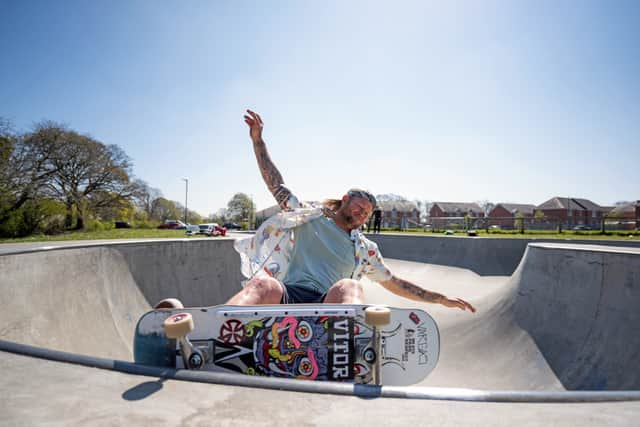
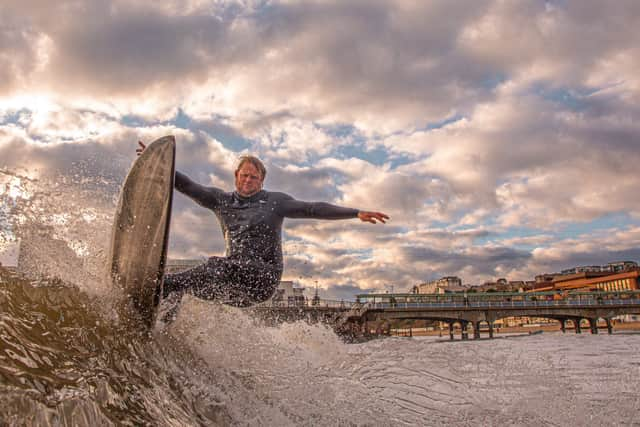
Now in his late 40s and still a keen surfer and skater, he hopes that sharing his active lifestyle will inspire young people living with the condition and show them that anything is possible.
Richard Inskip, 48, who is originally from South Shields, lives with ankylosing spondylitis (AS), a long-term condition in which the spine and other areas of the body become inflamed, according to the NHS website.
“I’m 48-years-old and the bad flare-ups can literally have me on the floor crying like a baby,” Richard told PA Real Life.
“I’ll go from touching my toes to hardly be able to touch my knees, and that can last from anything from three weeks to three months.
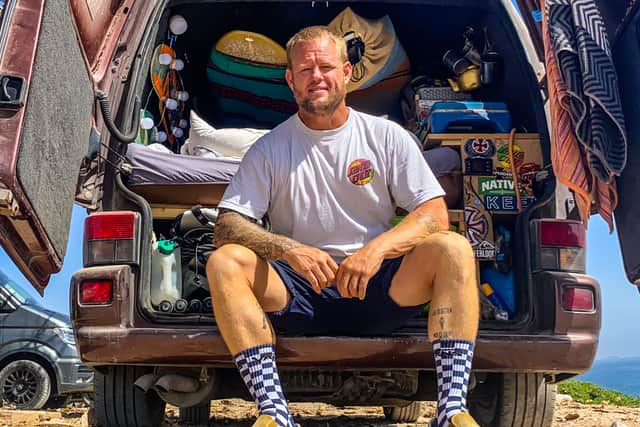
“In some ways it’s been a pain in the bum – well, more like a pain in the back – and it’s been a really horrible thing to live with. But, on the other side, it’s almost been a blessing because would I be so conscious about my own health and fitness if I didn’t have this (condition) as a constant reminder?
“It’s the reason I get up and train on days where I don’t want to train.”
However, Richard shared that he struggled to see these positives when he was first diagnosed with the condition at 15 years old.
“As a young lad it was put down to aches and growing pains. I played a lot of rugby at the time, and then it just got worse and worse and it got to the point where I lost a lot of mobility,” said Richard.
“It can affect your skin, causes eye problems, but the worst thing for me was I got a lot of pain in my knees and my lower back.”
The diagnosis meant Richard was unable to fulfil his dream of following in his dad’s footsteps by joining the Army.
“I had a scholarship lined up to go to college and follow in his footsteps but, unfortunately, as soon as I was diagnosed, I was unable to join the Army because I would have instantly failed the medical,” he said.
As well as the physical effects, it also had a mental toll.
“You’re going through enough as it is anyway at that age, and then having to deal with all this too was quite a shock. It hit my mental health quite badly at the time,” he said.
“Between the ages of 15 and 18 it was really bad. I lost all my confidence and wasn’t able to kind of do the things that I loved, like playing rugby.”
He was initially prescribed an array of medication and treatments – from anti-inflammatories and painkillers to acupuncture and physiotherapy – however, he said it was a doctor who encouraged him to stay active who had the biggest impact on his pain management journey.
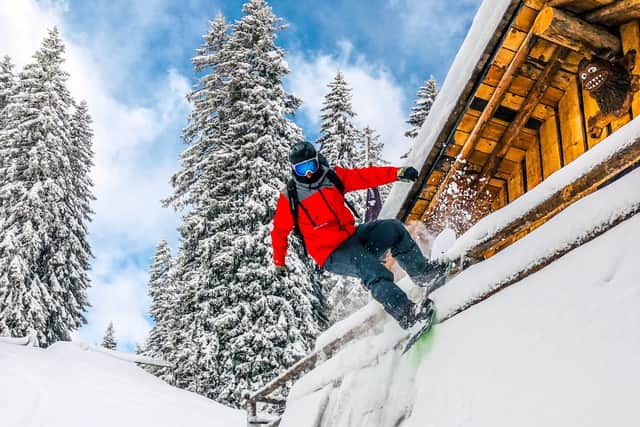
“He was a guardian angel for me. He told me to get in the gym and keep moving, which was against a lot of the recommendations at the time. That really saved me,” he said.
“I ended up going to university and studying sport exercise science and tried to learn as much as I could about the human anatomy and performance, which I have applied throughout my life to maintain an active lifestyle.”
He has always worked in the surfing and skateboarding industry in various marketing, event management and sports therapy roles, which has allowed him to travel the world.
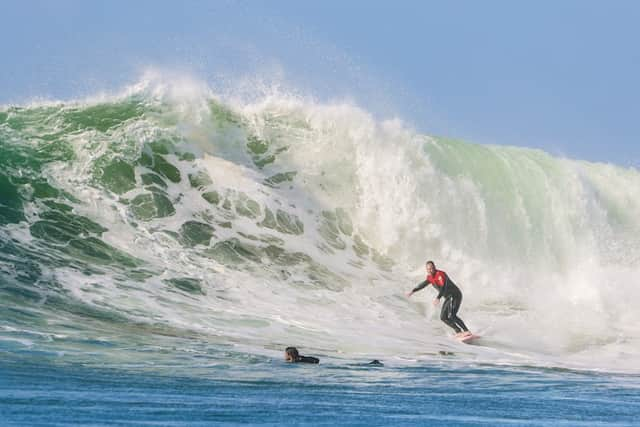
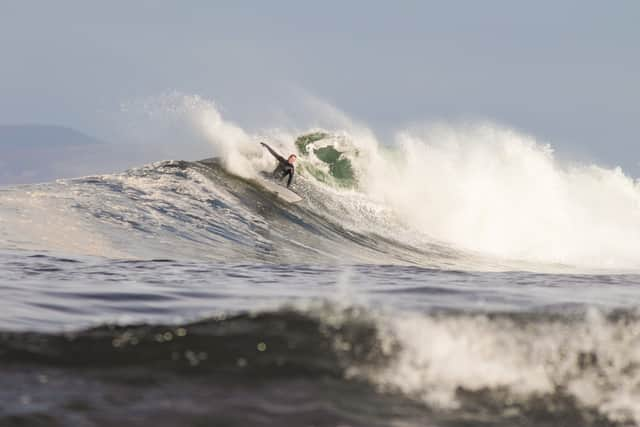
“I try to travel to as many places as I can to surf and skate in different sports around the world,” he said.
“I’ve travelled Europe extensively – including Portugal, France, Spain and Germany – and Africa, Asia, America, Central America, South America, El Salvador, and Indonesia.
“I know my time is limited to continue skating and surfing at quite a good level with this condition progressing, so I try to pack in as much as possible.”
However, during the pandemic he had a big knockback.
“I was almost in the stage of remission where it wasn’t progressing or getting any worse, but then I caught Covid in 2021,” recollected Richard.
“Unfortunately, Covid attacked the autoimmune disease, and it flared up to the worst flare I’d ever experienced in my life. It just made any old injury almost sensitive again.
“I’ve never experienced anything so intense. The pain was unbearable to the point that I would try to sleep and I would be in so much pain during my sleep that I’d actually be dreaming about being in pain, and then I’d wake up in the pain that I was dreaming about.
“That flare-up lasted six weeks. Since then it’s just slowly been worsening each year.”
As part of his own research, he became increasing interested in medical cannabis for pain relief and was prescribed it six months ago through Mamedica.
His flare-ups usually occur in the mornings or in the evenings but can also cause constant “10 out of 10 pain”.
He shared that the prescribed cannabis has helped him control this pain, which has improved his sleep and energy levels in the day as a result.
“It gives me an opportunity to get a better quality of sleep, so my body is naturally going through its recovery process a lot more efficiently,” said Richard.
“I use cannabis in its original form, in the flower bud. I have a combination of one that energises you and one that relaxes you.
“So, if I do choose to use the medication in the morning, I’ll use one that will help energise me and in the evening I will use the one that helps me sleep. I always use the same dose.
“I use a vaporiser, so there’s no combustion or smoke or anything like that. You put the medication in this oven, I heat it up to a certain temperature, which releases the THC (tetrahydrocannabinol), and then you consume it through there.”
He recognises that there’s still a lot of stigma around using medical cannabis.
“My dad still views it as an illegal drug but my mum’s a nurse and thinks it’s great,” he said.
Cannabis is a Class B drug in the UK, but while recreational use remains illegal, cannabis-based products for medicinal use can be legally prescribed by a specialist doctor.
“I think education is a really important element now, because you shouldn’t feel any anxiety or worry or concern if you are using medical cannabis as part of a strategy to manage pain or whatever it might be prescribed to somebody for,” Richard added.
“I’ve never looked at it as the answer, I just look at it as one of the ingredients for the solution. For example, good nutrition, exercise and lots of water are also really important.”
He hopes that sharing his story with others will help younger people living with AS realise that there’s no limit to what they can achieve.
“Getting an AS diagnosis can be quite traumatic for a young person, so I think having someone that’s approaching 50 that they can look up and be like, that guy’s still surfing and skating and is still active, is a good thing,” said Richard.
“I think it’s important that people know that there is a future for them, and that it can be managed.”