
Mum whose baby has rare ‘butterfly skin’ condition which causes blisters at the slightest touch cannot hold or bathe him
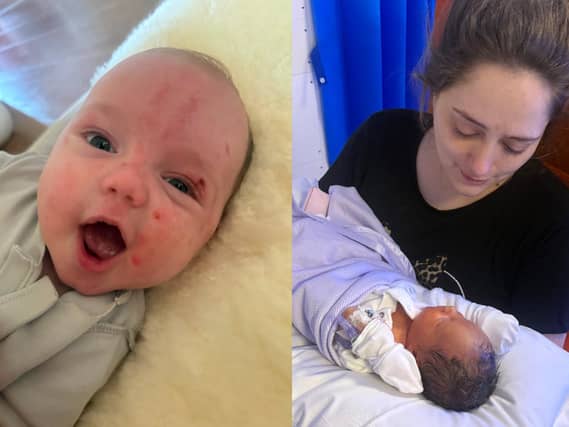

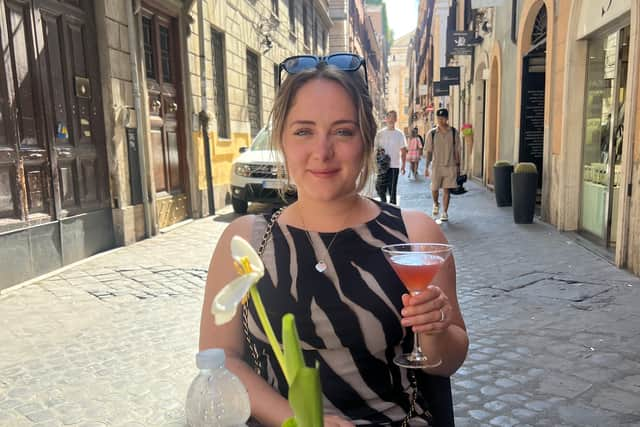
Ciara Burnside immediately noticed ‘big red patches’ on her baby Ralph’s body after he was born.
The mother of a boy with a rare genetic condition which makes his skin blister at the slightest touch has said she cannot hold or bathe him, and “rarely” leaves the house for fear of “causing damage”.
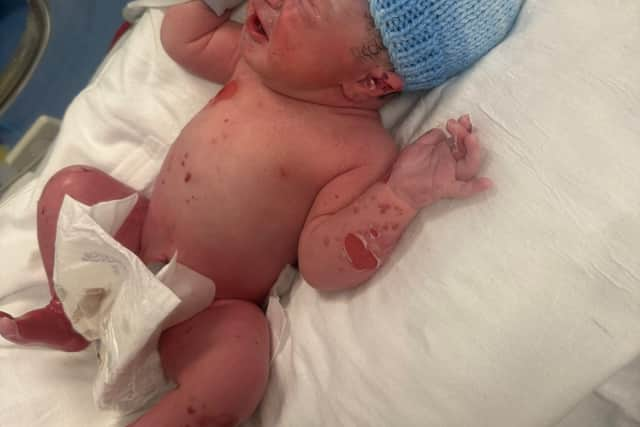
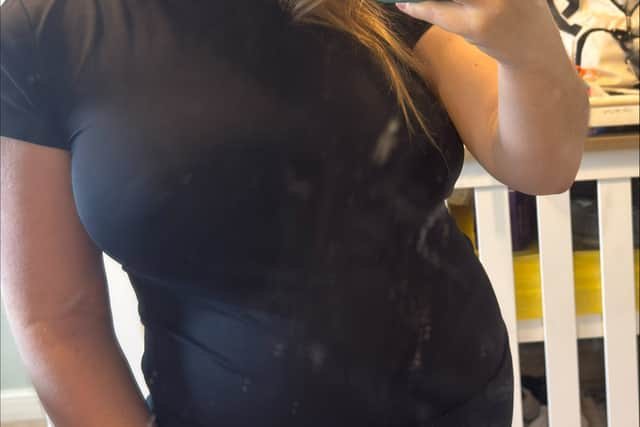
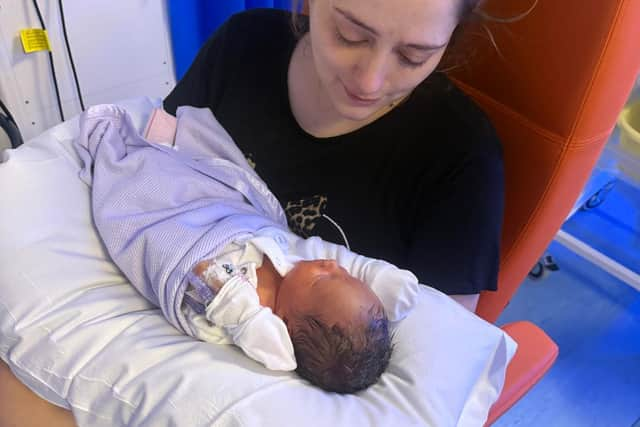
Ciara Burnside, 30, a technical manager who lives in Bedfordshire, said she noticed “big red patches” on her baby Ralph’s hands and feet when she first saw him after giving birth on March 25 2026.
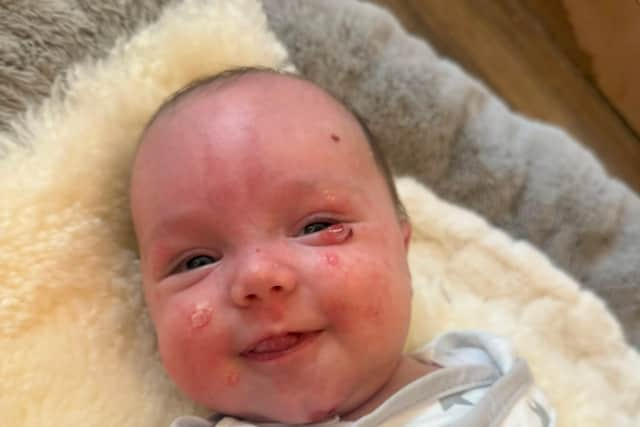
He was admitted to intensive care within minutes and his condition progressed to “blistering all over his body” after just a few hours.
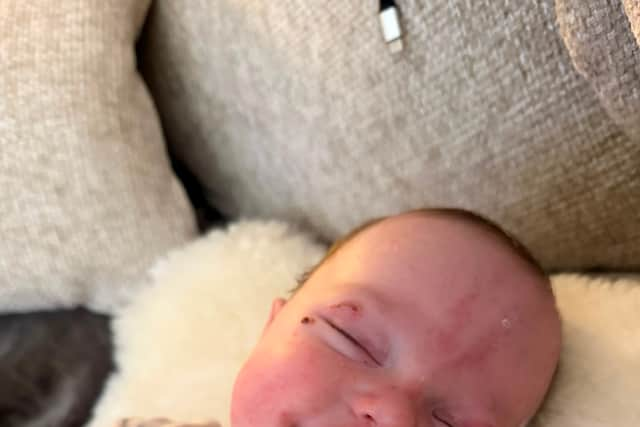
In May, she said Ralph was diagnosed with a rare subtype of epidermolysis bullosa (EB) – the name for a group of rare inherited skin disorders which cause the skin to become very fragile – known as intermediate junctional EB.
Ciara and her fiance Lewis Archer, 29, said they have to give Ralph, now five months old, acid reflux medication to prevent internal blistering in his oesophagus, as well as a daily dose of morphine, paracetamol every four to six hours and regular dressing changes.
Ciara told PA Real Life: “Doctors have told me that there is a chance (Ralph) will need a wheelchair because his feet will always be very fragile because they were so badly damaged from birth.
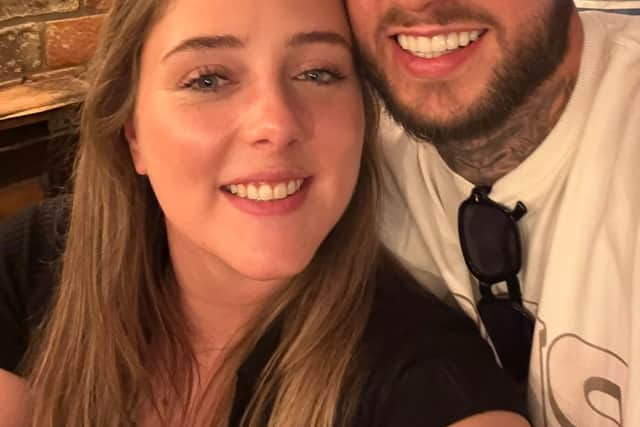
“He will likely make it to adulthood because his prognosis is not the most severe, but they’ve told me that there is a chance he will lose his hair and fingernails.
“They can’t tell me much else, other than we have to be proactive in stopping complications early.
“We just have to take each day as it comes.”
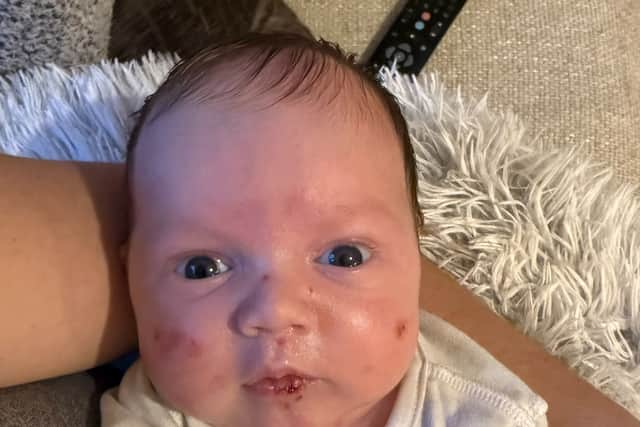
Ciara said she and Lewis felt “elated and terrified” to find out they were having a baby on August 13 2025, and her pregnancy was “very straightforward”.
Ciara gave birth to her baby boy, Ralph, on March 25 2026, but when she held him for the first time, she realised “something wasn’t quite right”.
She explained: “There were big red patches on his fingers and on his feet, and I remember saying to the midwife, ‘What’s wrong with him?’.”
She said Ralph was then taken into the neonatal intensive care unit, where he was placed in a heated incubator.
When Ciara was able to see her baby again later that day, she said he had blisters “all over his body.”
The next day, she said a consultant gave her and Lewis a leaflet about epidermolysis bullosa, and a specialist from Great Ormond Street Hospital visited a day later to explain what the diagnosis meant.
The specialist also told them Ralph needed genetic testing to determine what subtype of EB he had.
She said: “They said to us there is a specific type where he may not survive.
“After that, my partner and I just shut down… we were crying and were very, very upset.”
Ciara said she struggled mentally over the next few days, with midwives contacting emergency mental health teams.
Ralph was discharged from hospital after 16 days and they received the news of the genetic testing on May 21.
She said it confirmed both Ciara and Lewis are silent carriers of a mutation of the COL17A1 gene, which causes intermediate junctional epidermolysis bullosa (JEB).
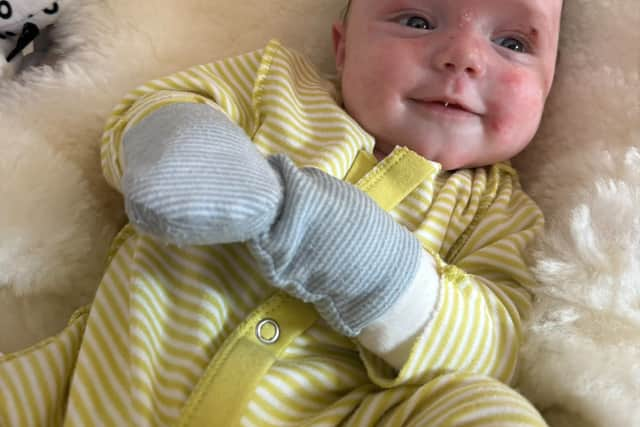
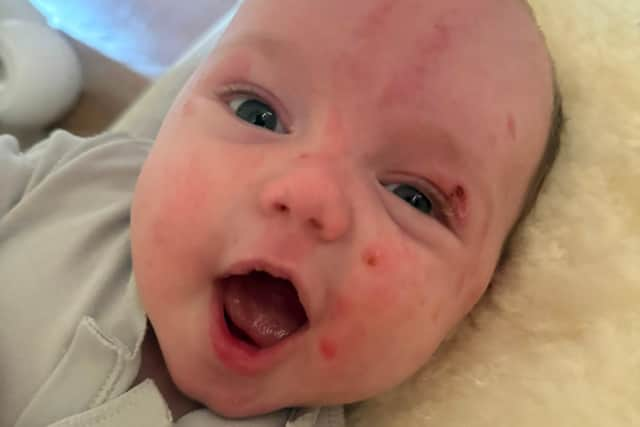
For Ralph, it presents with full body extreme skin fragility, and may progress to alopecia, malformed finger and toenails and irregular tooth enamel.
EB is known as butterfly skin because the condition makes a person’s skin as fragile as a butterfly’s wings, according to the charity DEBRA UK.
Ciara said an average day consists of her and Lewis changing their son’s nappy first thing, which is a “two-person job” because he can “kick around” – but she cannot hold him down or his skin will break.
They then give him his first dose of paracetamol and omeprazole to manage his acid reflux, as Ciara said Ralph is “just as fragile internally” as he is externally.
They will feed Ralph by giving him a bottle, but Ciara said they need to lubricate the teat with coconut oil to try to “stop the friction” in his mouth, which is not always successful.
Whenever there is damage in his mouth, she said they will use a mouthwash typically used for chemotherapy patients that aims to reduce pain.
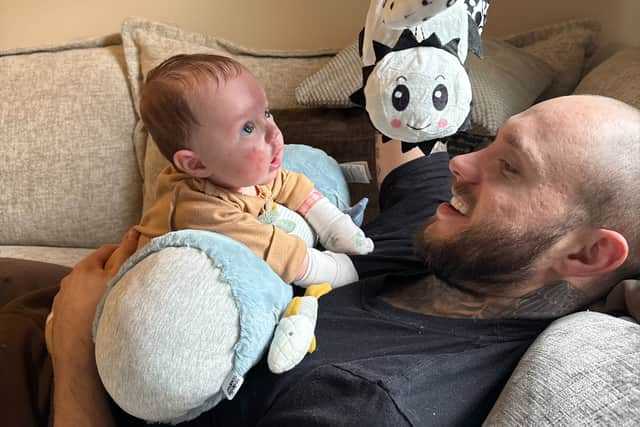
Ciara added: “We have also syringe-fed Ralph, so we sat there for over an hour, slowly dripping the milk into his mouth.”
The parents are “too scared” to bathe Ralph, so Ciara said they will sponge bathe him with a flannel or gauze to try to “carefully” clean his wounds and his body.
After a morning feed, Ralph will have a heavily supervised playtime, before he has a nap.
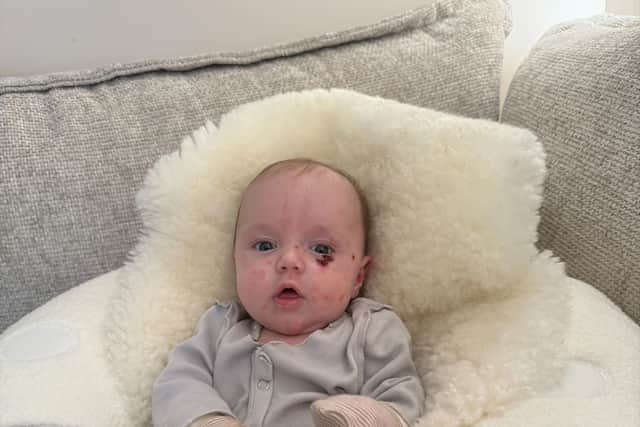
Ciara said: “Unlike most parents, we can’t really leave him unattended for more than a minute because, even with very soft mittens on, rubbing his face can cause significant damage incredibly quickly.
“We rarely leave the house due to the heat and fear of damage from the car seat.”
They change Ralph’s clothes twice a day and carry out a full-body check, as blisters can appear at any time, including underneath his nail beds, causing his nails to fall off.
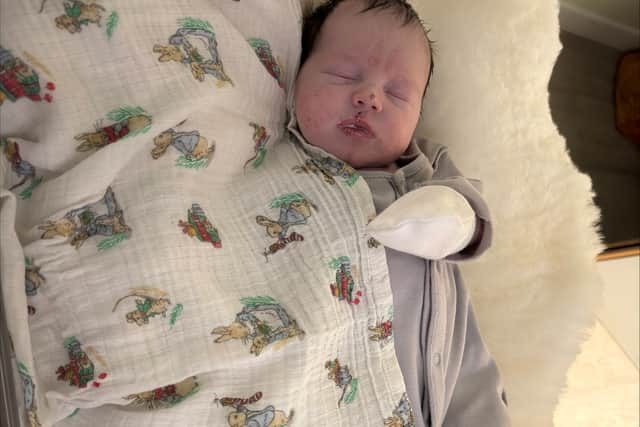
Ciara said: “If a blister comes up, it will just keep spreading and getting bigger, unless you pierce it and drain the fluid.”
Ciara said she has been in a “very bad space” mentally but she, Lewis and Ralph have received support from Great Ormond Street Hospital and the butterfly skin charity, DEBRA UK.
She now spends “every spare minute” researching developments in the condition and connecting with other families affected by JEB via Facebook.
Looking ahead, the couple would like to have another child, but Ciara said they would explore IVF with genetic testing for healthy embryos.
Ciara is hoping a cure for EB is found in the future, or at least an effective treatment to help manage Ralph’s condition.
To help raise awareness, she shares Ralph’s story on social media, under the handle @ciaraburnside on TikTok, and has started a petition to increase government funding for rare skin conditions.
She has more than 6,000 followers and almost 150,000 likes, including one video of Ralph with more than 800,000 views, reposted by Made in Chelsea’s Jamie Laing.
Ciara said: “As a parent, I think we’re biologically wired to try and take pain away from our children and to protect them.
“And I guess that’s what I feel like I’m doing by sharing his story.”
You can sign Ciara’s petition here: Petition.parliament.uk/petitions/775393.