
Rick Stein: Cooking helps me ‘conquer the disorder of things’
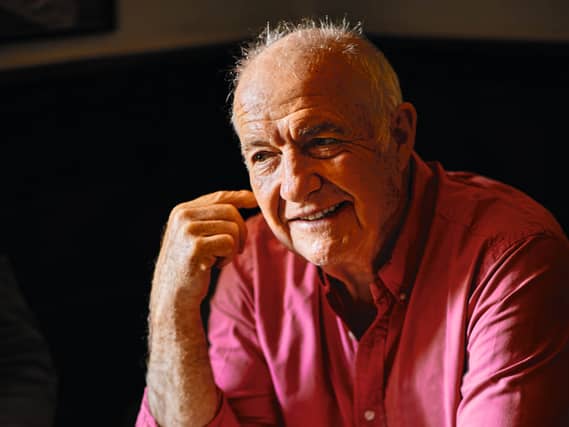

Lauren Taylor chats to the TV chef about food memories from a long career and sustainable seafood.
Veteran TV chef Rick Stein says he’s a “naturally disorganised” person but the process of cooking brings him a sense of structure.
“I think that’s part of the pleasure for me of cooking – you have to conquer your natural disorganisation. Because if you’re not organised, you’re not going to cook well.”
The 79-year-old adds: “I’ve got plenty of imagination and knowledge about how this should taste. My only problem is getting organised to make sure that I can carry that out successfully.
“I think it’s just conquering the disorder of things with order and achieving it.”

Stein made his name in the Seventies after co-founding The Seafood Restaurant in Padstow, Cornwall, and through appearances on BBC cooking and travel shows in the Eighties, before his debut series Taste of The Sea in 1995.
A lot has changed in the culinary world in that time. Courgettes – a staple in lots of UK households now – really only appeared in this country in the Sixties.
“I started properly cooking in the Seventies, and during those early years, it was one of the excitements, working with new ingredients that other people wouldn’t know about. Particularly artichokes, coriander, obviously lots of different types of fish which people had never heard of.
But it was a “struggle to get those things accepted by people”, says the chef and cookery author, whose new book is Rick Stein’s Cookery Course, which shares many key kitchen skills and brings together 60 years of learnings.
“I can remember when we started using monkfish – I guess in the Seventies – when nobody knew anything about monkfish. We had this fish pie on [the restaurant menu] at the time which was called seafood thermado, and it used to say ‘crab, lobster, and other white fish’, and the white fish was always monkfish because it’s really firm, it stands up really well in a fish pie.
“But if you put monkfish on [the menu], nobody would go near it.” Some 50 years later, the fish is considered a delicacy.
Sardines, he says, needed to be renamed in the Nineties to get people to eat them. “They used to be called pilchards. That was the thing in those days, unless you made a big fuss about stuff that people didn’t know, you had to name them something else that people did.”
It was a similar tale with basil, “People wouldn’t have travelled to Italy”, Stein says, and most wouldn’t have known the herb.
“And certainly chilis – you had to be incredibly careful about what you said about how chilli would affect people. By then, I’d started going to India quite regularly and was in Mexico and was very happy to put chilli into various fish dishes.
“For a long time we had this dish called Singapore chilli crab on the menu and the only way you could sell it – because it’s still in its shell – is to say ‘this is for people who like eating with their fingers’.
“It’s always been a bit of a struggle to get people to accept oysters”, too.
Stein is, of course, a proponent of sustainable fish eating. The best thing to substitute cod for his hake, he says, or coley, which some used to turn their noses up at “just because it’s not quite as white in its raw form, people think it’s not as nice but it’s absolutely lovely”.
He recommends pouting and whiting, too – “in terms of flat fish, Cornish sole is very nice,” Stein says.
“Brill is another flat fish similar to turbot, it’s not got the same quality, but it’s very well-flavoured. John dory, bream, again, has got a lot of flavour.
“There’s a big campaign in Cornwall to try and get people to eat more spider crab, [so] they called it Cornish king crab. Spider crab is beautifully flavoured, but the problem is it’s difficult to get out of the shell – far, far harder than brown crab. Once you have it out of the shell it pays off.
“One of the good things about trying to persuade people to eat different species to those well-known ones is that it takes the pressure off the stocks of those well-known ones.
“And it’s not really what the fish tastes like, it’s what you do with it and put it with. If the fish is a bit on the bland side, then you put something quite tasty with it.”
Monkfish tail is often the preferred part but, “there’s a big head which has these really chunky, firm, fleshy cheeks. They’re great because they’ve got this firm flesh”.
They aren’t the most flavourful part of the fish on their own, “but in a fish pie or with a cheese sauce, cheeks are totally wonderful, and the same with cod cheeks. I’d put them in a veloute or a bechamel cheese [sauce] with either a bread-crumb top of a mashed-potato top and gatinate them in the oven”.
Stein’s latest book provides step-by-step techniques – from how to make an omelette, doing pasta from scratch and making homemade mayonnaise, to perfectly cooked rice or fileting fish – as well essays on his nostalgic reminiscences over a long career, and 150 recipes. There are classics like steak and Guinness pie, lemon sole meuniere, and chocolate fondants, as well as some twists, like duck cottage pie and battered mackerel.
“One question is, you could get all these techniques on the internet, on YouTube, why bother with the book? The answer to that would be that much of the stuff you see on YouTube is actually not that good,” he says.
Some classic techniques are simpler than we might think, too – like souffles.
“It sounds very grand, a twice-baked souffle,” says Stein. “But actually, souffles are really easy to make. The problem is timing [if you’re in a rush].
“The reason they’re twice baked, is that you either put them in the fridge and bake them again, or you bake them later that day, which, if you’re doing a dinner-party event, makes them relatively easy.
“If you’re not pressurised by time, a twice-baked souffle sounds posh and is very easy to make.”
Rick Stein’s Cookery Course: Recipes and techniques from a lifetime in the kitchen, is published in hardback by BBC Books, priced £30. Available October 29