
Seven-year-old’s stomach pain turned out to be heart failure as she now lives with mechanical heart awaiting transplant
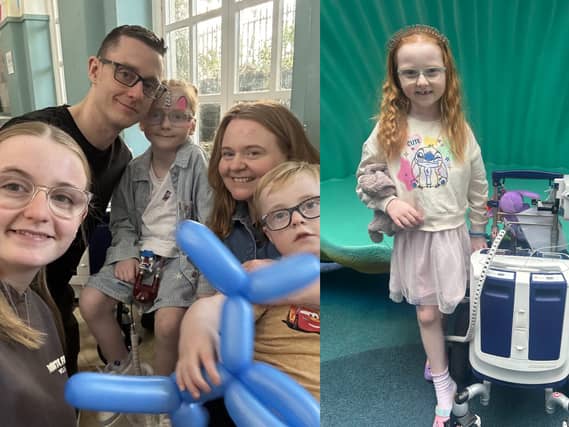

Annemarie and Michael Loftus began to notice Essie became more lethargic and ‘chubbier’ in 2024.
A “happy and active” seven-year-old girl whose stomach pain turned out to be a sign her heart was failing now has a mechanical heart pumping blood for her while she waits for a transplant.
Essie Loftus’s parents, Annemarie, 41, and Michael, 46, said she began showing “subtle” changes in 2024, such as not wanting to cycle to school and being “chubbier” than her siblings.
Annemarie and Michael, from Dublin, felt she had “lost her spark” the following summer, and in March 2026 she developed worsening stomach pain, exhaustion and vomiting before initially being diagnosed with constipation.
When her condition continued to deteriorate, further tests revealed she had hybrid cardiomyopathy, a rare heart condition affecting the ability to pump blood, which explained her previous symptoms.
She was then transferred to Great Ormond Street Hospital in London after doctors warned she would likely need a heart transplant to survive.
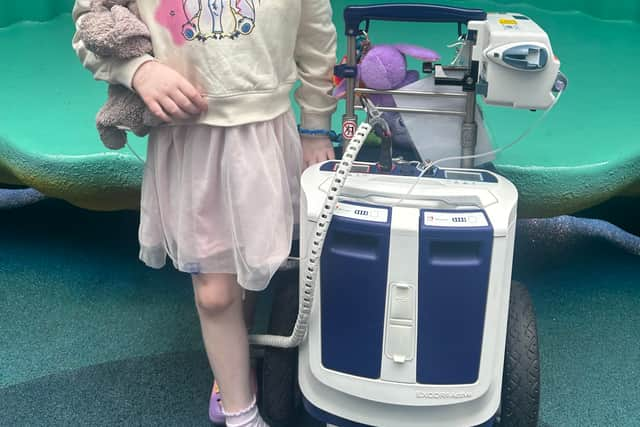
To keep her heart pumping while she waits for a transplant, Essie was placed on an advanced life-support system for 12 days and fitted with a Berlin Heart mechanical pump on May 5.
Now, as Michael and Annemarie split their time between London and Dublin, also looking after their other two children, Ayla, 13, and Cael, four, Essie takes around 25 medicines a day while she waits for a new heart.
Annemarie, a Montessori teacher, told PA Real Life: “When I see Essie with the biggest smile on her face, or she’s got some story to tell me about winding up the doctors, you just think to yourself, ‘If she can get through this all, then so can we’.”
“She’s an inspiration to us every day,” Michael, a streaming media engineer, added.
Essie had always been constantly “running around” and “cheeky”.
But, at age four, in 2024, Annemarie and Michael started to notice some “subtle” changes, such as her being “very concerned” if they were going to drive or cycle to school.
They also said she was “a bit chubbier” than their other two children but did not think “too much of it” at the time.
In the summer of 2025, Annemarie and Michael felt Essie had “lost her spark” and took her to a play therapist, but it seemed she “was fine”.
However, Essie continued not to be “quite herself” and, in March 2026, she began “complaining” that her stomach was hurting.
Annemarie added: “She was saying that she was tired and wanted to go to bed early, which wasn’t like her.
“We took her to the St Patrick’s Day parade, and she wanted to be carried and not stand.
“It just got worse – over the next day or two she started vomiting and couldn’t keep anything down.”
At the end of March, they said they took her to their GP, who diagnosed her with constipation and prescribed medication.
But her condition did not improve over the next few days, so they took her to their local children’s hospital, where she received the same diagnosis.
Annemarie and Michael had a “feeling” that “something wasn’t right”, so they took her back to hospital, where she underwent several tests, including an ultrasound, electrocardiogram (ECG) and X-ray.
Just hours later, on April 15, they met with the cardiac nurse specialist and chief cardiologist and knew it was “something serious”.
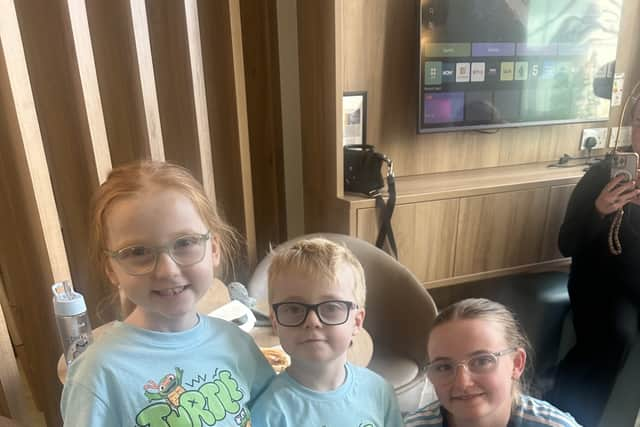
Michael explained: “They told me separately to Annemarie that they thought Essie had restrictive cardiomyopathy.
“I didn’t know what that meant, but they mentioned the word transplant, and of course, in between going in and out the room, I googled it, and that was probably the worst day of my life. It wasn’t a good day.”
The NHS says restrictive cardiomyopathy is a heart condition where the walls of the main heart chambers become stiff and rigid and cannot relax properly after contracting, meaning the heart cannot fill up with blood properly.
According to the National Library of Medicine, estimates suggest an average survival of two to five years after diagnosis.
Essie was admitted to intensive care before undergoing a cardiac catheterisation to check her heart function.
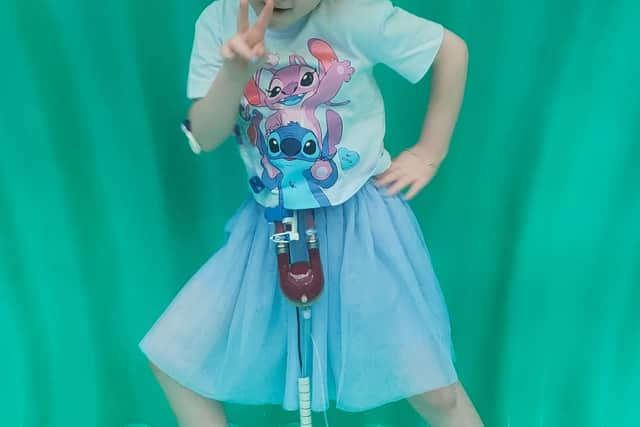
The couple said her diagnosis was then changed to hybrid cardiomyopathy, meaning she had signs of both restrictive and dilated cardiomyopathy, and that treatment was a possibility.
In dilated cardiomyopathy the muscle walls of the heart become stretched and thin, so they cannot squeeze properly to pump blood around the body, according to the NHS.
It explained Essie’s fatigue and it can cause swelling, accounting for her looking “chubbier” than her siblings, as well as stomach pain, as a weakened heart causes fluid to build up in the digestive organs.
Three days later, she underwent further tests to see if she was eligible for a mechanical heart at Great Ormond Street Hospital and was told she was.
The mechanical heart, known as a Berlin Heart Ventricular Assist Device (VAD), is used to support children in severe heart failure until a heart transplant is possible.
It takes over the function of a child’s own heart when it becomes too weak to pump sufficient amounts of blood to the lungs and around their body, according to Great Ormond Street Hospital.

“We were just trembling, sitting there, holding each other, shaking with fear and anxiety and everything you can imagine,” Michael said.
“Eventually they came and told us, and we were just so happy and relieved.”
However, long-term, Michael and Annemarie would have to swap between one of them staying at Great Ormond Street Hospital with Essie, and the other being in Dublin with their other children.
“It was very difficult to accept but it meant saving Essie – we had a good cry and we knew it was something we needed to do,” Michael said.
Just days later, Essie was airlifted from Dublin to Great Ormond Street and was put on an advanced life-support system that temporarily pumps and oxygenates a patient’s blood outside the body for 12 days before having the mechanical heart fitted on May 5.
Annemarie said: “It’s horrific to watch your child go through something like that.
“Essie has been through some things adults will never, ever go through.
“When she got on to the Berlin Heart, we just felt like we’re one step closer to transplant and she got her spark back.”
Essie spent a few weeks in intensive care afterwards, with her parents by her side, and slowly began to regain her strength.
While in intensive care, they were told there was a match for a transplant, but shortly afterwards, were informed the tissue was not viable and they could not proceed, leaving them “so disappointed”.
But, Michael and Annemarie believe Essie’s “character” got her through the ordeal.
Michael said: “We always said her sassiness and sense of humour will do her well when she’s older, we just didn’t realise that she was going to need it so soon.”
In June 2026, Annemarie’s mother sadly died, and she felt she did not “get time to grieve” while worrying about Essie, juggling looking after her other children and travelling back and forth between Dublin and London.
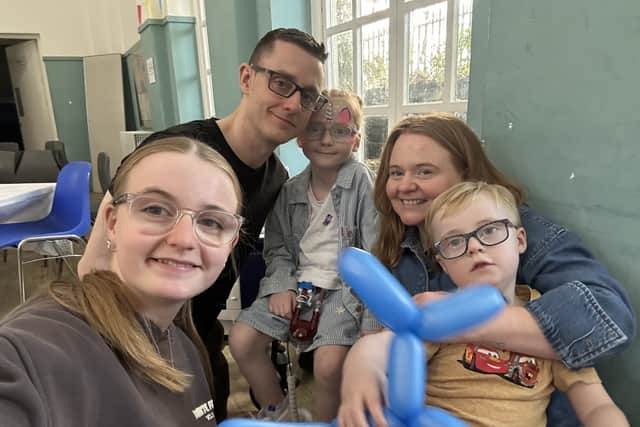
“It’s all just been so tough, and I don’t know if I’ve processed it all, I feel like maybe I will years later,” she said.
“I believe there will be some major breakdowns once this is over, but it’s just about putting one foot in front of another for now.”
Now, day-to-day, Essie has regular wound dressing changes and observations, and takes around 25 medicines a day.
The Berlin Heart VAD consists of a plastic pump or chamber which sits outside of the body, and the air-filled side of the pump is connected via a long plastic tube to a driving unit, which Essie wheels around next to her.
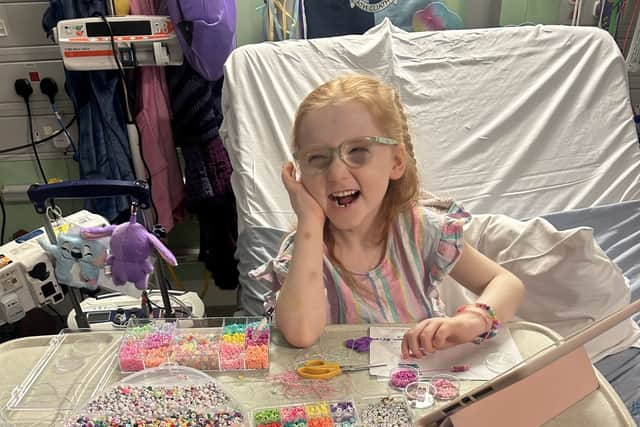
She has school sessions in bed at Great Ormond Street for one hour every day and socialises with the children and nurses, often role-playing as a nurse on the ward.
“The team have just been incredible at making life feel as normal as possible, and there are parents here that all understand what we’re going through,” Michael added.
Michael will stay at Great Ormond Street until Essie is able to have a transplant, and they “have no idea” how long that will be.
“It’s just a waiting game for us and our little girl now,” Michael said.
For more information, visit: gosh.nhs.uk and organdonation.nhs.uk.