
Single 22-year-old ‘desperate’ to be mum uses Facebook sperm donor, then terminates IVF pregnancy as baby had no kidneys
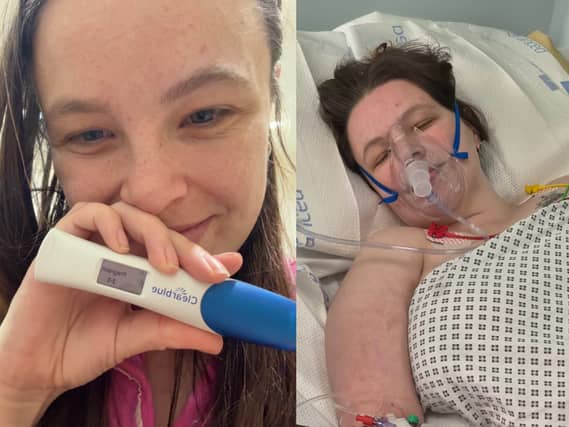

Alannah Dunn has always wanted to be a mother, seeing it as her purpose in life.
A single 22-year-old who tried using a sperm donor she found through Facebook to fulfil her lifelong “obsession” of becoming a mother later terminated an IVF pregnancy after discovering her baby had no kidneys or bladder, and nearly lost her life.
Alannah Dunn, a residential support worker from Merthyr Tydfil, South Wales, said she felt as though there was a “hole in (her) heart” at age 22 as she longed to have a child.
Living in New Zealand and “still” single at the time, she said she sourced a sperm donor through Facebook and carried out at-home insemination.
According to the Donor Conception Network, this route has “significant legal, practical and relational risks” that are “reduced or not present” when treatment is carried out in a licensed clinic.
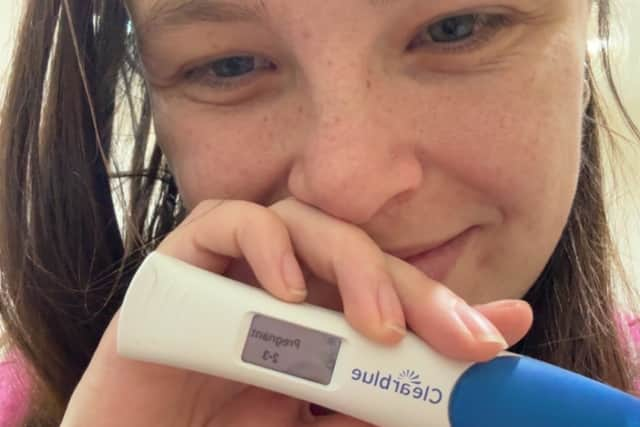
After a miscarriage and 18 months of unsuccessful attempts, she returned to Wales at the end of 2023 to pursue private IVF, falling pregnant in November 2025.
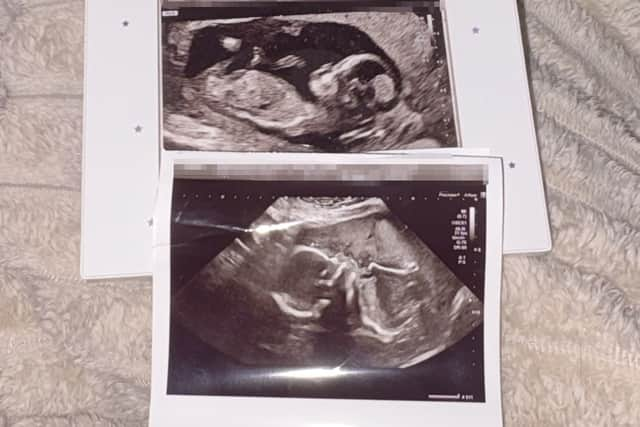
At her 20-week scan, Alannah said doctors discovered her daughter, Effie, had no kidneys, bladder or urinary tract, a compressed skull and very little amniotic fluid – the liquid that surrounds and protects a foetus during pregnancy.
She said doctors told her this meant Effie was unlikely to survive, and she chose to terminate the pregnancy at 24 weeks.
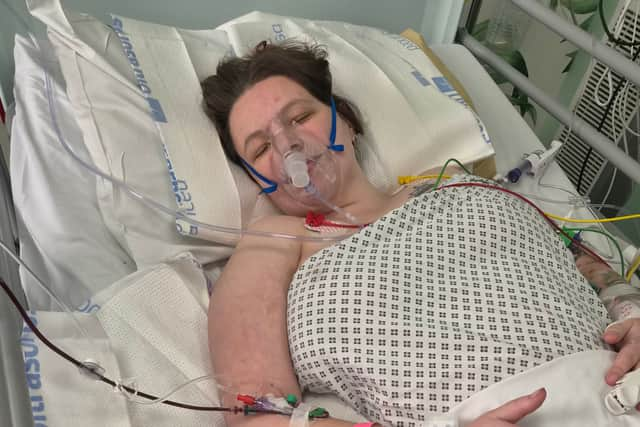
Days later, Alannah said she nearly died from a severe haemorrhage caused by part of the placenta remaining inside her uterus after birth.
Now, aged 27 with one embryo remaining, she is fundraising £5,000 for another transfer, as her “last chance” of giving Effie a sibling.
Alannah told PA Real Life: “I have such a big hole in my heart that needs to be filled, and it just keeps getting bigger.
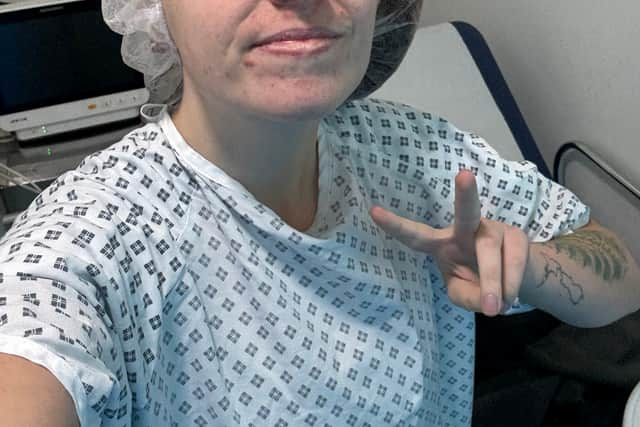
“It would be a dream come true to become a mum, it’s my purpose in life, I’m desperate.”
Alannah, who was born in Wales but moved to New Zealand with her family at the age of 10, has wanted to be a mother for as long as she can remember.
By the age of 22, she said she was “still waiting” to be in a long-term, serious relationship where children felt like a “real possibility”.
Alannah explained: “I get a lot of anxiety meeting new people, and I tried dating apps but just didn’t meet the right person.
“I realised, ‘why am I waiting for a relationship to have children, when all I really want is a baby now?’
“I’m not writing off a relationship, but having a baby is what I’m prioritising.”
At the end of 2021, Alannah began “researching”, joining Facebook groups and watching TikTok videos about single motherhood.
She said she “figured out” she could use donor sperm and carry out artificial insemination at home.
A spokesperson from the Donor Conception Network, regarding using unregulated sperm donation, said: “This route carries significant legal, practical and relational risks that are not present, or are reduced, when undergoing treatment in a licensed clinic.
“We recommend that anyone considering this route should proceed cautiously, think carefully about the long-term implications for the future child, seek specialist counselling and legal advice, and recognise that online donor arrangements operate without many of the safeguards provided by regulated fertility treatment.”
Alannah bought an at-home insemination kit, including syringes and sterile containers for collecting sperm.
She said: “I could have gone down the formal, legal route, but I was part of a Facebook group for people doing it independently, including donors, and wanted to do it that way, without any delays.”
Through the group, she said she began messaging a local man who wanted to donate his sperm after previously doing so for a friend and seeing the challenges people face when trying to conceive.
“We met up, had proper conversations, and he didn’t seem like a dodgy person. I felt very safe,” she added.
Alannah said she and the man signed a contract at the beginning of 2022, downloaded from the Facebook group, stating that he would have no parental rights if a pregnancy resulted, and that no payment was involved.
Alannah said she would drive to his house, collect the sample, return home, and carry out the insemination herself.
Alannah explained: “I’d use the syringe to insert it, and then I used a disc, like a menstrual cup, to keep the sperm inside me for around 12 hours.”
She said her family were “very supportive” of her decision and even “encouraged” her, as they understood how much she wanted a child.
She fell pregnant after the second insemination, in August 2022, which she said made her feel “amazing”.
However, five-and-a-half weeks later she said she miscarried, leaving her “heartbroken”.
She said she continued with at-home insemination once a month for 18 months but did not become pregnant again.
So she decided to look into IVF and said the waiting list in New Zealand was around three years.
As she “could not wait any longer”, she moved back to the UK at the end of 2023, believing treatment would be quicker there.
But she said her desired clinic shut down, and her second option stopped offering embryo donation.
She eventually began IVF in a private clinic in June 2025 – after donating some of her eggs, Alannah was left with three viable embryos.
She said her first transfer in August 2025 was unsuccessful, but she became pregnant in November of that year.
“It was fantastic, but fear immediately took over. I was so scared something would go wrong after the miscarriage,” she added.
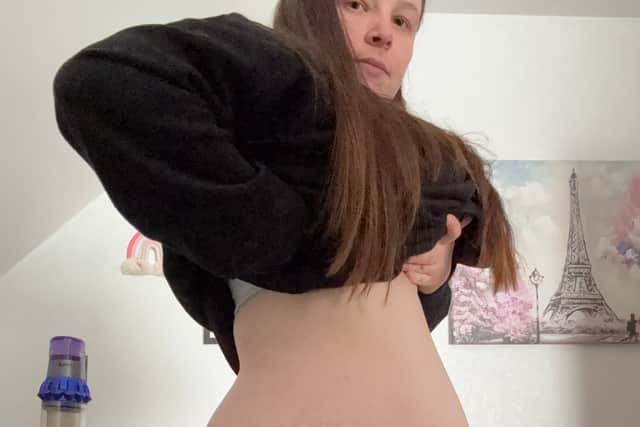
Alannah said she experienced light bleeding early in the pregnancy, but scans at six and 12 weeks appeared normal.
However, after doctors struggled to visualise the baby at her 17 and 20-week scans, Alannah was referred to the foetal medicine unit, where she said it was discovered there was little to no amniotic fluid and her baby was not developing as expected.
She said doctors told her the baby was unlikely to survive if born and gave her the option of terminating the pregnancy.
“My world just crashed. They said they couldn’t see her bladder, kidneys or urinary tract, and she wasn’t producing amniotic fluid, meaning her lungs wouldn’t develop,” she explained.
“Her chest had a bell shape because there were no lungs, and they said she could be compressed due to being underdeveloped.
“Her skull was also being compressed and had not fused together, it was in fragments, because of the low amniotic fluid.”
After a few weeks of consideration, she decided to proceed with the termination, saying she could not watch her “baby girl die”.
At 24 weeks, she underwent the procedure – doctors stopped the baby’s heartbeat, and Alannah was given medication to halt pregnancy hormones.
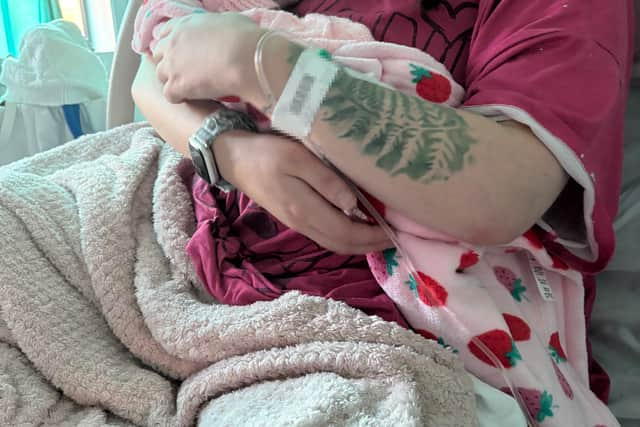
Two days later she was induced, and 24 hours later she gave birth to her daughter on April 24 2026.
“I held her because I don’t think I could live with myself if I didn’t,” she said.
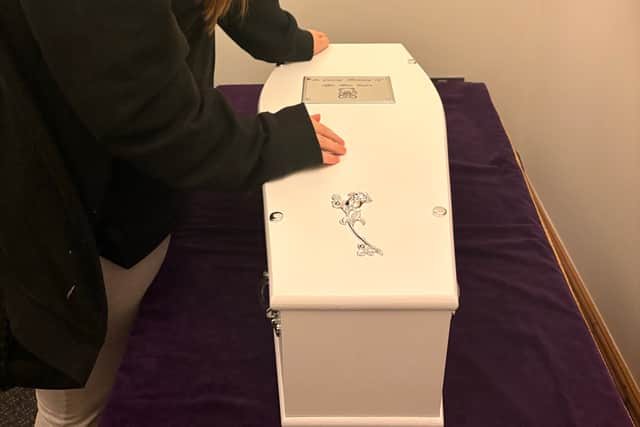
She took her baby home in a cold cot for two days to preserve her body and “spend time with her” before taking her to be cremated.
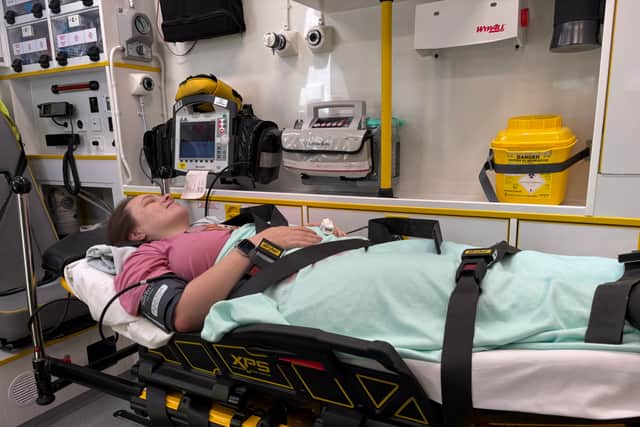
On April 29, Alannah said she suffered a severe postpartum haemorrhage, passing “huge” blood clots and losing “pools of blood”.
She said she was blue-lighted to hospital and taken into theatre to remove a retained placenta, where part of the placenta remained in the uterus after childbirth.
Alannah added that doctors said she “nearly died” but they were able to stabilise her and remove the remaining placenta tissue.
“It was just so brutal, I was in a cycle of grief, and felt just awful,” she said.
Alannah now has one embryo left and is fundraising £5,000 for another transfer.
“It’s my last chance to give Effie a sibling, it would mean the world to me. It’s all I’ve ever wanted,” she said.
She is open to adoption in the future, but believes “the system” would favour couples so thinks it would take “a very long time”.
To donate to her fundraiser, visit: www.gofundme.com/f/fund-my-ivf-transfer.