
Swimmer Mark Foster: Hiding my sexuality could have cost me an Olympic medal
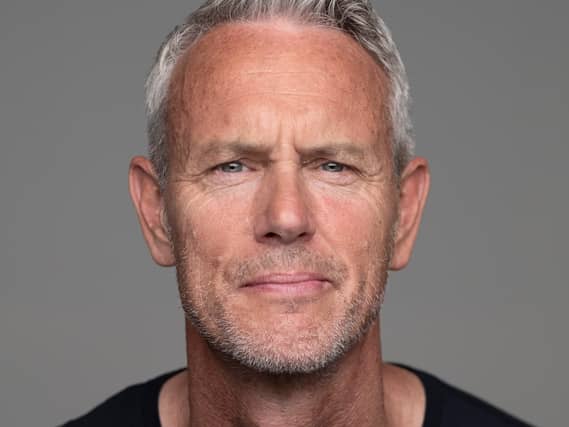

Five-time Olympian Mark Foster talks to Prudence Wade about the impact of hiding his sexuality from the world for so many years.
Former Olympic swimmer Mark Foster still wonders if he might have won an Olympic medal had he been open with the world about his sexuality.
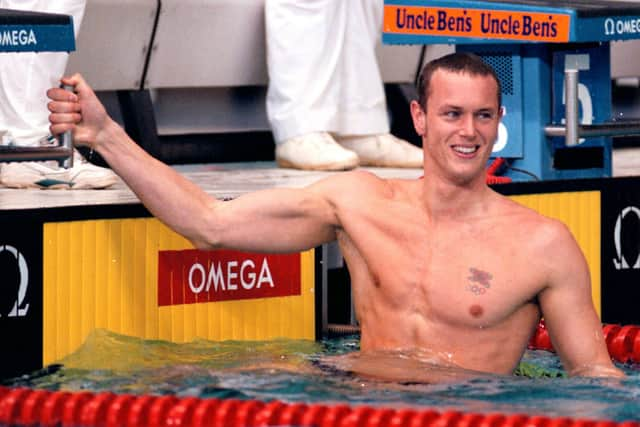
Foster, 56, has multiple World, European and Commonwealth titles to his name, but throughout his long and decorated career – he retired after the 2008 Beijing Olympics, aged 38 – he never managed to win an Olympic medal.
“Clearly I was leading a double life… Leading a double life resonates with a lot of people, it’s not just about your sexuality,” he tells the Press Association.
“I do wish I’d come out a lot earlier… Because it’s draining putting on a show. I’m not a tortured soul, because a lot of stuff washes off me anyway.

“But we know how much happier people are when they are themselves, or more productive [when] they are in the workplace – like me with swimming, if it would have made a 100th of a second of difference, that’s winning a medal or breaking a world record, which happened on a number of occasions. Maybe I didn’t get the Holy Grail, because as my friend Peter said, ‘You were never going to win, because you were afraid of people seeing the real you’.
“I can’t say that’s fact, but it’d be interesting to know when you free yourself up, how much better you can be.”
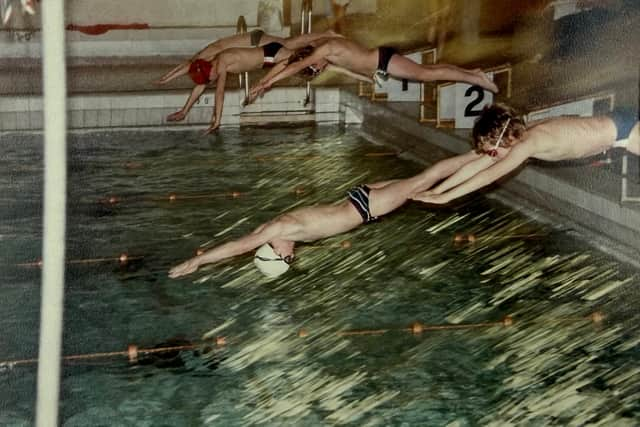
Growing up in the Seventies and Eighties in Essex, Foster suggests we are “moulded by our environment” – and that contributed to his reluctance to come out. While he says he was “fortunate” to not have “deeper, darker journey”, he adds: “From school to the swimming changing room, to the street to the TV – whatever I heard was like, being gay is not OK. It’s the name-calling and the piss-taking – it’s not aimed at me, because no one knows I’m gay, but you hear this stuff.”
This means Foster thought coming out “was not an option at an early age”, meaning he learnt how to “put a mask on” from young.
He remembers thinking: “Be careful what you say, be careful what you look at, be careful when conversations are going on that you don’t go red… Don’t let anyone see who you are.
“Is your sexuality the thing that defines you, and the be all and end all? No, but it’s a big part of who we are, especially when society puts pressure on people.”
All this is detailed in his memoir, My Double Life, which explores his personal relationships – he told his family and close friends he was gay in his early 20s, and has had long-term relationships over his life – as well as his swimming career.
Despite being out to his close circle, Foster stood firm in his decision to keep quiet to the public – partly because he didn’t want to risk losing sponsorship deals.
Another major reason was worry about his teammates. “Being on the team with people, you’re meant to be in a sport, you’re meant to be male, you’re meant to be macho – you’re meant to be, meant to be, meant to be all these things that society tells us to be,” he says.
“I was worried that I shared a changing room with the lads – I didn’t fancy any of them, by the way – but would it make them feel uncomfortable with me?”
A major thing Foster did have in common with his teammates was the mindset of a professional athlete.
“I always thought everyone was the same, then when you come out of the other side of the swimming or sports bubble, you realise that people aren’t – not built the same, but wired the same,” Foster reflects.
He suggests he enjoyed the element of hard work involved in being an elite sportsperson, because you have to “graft to get a result”.
Foster had a remarkably long career compared to his peers, something his credits to luck (“I had two big injuries, so my body was healthy”) and the fact he “loved it”.
He continues: “I’d still do it now if I could. I felt so honoured and lucky that what I did was train, compete, train compete, train, compete, hang with my mates… I lived this lifestyle where I wasn’t in an office.
“When we’re younger, we enjoy playing games, and sport’s a game. So, whether it be playing Monopoly, playing tic-tac-toe, doing a running race at school, playing a football game, swimming – a swimming game was a race, right?
“The game was, who gets to the other side of the pool first. The game was, can I go faster than I went last time.”
Foster was Team GB’s flag-bearer at the opening ceremony of the 2008 Olympics in Beijing, which was also his last outing as a professional swimmer. After the Olympics, he went straight into competing on Strictly Come Dancing – he was the sixth celebrity to be voted off, with judge Bruno Tonioli memorably telling him: “You look like a God, but you dance like a geek.”
Despite being “nearly forced out a couple of times”, Foster eventually revealed his sexuality to the world in a 2017 interview with the Guardian.
He says it felt like “a weight had been lifted”, particularly as he’d long retired from swimming, so didn’t have the same concerns that once plagued him.
While it was a “relief”, he says: “Even to this day, I still come out” – whether it’s playing golf with new people, or going to events, but now he’s able to “tell the truth” about who he really is.
Foster adds: “I must admit, the reactions have always been very, very cool for me personally. I know that’s not the same for a lot of people.”
Looking back, Foster asks: “Why should I have to lie anyway? Society didn’t make me do anything, but it moulded me in a certain way, as it did a lot of other people. Getting into the habit of not being authentic, not being myself, telling half truths, telling lies – it became this cycle.
“When you’re stuck in the cycle, when you come out of it, you breathe [and think], that was draining.”
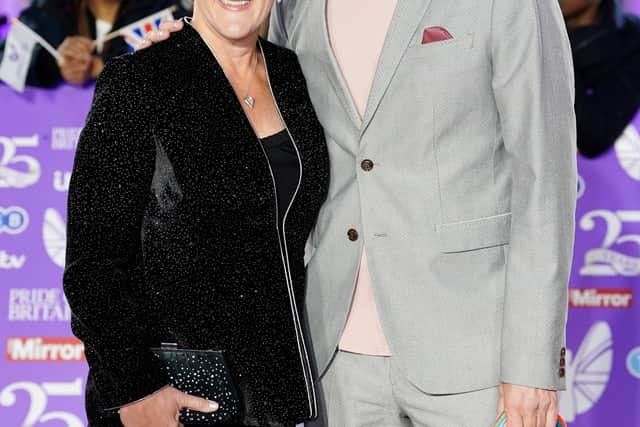
Foster moved back to Essex in 2020, which turned out to be a good decision as his mother was later diagnosed with Alzheimer’s, and he’s now closer to her. He’s a familiar face as a pundit during swimming competitions, and is close friends with fellow commentator Clare Balding, who wrote the introduction to his memoir (“she’s brilliant” he asserts).
He’s a golf fanatic, but still makes time to get in the pool once or twice a week.
“I have what I call a dip. It might be fast to most people, but it’s a dip,” he says.
“I feel at home in the water – it’s like most people going for a walk. I did it all my life… A big thing for me is the sight, the sound and the feel of the water. It’s like meditation.”
My Double Life by Mark Foster is published by Bloomsbury Sport, priced £22. Available now.