
US musician says accent changed to English and Indian after seizures and people think he is a ‘freak’ doing impressions
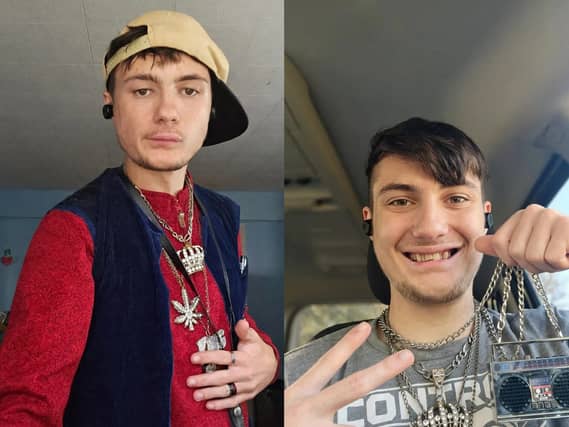

Scott Vaughn had his first seizure in 2021 and claims he started sounding as if he was from Boston the next morning, before his accent changed again.
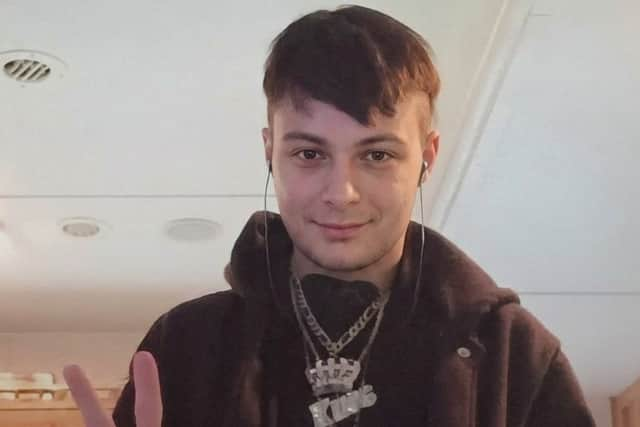
A 20-year-old from the “Deep South” of the United States who claims his accent changed to English, and briefly Indian, after seizures has said people think he is a “freak” doing an impression.
Scott Vaughn, a musician from Southside, Alabama, said he suffered his first seizure in 2021, and claims his southern US accent suddenly changed to a Boston, Massachusetts accent the following morning.
Scott said his Bostonian accent continued until he had another seizure in September 2022, when he collapsed, hit his head and woke up speaking with a southern English accent.
He was subsequently diagnosed with functional neurological disorder (FND), which affects how the brain receives and sends information to the rest of the body – and Scott said this explained his other symptoms, including shaking and clumsiness.
Scott also believes he has foreign accent syndrome (FAS), a rare condition where a person’s speech takes on an accent different from their usual accent and which other people can think sounds ‘foreign’, according to the NHS.
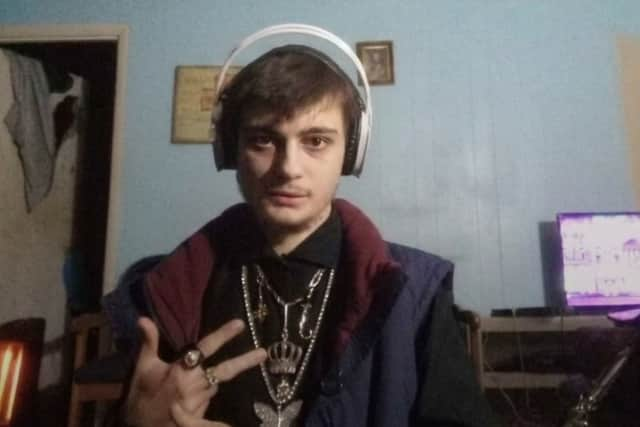
The NHS says most reported cases of foreign accent syndrome begin after a stroke, brain injury or other neurological disease, although some cases occur alongside functional neurological symptoms.
Scott claims another seizure in February 2026 caused his accent to change to an Indian accent for six days, and his accent now switches between Bostonian and English while he waits for a formal diagnosis and hopes his original voice will one day return.
Scott told PA Real Life: “Sometimes I cry about my accent – why does this have to happen to me?
“Every time I meet new people, I feel like I have to explain what happened but they often don’t believe me.
“I just don’t feel like myself any more – people think I’m doing an impression.
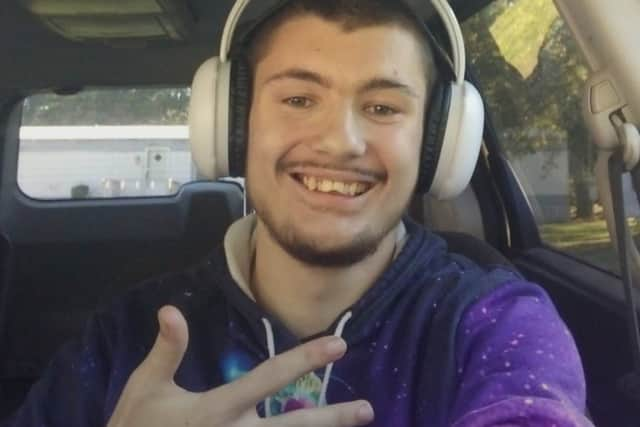
“People in school thought I was a freak, and that’s why I don’t have any friends now.”
At age 15, on December 6 2021, Scott said he had his first seizure.
“I was sitting in class and was at my computer when my mouth suddenly turned sideways with drool coming out,” he explained.
“My teacher noticed and got the nurse, and I started shaking profusely.
“My mom got there and said my body turned purple and I had to be put on an IV drip and taken into hospital.”
Scott said he remained in hospital until later that evening and he felt “out of it” until the following morning.

But when he woke up, he claims his accent had changed from a southern US accent to a Boston, Massachusetts accent, which he first noticed when he began speaking at school.
“I thought I was in a fever dream, it didn’t feel real at all,” he said.
Scott said his school contacted his mother, and he was taken to a psychiatrist, who suggested he may have foreign accent syndrome.
He said he went on to have speech therapy at school, but his accent did not return to how it had been before.
“People started looking at me quite differently, they barely wanted to come around me and know me any more,” he added.
“People thought I was just making fun of people with different accents and what I was doing was wrong … it made me feel awful and no-one at school really believed me.”

After leaving school the following year, Scott decided to channel his “trauma” into making music, performing professionally under the name Gaden Paris and making country rap.
“I thought playing music on the airwaves could get back at my bullies and make me successful,” he explained.
“I’ve got a track called FAS and I talk about being a mess because of it, and my haters who haven’t believed me.”
He claimed his Bostonian accent continued until September 2022, when he suffered another seizure.
He said he collapsed and hit his head, and that his heart stopped beating for around a minute during the ambulance journey before he was resuscitated.
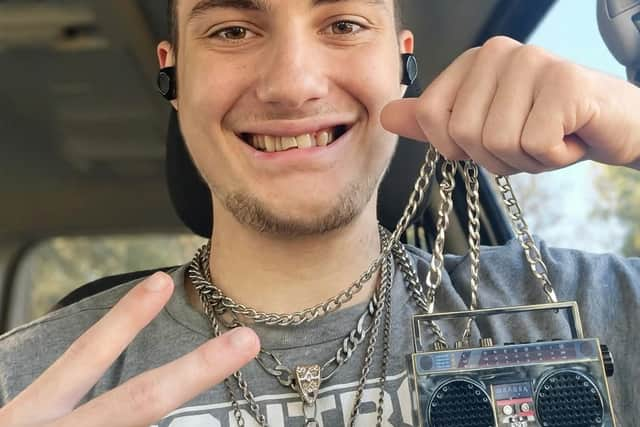
Scott said he was taken to a local hospital’s coronary care unit, where he had another seizure, leaving everything feeling like a “complete blur”.
When he “came to”, he claims he was speaking with an English accent, leaving his loved ones and doctors “shocked” and “confused”.
Following several tests, Scott claimed he was diagnosed with functional neurological disorder (FND), which doctors said was causing his seizures.
He said the diagnosis “made sense”, as he had previously experienced symptoms including being “clumsy”, dropping cutlery and “getting shaky” and sweaty.
“I was so young and I thought I was so healthy, so I was quite confused,” he added.
FND is a problem with how the brain receives and sends information to the rest of the body and can cause functional speech and swallowing difficulties, dizziness, tremors and seizures, among other symptoms, according to the NHS.
In some cases, it can be associated with foreign accent syndrome, where a person’s speech changes so that it sounds like they have a different accent.
Johan Verhoeven, a professor in experimental phonetics at City, University of London, said: “It is possible for different accents to be attributed to the same individual on different occasions.
“This may be partly due to subtle variations in pronunciation, which can have different effects depending on the context.

“However, the listener also plays an important role: their linguistic background and experience with foreign accents can significantly influence how they perceive and categorise a speaker’s accent.
“Both factors may cause the perception of the foreign accent.”
Scott said he is still waiting for a formal diagnosis of foreign accent syndrome.
“I joined a Facebook group and have spoken to other people with it on there, which has been good,” he said.
“I don’t think there’s enough research or knowledge about it.”
In February 2026, he claims he suffered another seizure, after which his accent suddenly changed to an Indian accent for six days before reverting to English.
Since then, Scott said his English accent has faded slightly, and his accent now switches between Bostonian and English, which he said becomes more pronounced when he is stressed.
He added: “It can be difficult because some people here are very, very rude and hateful and disrespectful, and people don’t really understand my situation and having a unique condition.
“People can get annoyed at me, thinking I’m joking around, but I can’t help it and there’s no control button.”
Scott said the changes to his voice and accent have been “frustrating” when recording music, but he has since “accepted” it.
He is currently unemployed and believes his accent is the reason why he has struggled to find work.
“I’m scared people won’t be able to understand me or won’t believe me if my accent changes again,” he said.
Looking ahead, Scott “hopes” his accent will eventually return to his original voice and that he will receive further support.
To find out more about Scott’s music, visit: lilv3.bandzoogle.com.