
Welcome to the exclusive Tuscan coastal town where Michelangelo left a legacy


Lauren Taylor stays at La Serena in Forte dei Marmi for a chic base to explore the artistic region.
When Michelangelo created his most famous masterpiece, the statue of David in 1501, he used the purest marble with the whitest translucency he could find – Carrara marble from the Apuan Alps of Tuscany.
The Italian Renaissance sculptor and painter is said to have frequently visited the quarries to handpick the best stone himself for his work.
Here on the central-west coast of Italy, the Apuan Alps are visible from the beaches. “The mountains are unusually close to the sea,” says my tour guide Claudia, “just 20km from sea level to 2,000 metres”. This proximity is one of the things that makes this area of Tuscany – near the sophisticated beach town of Forte dei Marmi – so unique.
The oldest marble quarries in the world, the Ancient Romans first discovered the mountains were made entirely of pure, white grey-veined marble in the 2nd century BC and it has been excavated ever since, with some 188 quarries operating since Roman times, according to local guide and Carrara native, Gabrielle.
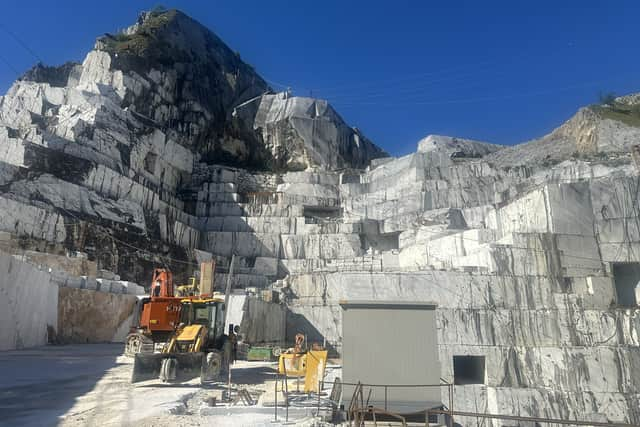
One might be concerned that centuries of excavating the incredible natural resource would mean there wouldn’t be much remaining but, “All the quarries together [remove] 3.5 million stones a year, but they’ve only removed 5%” of what’s available in the 55km mountain range in 22 centuries, he says.
In a dusty Landrover, Gabrielle navigates the dirt road twists and turns to one of these ancient open-pit quarries and it’s quite a sight to behold. The face of this particular peak has been carved away and what’s underneath is literally one huge piece of marble.
“The beauty about the marble is that every piece is unique,” he says. Apparently only around 3% is used for art, it’s more likely to be staircases and kitchen worksurfaces these days. Removing one perfect nine-metre slab without fractures using steel cables “could take two days or two months”, the quality is in the hands of the Gods.
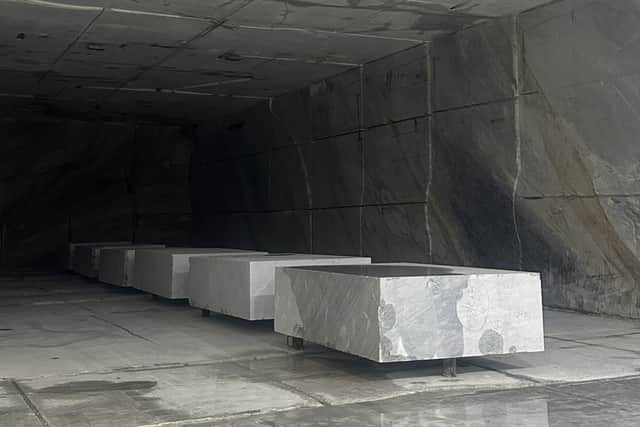
Excavation is easier (cheaper and safer) down into the ground but another method is to tunnel horizontally into a mountain, for what’s known as an underground quarry. Walking into such a quarry surrounded 360 degrees by marble is strangely beautiful, and a few artworks have been etched into the marble face inside.
When Michelangelo first came here, he may have been impressed with the quality of marble, but noted the lack of transport routes to get it out of the mountains, so “he made the first road to the first village,” notes Claudia, “which became Forte dei Marmi in the 18th century”.
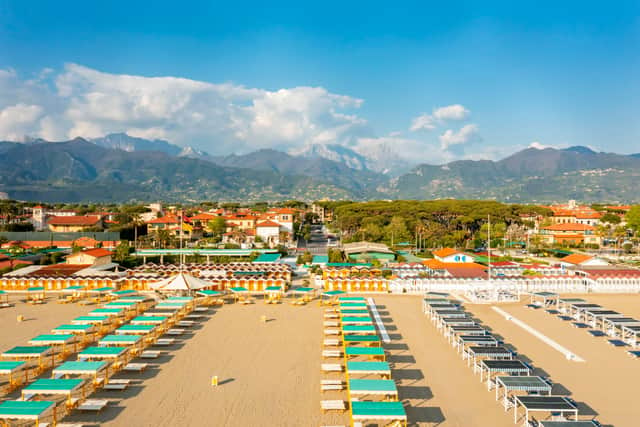
Now a (very) upmarket beach town – think Prada on one corner of the town’s square, with Dior, Fendi and Louis Vuitton nearby – Forte dei Marmi has been a getaway for fashionable Italians to escape to for years.
It’s still fairly unknown to British and Irish tourists, who skip this part of Tuscany to head to the region’s more famous Florence or sun themselves on the Amalfi Coast. But Forte dei Marmi offers a less packed alternative, where the coastline is a collection of exclusive beach clubs and glamour exists in a less ‘in your face’ way – there’s not a yacht in sight.
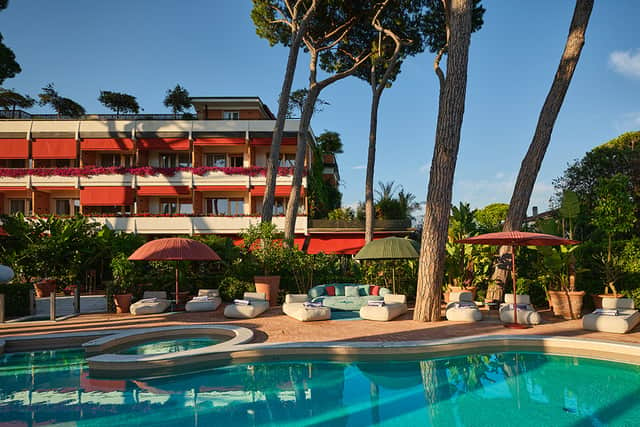
The beautiful La Serena, a recently renovated boutique hotel, perfectly embodies this air of quiet luxury, too. Here, champagne is sipped under lemon trees in the gardens, from colourful sofas dotted in the greenery, umbrella pines reaching into the blue Tuscan sky.
The Lumarea Bistrot and Bar serves up sophisticated Tuscan fare and perfect homemade pastas, while the impressive wine cellar holds over 2,000 bottles.
The hotel has strong links to the global art community and the walls act as an ever-changing exhibition of contemporary artists, while at the same time being inspired by the region’s artistic heritage.
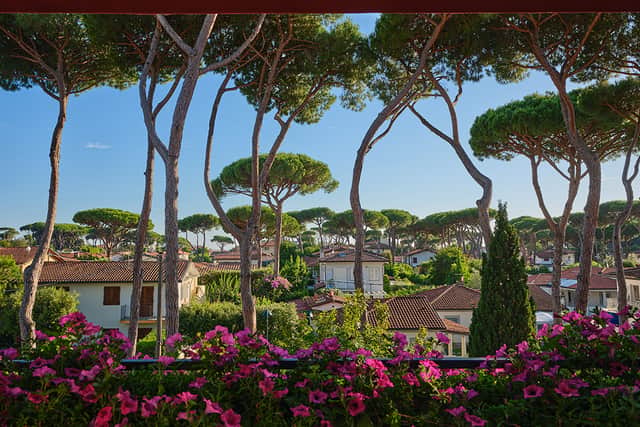
With only 21 rooms, it feels exclusive, and wonderfully calm and quiet. My spacious double bedroom opens up onto a balcony overlooking the curved pool and luscious gardens. There are all the special touches that justify its upgrade from a four-star to a five-star last year.
Forte dei Marmi itself, a 10-minute bike ride away (e-bikes or cute Fiat Topolino cars are also available to borrow from the hotel) experienced a boom in the Sixties, when the Milanese and Florentines started coming for the sea air.
While the beaches are technically public, it’s made clear that putting down a towel and lying on sand simply isn’t acceptable. Instead, it’s orderly and elegant with cabanas needing to be booked (from €100-150 a day, but prices rise the closer you get to the sea), although I’m told you’ll get a lot more space here than than in some of the popular Italian beach resorts in the summer. Portofino, incidentally, is only 1.5 hours away – so it could also be used as a base for a day trip to the tourist hotspot.
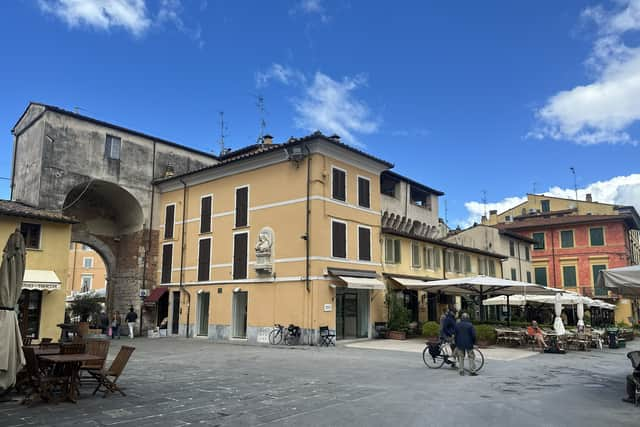
Much closer is the charming town of Pietrasanta – historically an important pilgrimage route to get to Rome. The region’s art legacy is so evident here it feels like walking through an open-air exhibition – of both past and present – with statues, sculptures and modern installations at every turn.
“Each artist that worked here left something,” adds Claudia, who says artists were attracted to the town because of the marble source. Jumping out the car, I’m immediately greeted with the bronze statue Il danzatore by Anna Chromy, while inside the Church of the Misericordia, famed Colombian artist Fernando Botero painted two large panels – The Gates of Paradise and The Gates of the Inferno.
Next I walk through the Peace Frame, by American artist Fred Nall Hollis, framing a view down the main high street that leads to the town’s famous 13th-century duomo (church)– made from the marble of the mountains that hover in its backdrop.
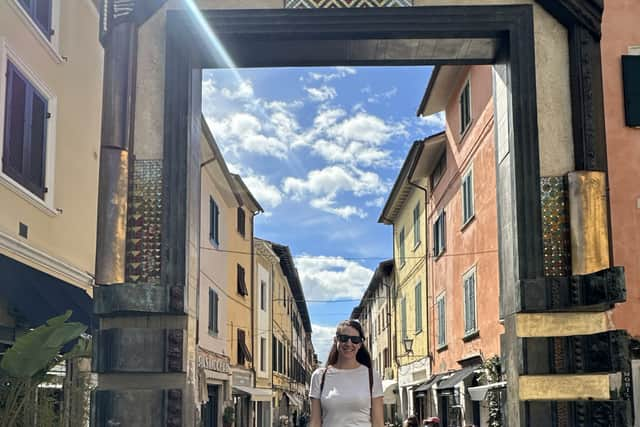
Many of the buildings date back to the 14th century, but the main square showcases huge pieces of modern art in the middle of them. While I’m visiting, a huge moving structure of three mirrored circles picks up the muted colours that surround it (pieces are replaced every three to four months).
A belltower looms over the square too – Michelangelo is said to have made the marble staircase inside.
And as we sip coffee in the “salotto” of the town – literally translated to living room, meaning the cozy, open-air space where locals gather to socialise on chairs and tables that spill out of cafes on the square – I notice the adjacent cafe is simply called ‘Michelangelo’ – it seems the name is never too far from everyone’s lips here.
How to book:
Rooms at La Serena start from €500 based on two adults sharing a double room on a B&B basis. laserenahotel.it