
What you need to know about alopecia, as Melanie Sykes shares hair loss pictures
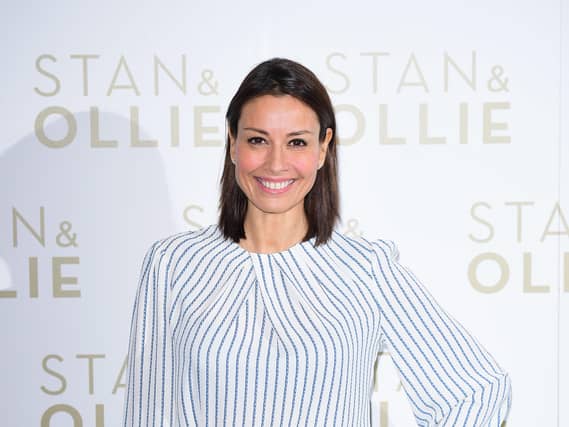

The former TV presenter has shared an update on her battle with alopecia – here are the symptoms and what you need to know.
Melanie Sykes took to Instagram on Sunday to share pictures of her battle with alopecia, previously noting that she was “two-thirds bald” with the condition.
The 55-year old broadcaster opened up about her life with alopecia after announcing her diagnosis last year, as well as a heart condition and widespread inflammation, which she has attributed to prolonged stress and PTSD.
So, what are the symptoms of alopecia? Are you more prone to it later in life and what are the best treatments? A trichologist explains the key things you need to know.
What is alopecia?
“Alopecia means any type of hair loss, so any type of hair loss falls under the umbrella term of alopecia, but what I think [Sykes is] talking about is alopecia areata, which is an autoimmune type of hair loss,” explains brand president and lead trichologist at Philip Kingsley, Anabel Kingsley.
Alopecia areata is one of several types of hair loss, but it is often the most recognisable. It occurs when the immune system mistakenly attacks the hair follicles.
“What happens is generally your hair follicles enjoy something called immune privilege, which means that they’re hidden from the immune system,” Kingsley says. “But with alopecia areata, this immune privilege breaks down and your immune system starts to attack hair follicles on your scalp, like they’re a foreign body – as it would a virus – and this causes hair loss.”
How to spot the signs and seek help early
One of the defining features of alopecia areata, in particular, is how quickly it can appear.
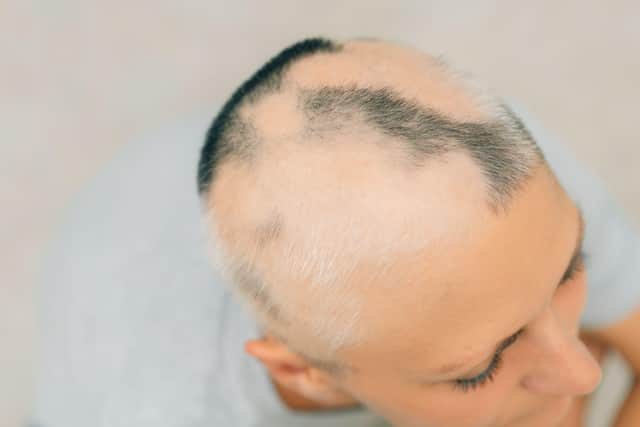
“It can happen really suddenly,” says Kinglsey, “it can range from really teeny tiny patches with no hair to covering the whole scalp or all body hair, which is more rare.”
These patches tend to be distinctive in appearance. “You have kind of circular or oval patches, and they’re quite pronounced, usually they are totally bald or can have a few white hairs in there,” she says.
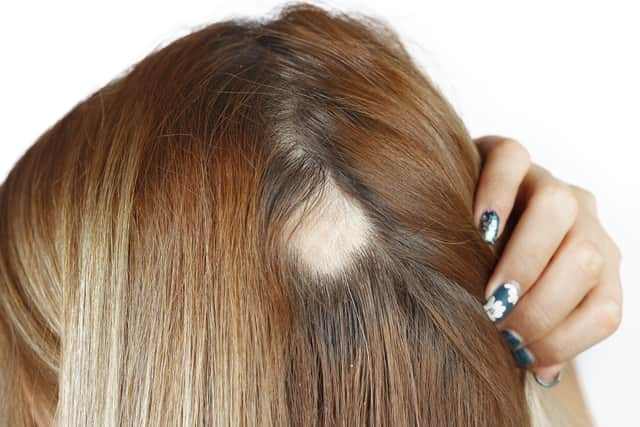
There are also some lesser-known signs that can indicate the condition is active. “A distinguishing feature is the appearance of ‘exclamation mark hairs’ they’re thicker on the top and thinner at the bottom,” Kingsley says.
“If you were to take a little pair of tweezers they would just come out with no resistance, and when you have those, it means the patch is active, so it’s likely to get bigger.”
For anyone concerned, she advises seeking help early, even if you’re not totally convinced. “If you notice it and you’re worried about it, go seek help as soon as possible,” she says, either at your GP or a hair specialist, like a trichologist.
What are the triggers and who is at risk?
The exact cause of alopecia areata remains unclear, but it is widely understood to be autoimmune, which can be worsened by stress and inflammation.
“We don’t know exactly what causes it, but triggers are thought to be intense stress, certain illnesses, sometimes trauma to the scalp and you’re more likely to get it if you have other autoimmune conditions,” Kingsley says.
She says that while it can affect anyone, there are some patterns in relation to age. “You’re more likely to get it when you’re younger, but I do think it becomes more common in perimenopause and menopause again, because of hormonal shifts,” she says, noting it can also affect children and is “one of the more common forms of hair loss in children”.
How it progresses and what to expect
For many people, there is not severe damage to the hair follicle itself, and so hair can grow back without intervention.
“Often the patches just grow back on their own with no treatment within about six months,” Kingsley explains. However, she warns that the condition can be unpredictable.
“You can get one patch that just goes away, or you can get one patch and then find a lot of other patches – because it’s autoimmune, it’s unpredictable.”
Treatments
Treatment options vary depending on the severity, but evidence-based approaches are what will make a real difference.
“You can use treatments to try to help get the hair grow back, and things like topical minoxidil works quite well, especially when less than 30% of the scalp is involved,” explains Kingsley.
Other options include prescription treatments and, in more severe cases, specialist medications. However, she stresses the limitations of treatments, noting “it’s quite tricky to treat, because you can’t just switch your immune system off”.
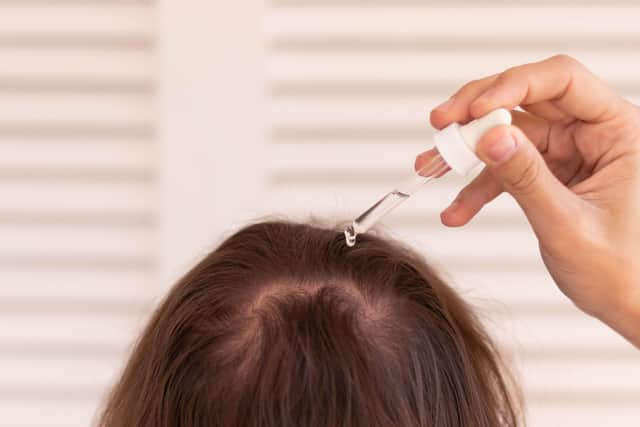
Unprescribed online products are also not guaranteed to help, Kingsley says, “the kind of anti-hair loss drops that you’d buy online or in a beauty store, they’re not going to do any harm, but they’re not going to necessarily improve the hair loss as it’s an autoimmune condition”.
However, she also says how taking action, even in small ways, can help people cope. “When you are applying something to your scalp, it can help alleviate some of that stress, because you feel like you’re being proactive.”
Look after your mental wellbeing and take a holistic approach
Hair loss can take a significant psychological toll, particularly given its visibility.
One of the most important messages, Kingsley says, is to avoid self-blame. “Many of my clients blame themselves for getting too stressed, but it’s not your fault, it’s an autoimmune condition. So don’t beat yourself up about it because really, there’s nothing you could have [done].”
While there is no single cure, overall health plays a role in supporting hair growth.
“Hair growth is really connected to your general health and your nutritional status. It’s really about taking a 360 holistic approach,” says Kingsley.

That includes a balanced, non-restrictive diet. “Try to eat fresh foods, lots of antioxidants – anything you can do to keep yourself healthy is going to help your hair,” she advises, noting that “there is a link between alopecia areata and vitamin D deficiency,” making it important to monitor levels and possibly take supplements too, if required.
“Generally people think hair loss is a man’s problem, but it affects women,” Kingsley says, “so don’t feel like you’re alone – it can happen pretty much at any age.
“I think it’s great that celebrities are speaking out more about it, because it makes other women and men feel less alone.”