
A different kind of cosmic show lights up the Limerick skies this October

Limerick Astronomy Club meets on the first Thursday of each month in Mary Immaculate College
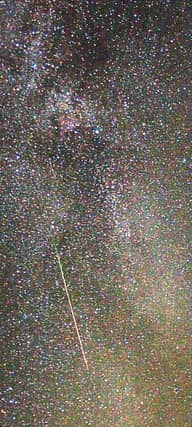
As October's cool nights draw in, a different kind of cosmic show lights up our skies: the Orionid meteor shower. These fast-moving streaks of light are tiny fragments left behind by the famous Comet Halley, a beautiful reminder of the cosmic wanderers that pass through our solar system. But beyond the visible wonders, there are incredible human stories that have helped us understand the universe, and this month, we celebrate one of the most compelling.
Born on October 19, 1910, the Indian-American physicist Subrahmanyan Chandrasekhar changed our understanding of how stars die. While still a young student, he discovered a crucial limit for a star's final moments: if a dying star is more than about 1.44 times the mass of our Sun, it can’t become a "white dwarf," a dense stellar remnant. Instead, its own immense gravity forces it to collapse into something far more exotic, like a neutron star or even a black hole.
This idea, known as the Chandrasekhar limit, was revolutionary. Yet, the young physicist's work was publicly opposed by the celebrated astronomer Arthur Eddington. The two were locked in a long scientific dispute, but Chandrasekhar’s dedication to his work ultimately prevailed. His research laid the groundwork for the later discovery of neutron stars and black holes, fundamentally reshaping modern astrophysics. He was finally recognised with the Nobel Prize in Physics in 1983, a testament to his incredible contribution and persistence in the face of adversity.
The Limerick Astronomy Club meets in Mary Immaculate College, Room 202 at 8pm. We'd love to welcome you and embark on this cosmic journey together. Reach out to us at [email protected] for more info.