
Ceremonies take place to mark 100th anniversary of Limerick - born General’s death
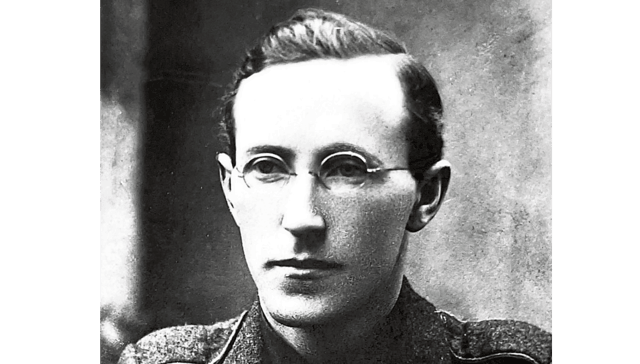

IT WAS ON the foot of the Knockmealdown Mountains on the Tipperary-Waterford border in April 1923 when the chief of staff of the Irish Republican Army, Limerick man Liam Lynch would meet his demise.
Lynch, born in Baurnagurrahy, Anglesboro, was a highly-regarded General and one of the most successful leaders in the War for Independence. The centenary of his death takes place on April 10.
Fermoy will host a commemorative pipe band parade this Easter Sunday. Twelve bands, Irish and international are to attend which is part of a week-long celebration of Liam Lynch.
The parade starts at 2pm and thousands are expected to attend, according to one of the organisers, Tomás MacCormaic.
Lynch led the first attack of the War of Independence (1919-21).
Himself and others, including hunger striker, Michael Fitzgerald ambushed 17 British soldiers on their way to Sunday service at Wesleyan Church.
The Irish Volunteers had just six revolvers between them, with most just carrying short clubs, which resulted in hand-to-hand fighting before the British troops surrendered.
One soldier died during the ambush and Lynch ended up wounded as he was shot in the back.
The aftermath of the ambush resulted in the arrest of several leading members of the Irish Volunteers (Fermoy Battalion) including Fitzgerald who would later die from a hunger strike within Cork Gaol.
Lynch, along with training officer in the IRA, Ernie O’Malley, would later take the Mallow Army Barracks which would result in several buildings in the town being burnt down.
The controversial signing of the Anglo-Irish Treaty saw the formation of the Irish Free State and six counties in the north remaining part of Britain.
This saw a divide amongst Irish men and women as many supported the Treaty but for others (anti-Treaty) nothing was acceptable without the six counties that formed Northern Ireland. This led to the Irish Civil War.
When the split occurred following the signing of the Treaty in 1921, Lynch was voted as IRA chief of staff and led a nine-month campaign against the Free State Army.
Following the Treaty being ratified in the Dáil in January 1922, Lynch led an estimated 80% of the Volunteers in an IRA convention which broke from the State with the intention to uphold the Irish Republic declared in 1919.
He worked with the leader of the Free State Army to arm the nationalist population in the six counties and directed a campaign against Crown Forces which resulted in the Battle of Pettigo in late May 1922.
In the aftermath of the June elections and the attack on the Four Courts by the Free State Army, Lynch led a guerrilla war against the new State for over nine months, which saw the deaths of hundreds of IRA Volunteers and Free State soldiers, many who had commanded the army in the war against English occupation in the two preceding years.
During the Irish Civil War, there was a growing number of Free State executions which led to the calling of a meeting of the IRA executive in April 1923, to discuss a possible cessation to activities. Lynch strongly opposed.
Lynch was staying in a hideout in the foot of the Knockmealdown Mountains the night before the planned meeting. The Free State Army began a search consisting of 1,000 soldiers combing the area.
A group of Free State soldiers under the command of Lieutenant Laurence Clancy, whose two brothers had been killed fighting the Black and Tans, engaged with Lynch’s small column of soldiers, which resulted in Lynch receiving a severe injury which led to his capture and death later that evening when moved to Clonmel.
With the death of Lynch, the IRA elected a new Chief of Staff, Frank Aiken, who called for a dumping of arms in May 1923, which ultimately ended the Irish Civil War.