
Climate action 'urgent' before Thomond Park becomes an island, expert warns

Climate conference urges government action for renewable energy transition
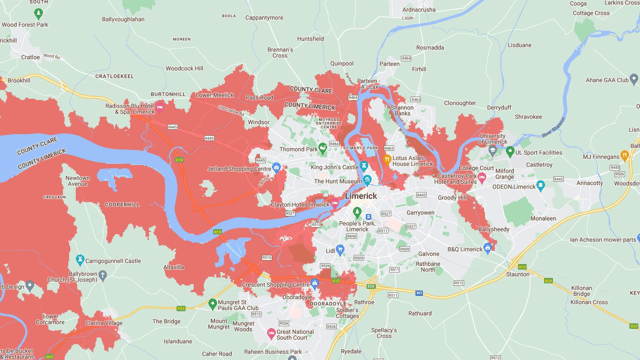
A CULTURE and climate conference in Limerick has heard that a number of areas in Limerick could be below the annual flood level by 2050, with the potential of Thomond Park becoming an island.
The Nights Candles are Burnt Out Culture and Climate Conference, organized by The Hunt Museum in collaboration with Mary Immaculate College (MIC), included discussions around the strategies and actions needed by Ireland to achieve its targets and commitments under the 2024 Climate Action Plan and achieving Net Zero by 2050.
The conference saw a mix of artists, businesses, academic and cultural institutions, climate ambassadors, environmentalists, and community members converge and call on the government to prioritise legislation, education and skills development and community engagement to support Ireland’s transition to renewable energy and the achievement of Net Zero goals.
Keynote speaker Dr Cara Augustenborg set the tone by emphasizing the urgency and scale of the problem, highlighting the exponential rate of climate change with some startling statistics and the need for swift, comprehensive solutions.
As part of her presentation, Dr Augustenborg shared an image generated from The Climate Central website which predicts areas at risk of serious flooding and land projected to be below annual flood level by 2050.
Based on the current rate of change, Thomond Park could become another Limerick island.
She emphasized the need for a skilled workforce to address these challenges, pointing out that if Ireland were to become 100% renewable, it could create 100,000 jobs.
She also encouraged everyone to engage with elected representatives, emphasizing the power of public advocacy, particularly in the upcoming local elections.
The conference also delved into Ireland's potential to become a net exporter of energy, emphasizing the need for strategic planning.
Industry leaders from ESB, GKinetic and Western Star Floating Wind stressed the importance of integrated masterplans and spatial plans for coastal management and energy systems in Ireland, and reflected on how art and culture could change attitudes.
Jill Cousins, Director, The Hunt Museum, said: "The conference delivered a dynamic dialogue between speakers and delegates and inspired tangible actions, to be published in March, towards a sustainable future.
"Speakers and attendees used the World Café, run by John Morrissey of MIC, to generate new connections between culture, the arts, engineering, education and science to galvanise action from the individual to the collective to find ways to manage climate change."