
Digitised history of the Irish Free State comes to Limerick as 'one of a kind' archive is launched

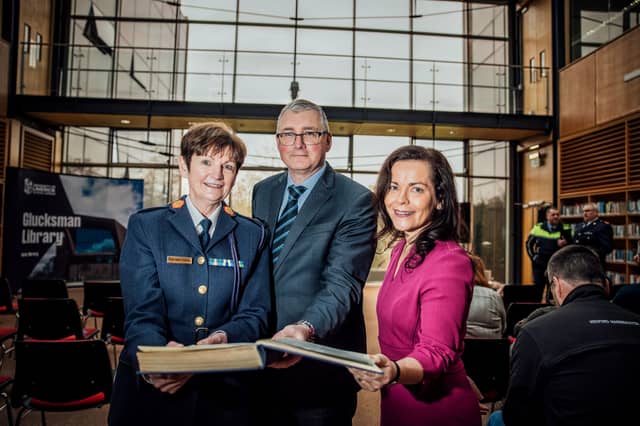

A ONE OF a kind digital archive collection of photographs, drawings and other policing materials of the first ten years of the Irish Free State has been made available in Limerick.
A unique accumulation of materials, entitled ‘20th Century Gems’ via the Garda Review Archive, dates from 1923 to 1932 and has become accessible for people to view in digital form, thanks to the University of Limerick (UL) and an Garda Síochána.
The Garda Review is a magazine that is the longest running publication of its kind in the country. This new digital archive, available in Glucksman Library in UL, offers a fully searchable window into policing in Ireland from the Civil War through the early Free State.
There are early accounts of policing and policing policy, divisional news and movements and transfers of individual Garda, Irish language articles and sporting accounts. Also included are numerous photographs, drawings, and period advertising.
Deputy Commissioner Anne Marie McMahon, who launched the digitised archive, said: “The collection will represent a fascinating look at what was the formative years of An Garda Síochána, not only from an organisational perspective, but also a unique look at the social side of An Garda Síochána at that time.
“It gives a significant insight into the community and sporting history of An Garda Síochána during those formative years, which ensured we remained an organisation embedded in our communities, and of our communities.
“I have no doubt that such a unique archive will not only interest historians, but also the public who will have an opportunity to be reminded of times gone by,” Deputy McMahon added.
Ciara McCaffrey, interim director of the Glucksman Library, said: “The launch of the UL Digital Library late last year means that UL’s unique and priceless collections are opened to digital interrogation by a global, as well as local, cohort of researchers.
“The inclusion of the Garda Review in the UL Digital Library means that the Irish-facing, early 20th century gems of this publication are now available to a global 21st century audience.
“This project is a wonderful example of cultural heritage in the digital age and provides researchers with exciting new ways of exploring Ireland's history.”