
If Walls Could Talk: Ads provide a glimpse into middle class living in Limerick
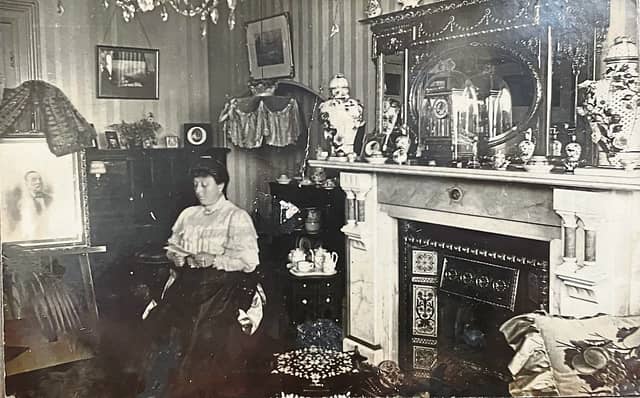

WHILE the large brick townhouses that comprise Georgian Limerick are very well-documented through the existence of numerous photographs, sketches, drawings and plans, no interior images have emerged.
In many cases, we know who lived in these houses, the rent they paid, the names of their landlords, and even the dates of family occasions such as births and weddings. Unlike large country mansions, which were often photographed or captured on canvas, the interiors of townhouses in cities such as Limerick, were rarely documented.
Therefore, we must rely on tangential sources to imagine how these houses appeared in respect of interior design. One such source are the countless auction notices printed in the local press. Many of these notices list contents room by room thus informing us of trends and fashions in interior design. Over the course of about 150 years, changing tastes, types of furniture and room usage are all reflected in these notices.
In the latter end of the eighteenth century, many of the houses were lavishly decorated and boasted ornate coving, carved chimney pieces, and oak floorboards. The rooms were adorned with gilt mirrors, Sheraton and Chippendale furniture, and Adams fireplaces. When the Victorian era began, it ushered in cluttered spaces with indoor plants, jardinières, and larger pieces of furniture. The elegance and sophistication of the Georgian period had come to an end.
So, how were these tastes in interior design reflected in Limerick? In January 1805, Mr Connell, an auctioneer, sold the contents of the late Mrs Rosslewin of George Street (O’Connell Street). The items included a mahogany sideboard, set of joining tables, breakfast and card tables, spider and pier tables, tall and low boys, prints and paintings, feather beds and a good clock.
In the same year, the entire household furniture of the late Saul Bruce of George Street was sold. It consisted of sideboards, a set of tables, mahogany and parlour chairs, while other items included a dinner service of burnt China, plated candlesticks, covered dishes and an epergne (an ornamental centrepiece for a dining table, typically used for holding fruit or flowers).
A few months later, at the house of Mrs Martha Jellico, 4, Francis Street at the corner of the Custom House Gate, the sale of ‘excellent furniture’ was announced. Items included drawing room chairs, oak tables, window curtains, toilet tables, and ‘every necessary article of kitchen furniture.’
In 1810, at the house of the late Stephen Long Esq, of Upper George Street, the entire household furniture was sold. The lengthy notice in the Limerick Gazette informed the public that items included a Northumberland cellaret sideboard (a lockable small furniture cabinet which is used to store wine or whiskey), conversation stools, large Spanish mats, clothes press, and ‘all useful kitchen requisites.’
Several auctioneers worked in the city including Thomas Seymour who sold the entire contents of 2, Cecil Street in February 1818. Seymour advised that ‘sofas, sun blinds, and a quantity of excellent sheeting’ were among the items being sold. In addition, a ‘set of brown edged ware, roasting Jacks (sometimes called spit jacks for grilling meat on a spit in an open fire by rotating the spit), and kitchen furniture’ were among the lots. A few months later, Seymour advised the public that the ‘entire furniture of Mrs Harte of Richmond Place (the Crescent)’ was being sold without reserve. Mrs Harte’s furniture included items from her drawing room, dining room, parlour, servants’ rooms, kitchen and out offices.’ The inclusion of these rooms in the sale notice provides an insight into the arrangement of the principal spaces in the house.
By 1834, interior fashions had begun to change, and these are chronicled in sale notices. For instance, the contents of no. 1, Francis Street came up for auction on January 1, 1834 and included ‘Moreen window curtains, French dressing tables, boxes and stands, and clocks.’ By the end of the year, John Seymour was selling ‘Turkey and Persian carpets, Bengal hearth rugs, a piano forte, and a new gig (a two-wheeled open carriage with large wheels, a forward facing seat for a single horse).’
During the years of the Famine, auctions of household furniture appear to have increased. For instance, in 1846, Mr McAuliffe, advised the public that he had for sale at his showrooms an extensive array of household items including ‘chimney glass, French clocks, Canterbury tables, Grecian sofas and loungers, Venetian chairs, Brussels and Kidderminster carpets, Ottoman stools, India China, papier mâché chairs, pewter ware, and two easy leather chairs.’
A few years later in 1849, Thomas Bernal, auctioneer, held a huge sale of items from a house in George Street. Among the many lots were ‘reclining and Elizabethan balloon chairs, a sarcophagus, hall globes, rosewood piano forte, set of 12 Sheraton chairs, Chippendale carved mirrors, tumblers, rummers, morning and evening tea services, plate drainers and spirit casks.’
Auctioneer notices in newspapers remain one of the best sources available for gaining insights into how Limerick townhouses were furnished. Generally speaking these houses were elegantly furnished with carpets, curtains, and with possessions like fine China and glass as can be seen in the above sale notices.
Until such time as photographic evidence surfaces, we are at a loss as to know exactly how these spaces appeared.
Dr Paul O’Brien lectures at Mary Immaculate College.