
If Walls Could Talk: The first residents move into Limerick's Frederick Street
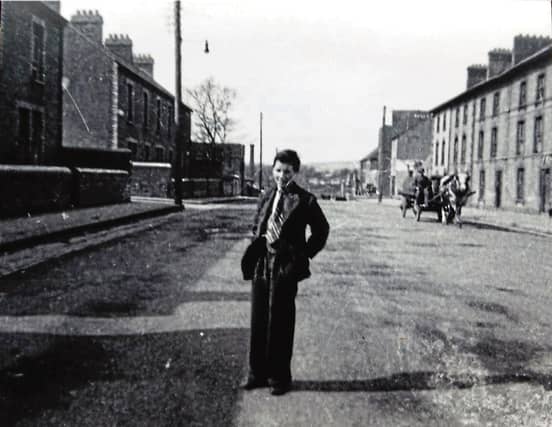

O’Curry Street (formerly Frederick Street) connects the Dock Road to Henry Street and was once home to the city gasworks, large townhouses, houses and gardens, the former Guinness depot at Inver House, and several pubs. Also on the street is the Sailors’ Home, recently destroyed in an arson attack. The earliest residents of this vibrant street comprised naval and army officers, civil servants, and those from the professional classes. The earliest mention of the street is from 1827 when George McKern’s, Plan of the City of Limerick, was published.
Contemporary newspapers contain reports about the very first residents of Frederick Street such as Mrs Ringrose-Woods who gave birth to a son and heir at her house on the street in November 1828. Ringrose Woods was from Ballyquin, Co Clare and his wife, Anne Meredith, was the adopted daughter of Miss Honora Meredith of Limerick. The couple married in Limerick on January 27, 1820. They were the parents of at least two sons and three daughters. Sergeant Ringrose Woods was born on May 4, 1784, in Co Galway, the son of William Woods and Woods. He registered for military service in 1807. Sometime after 1835, the family emigrated to Canada. Ringrose Woods died on July 6, 1844, in South March, Ottawa, Ontario, Canada, at the age of 60, and was buried in St John’s Anglican Cemetery.
The following year at her home on Frederick Street, Mrs George N Russell died. Her husband George was a grocer and wine merchant. In August 1825, he was charged with ‘having given Betty Fitzpatrick, a quantity of sugar, mixed with arsenic, with the intent to poison her.’ The case centred on an attempt to defraud an insurance company. It was found that Fitzpatrick was the mastermind, and that George N Russell was innocent. He was set free, and she was arrested. The account of the trial in the Limerick Chronicle noted that when the verdict was read out, the ‘court burst into a loud applause.’
Another family living on the street in 1829 was the Henwoods. From 1825-1845, Charles Henwood was the chief engineer to the United General Gas Company situated along Frederick Street and the Dock Road. He resigned in 1845 and established his own company. When he departed the United General Gas Company, a list of leading citizens and customers of his former employers announced in the Limerick Chronicle of April 2, 1845 that they would be following him in his new endeavour. Among the names were Ralph Nash, Samuel Alexander, Thomas Evans, James Myles, Edward Cruise and W Unthank. Henwood’s new business, the Phoenix Iron Works was situated at no. 1, Roche’s Street, and was leased from John Fogarty, architect. Henwood was active in several civic bodies in the city and from the mid-1840s, he served on the committee of the Philosophical House along with well-known Limerick citizens Isaac Unthank and Thomas Fitt. Charles Henwood sold his business in 1854 and the lease was taken over by Thomas Usborne. The Henwoods disappear from the newspaper record thereafter.
From about 1832, Lieutenant Robert Hewitt was residing at no. 6 on the street. Hewitt was appointed barrack master of Sligo in 1836 and as a result sold his interest in no. 6 along with the contents. It was described as a ‘neat, compact, and very desirable house situated in the most beautiful part of the suburbs within a few minutes’ walk of George Street (O’Connell Street).’ It has a walled-in garden, fully planted.’ After his posting to Sligo, Robert Hewitt was dispatched to Clonmel. He resigned in 1856 owing to his ‘health giving away in consequence of wounds received at Waterloo.’ During that battle, he lost a leg and was severely wounded in multiple parts of his body. The then Commander-in-Chief, the Duke of York, gave him a five year leave of absence.
Another resident of Frederick Street was Joseph Gabbett Bouchier, Esq, of the Royal Tyrone Regiment. He died at his house on the street in 1841. In the 1850s, no. 6 was home to James R Millington and family, he was the proprietor of the Limerick Herald. In 1853, no. 7 was home to the Mackey family; Hugh Mackey was staff surgeon to the army in the city. In 1855, Andrew Seymour, a mineral water manufacturer and superannuated excise officer, with an address on Frederick Street was declared an insolvent debtor in the Dublin Daily Express. Z. J. Ledger Esq, and family were residents on the street by 1862. The death of Christopher Dignan, Esq, formerly of Carrig House, Co Tipperary, was announced in the Freeman’s Journal of May 19, 1869. Dignan had been living in a large house on Frederick Street for some time. He left a widow and children.
Frederick Street was renamed O’Curry Street in the early twentieth century, and it continues to be home to a vibrant community, although these days, the street is very much part of the city and not in the suburbs as it was for many years.
The launch of Dr Paul O’Brien and William Banks’ much anticipated book entitled Taprooms, Taverns and Alehouses: Limerick City Pubs c.1850-2024 takes place in Mother Mac’s, 9 High Street, Limerick on Wednesday July 10 at 8.30pm. All proceeds are being donated to Down Syndrome Limerick. All are welcome to attend. The launch is kindly supported by Heineken. Our thanks to Clive Larkin, sales manager at Beamish & Crawford for his assistance.
Dr Paul O’Brien lectures at Mary Immaculate College.