
Limerick-based researchers on a mission to eliminate road crash deaths
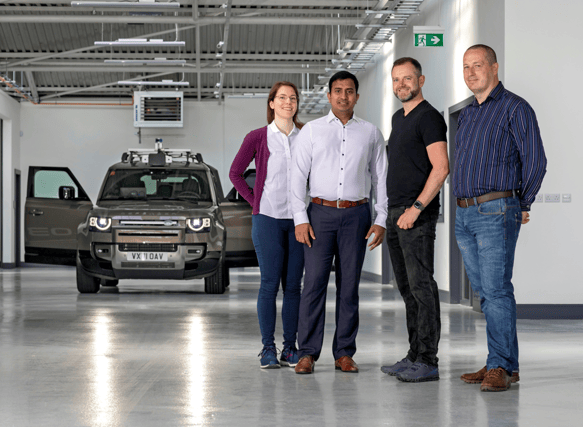

LIMERICK based researchers are on a mission to eliminate road crash deaths using AI and robotic technologies.
Researchers at Lero, the Science Foundation Ireland Research Centre for Software, based at the University of Limerick have teamed up with automotive perception company Provizio for the project.
The researchers are aiming to develop artificial intelligence tools to end traffic accidents on the world’s roads which result in 1.35 million deaths annually with more than 50 million people maimed, and the cost to the global economy is estimated to be just shy of €2 trillion annually.
Provizio founder and CEO Barry Lunn said: "Preventable human error has a role in more than 90% of road accidents. The numbers have not changed for more than 20 years.
"Unless we initiate change, this worldwide problem will continue unabated. We started Provizio to solve this problem firstly, and then we will pave a path to safe, sustainable and ubiquitous autonomy.
"With the right focus, we believe that robotics and drivers can work together to reduce both road deaths and accidents to zero – 1.35 million to zero drives everything we do."
Lero researchers Dr Ciarán Eising and Dr Pepijn Van de Ven will focus on the fusion of data from onboard cameras and radar sensors to help eliminate traffic accidents for all drivers – human and robotic.
Dr Eising explained: "Every decision to move that an autonomous car makes, based on its sensor inputs, is potentially a life or death one. The time-critical nature of the car’s operation means that only the car can make these decisions safely and reliably.
"A critical challenge to the successful deployment of autonomous vehicles is the difficulty the vehicle has in viewing and understanding the environment in which it must safely operate and understanding its location within that environment."
Provizio founder Barry Lunn said: "We started Provizio to solve the global road death pandemic. For the last 20 years, international regulatory policy has focused on trying to make us better, more responsible drivers.
This approach has failed consistently. We are building augmented, guardian angel technology to make us all better and safer drivers. We are using unparalleled ‘beyond-line-of-sight’ sensor technology coupled with artificial intelligence ‘on-the-edge’ to perceive, predict and prevent accidents."