
Limerick community opposed to wind farm to hold public meeting

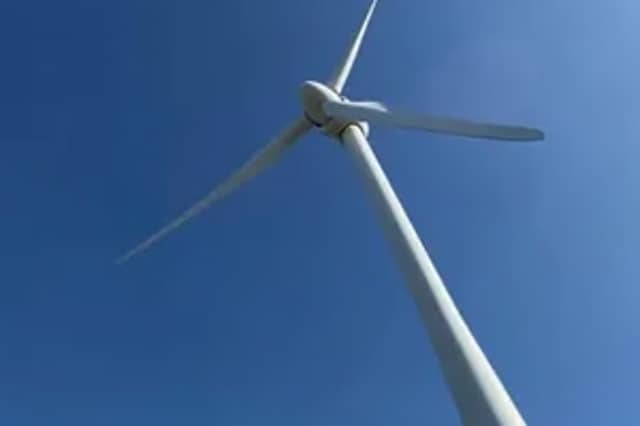

The Bruff Dromin Athlacca community action group opposing the Ballinlee Wind Farm will hold a public meeting in Bruff GAA club on Wednesday, November 11
THE COMMUNITY action group from Bruff and Dromin/Athlacca, opposed to the Ballinlee Wind Farm, which was recently granted planning permission for 12 wind turbines, are holding an emergency public meeting.
The meeting will take place in Bruff GAA club this Wednesday, November 11 at 7.30pm.
Organisers are encouraging people to attend and to make their friends, family, and neighbours aware of it too.
Despite more than 300 submissions opposing the development being submitted, An Coimisiún Pleanála granted permission for 12 out of 17 wind turbines, with conditions attached.
Speaking on behalf of the community group, Marie-Clare Power said that the planning approval decision has left them feeling “angry, disillusioned and questioning the fairness of Ireland’s planning system.”
She said that they feel submissions were not given due consideration.
“These are real people, families and children whose individual circumstances and vulnerabilities have not been given proper consideration.”
Ballinlee Green Energy welcomed the planning decision: “Projects such as Ballinlee play an important role in tackling climate change, strengthening energy security, and contributing to Limerick’s climate action ambitions. The decision represents a positive step towards harnessing Limerick’s renewable energy resources and supporting Ireland’s transition to a cleaner, more sustainable energy future for us all.”
An Coimisiún Pleanála have placed 30 conditions on the planning approval including ones relating to noise and shadow flicker, however the community group are not confident that these will be fully complied with.
According to Limerick City and County Council, there are seven open planning enforcement cases against wind farms, with one dating back as far as 2018. Three of these relate to noise and shadow flicker.
Ms Power said that they feel the decision was made due to the climate action plan.
“These obligations must not remove its responsibility to properly assess individual developments and their impacts on local communities, and that is clearly what has happened here.”
Ms Power said the impact of this decision on the community, if left unchallenged, will be detrimental.
“This is the most densely populated area ever proposed to host a wind farm. It cannot be allowed to proceed.”
The five turbines which are not being approved were removed to protect whooper swans that forage in the wetlands and floodplains, and this was welcomed, however the group don’t think the same considerations have been given to people.
“The system has proven itself to be entirely undemocratic. People engaged in the process, raised legitimate issues and placed their trust in the planning system.
“Yet we are now left questioning whether those voices have carried any meaningful weight. Many issues were either not acknowledged or were totally dismissed,” Ms Power stressed.
Of particular concern to the group is what it considers an inadequate assessment of the impacts on vulnerable residents, including children, people with autism, those experiencing anxiety and individuals whose wellbeing would be particularly affected.
In the inspector's report, the inspector states: “For those that are concerned regarding effects or who oppose the development, I accept that psychological stress and/or annoyance may arise.”
Responding to this statement, Ms Power said: “We find this deeply disturbing. These are legitimate issues about people’s health and wellbeing, not simply annoyance arising from opposition to a development.”
Ms Power also highlighted what they see as the significant imbalance of power between developers and rural communities.
“Developers have substantial financial resources, professional consultants and legal expertise at their disposal, while ordinary hardworking families are left trying to navigate an enormously complex planning system, often at considerable personal and financial cost. It is not a level playing field.
“Time spent fighting these developments is time robbed from spending with their families. We need urgent ministerial intervention to call a halt to these developments, which are placing people's health secondary to meeting onshore wind energy targets.”
She said the decision raises wider questions about climate justice and the responsibility of the State to protect rural citizens.
“Rural communities are entitled to the same standards of public health protection, environmental safeguards and consideration of human rights as communities elsewhere in Ireland.
“We recognise the importance of reducing fossil fuel use, but climate action must not come at the expense of social justice. If we were serious about fossil fuel reduction, we wouldn't be encouraging the rapid development of data centres. It is a complete contradiction.”
The group are calling for Government intervention to put a stop to these developments “which are placing people’s health secondary to meeting onshore wind energy targets.”
Ms Power said: “We will not simply accept this decision. We firmly stand over our position that this area is an entirely unsuitable location for an industrial-scale wind factory.
“Democracy must mean more than the right to object. It must mean the right to be heard.”