
‘Politicians can feel slightly out of reach to young people’: Voting in your twenties in Limerick


Student vote: Will Gen Z turn out in numbers?
FOR thousands of young people nationwide, this General Election will be our first chance to have a say in who represents us at a national level.
It’s a big deal, but the question is whether or not younger generations realise that it is.
People in their late teens or early twenties are always a subject of fascination when the breakdown of the turnout emerges after voting day, as we are nearly always underrepresented in the polls.
The main issues that students are focused on for this election include the usual suspects of the cost of living crisis and the lack of student accommodation, as well as steep college fees and the need for regular and reliable public transport.
For many, Palestine and the Occupied Territories Bill are high up on the agenda, and the wider issues of health and crime are also on young people’s minds.
Despite being particularly impacted by many of the issues outlined above, as an age demographic, we are not known for our incredible turnout at elections. However, I feel the need to make a few arguments in our defence.
College students are often stuck in a no-man’s-land situation when it comes to voting - many students don’t go to college near their home, and therefore have to choose either their home address or college address as their voting constituency.
They understandably can’t have a say in both, but it’s also understandable that voting may feel less important when it’s for a place you only live in half of the time.
There is, of course, the age-old problem of students journeying home from college to vote, and there is also the lesser-discussed issue of the thousands of students who are studying abroad on their Erasmus or Exchange placements.
Unbeknownst to many of these students, they are eligible for postal votes. Unfortunately, they only have two days after the dissolution of the Dáil to get the relevant form filled out, including getting written confirmation from a college official that they are, in fact, studying abroad.
Politicians can also feel slightly out of reach to young people, both in that there are very few our age, and that student villages aren’t exactly key areas for canvassing, so young people can often feel slightly disjointed from politics, leading to passiveness in the polls.
However, ‘passive’ is not the word I would use to describe the conversations I’ve witnessed my peers having about this election.
‘Unprepared’ may be slightly more accurate, as the phrase I hear most often is “I really must actually sit down and do some research”, but these students, I believe, do genuinely intend to “sit and do some research”.
Social media, unsurprisingly, is where we get the bulk of our knowledge, but, closer to election day, or perhaps on it, students will turn to Google to try and find whatever information they can on their local candidates before heading to the polling stations.
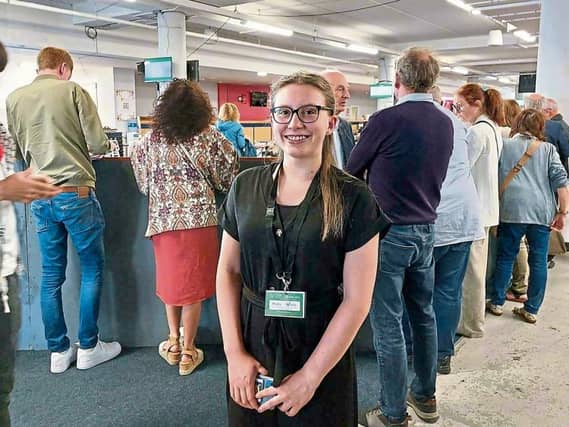
As a journalism student who is currently working in a local newspaper covering the elections, my sense of what young people are feeling, and my optimism for the turnout of my generation in the polls, could be slightly skewed. As someone who also works in a polling centre on voting day, I feel less optimistic, given the age demographic of voters at the previous two votes this year.
But, each time an election comes around, we get a few first-timers that bring back hope. Some come straight from school, still in their uniform, bright-eyed and ready to have their say.
I hope, for my generation’s sake, that many of us make the same choice on Friday - to have our say in the future of our country.