
Puppy, 9 months old, 'illegally mated' in Limerick establishment, complaint states
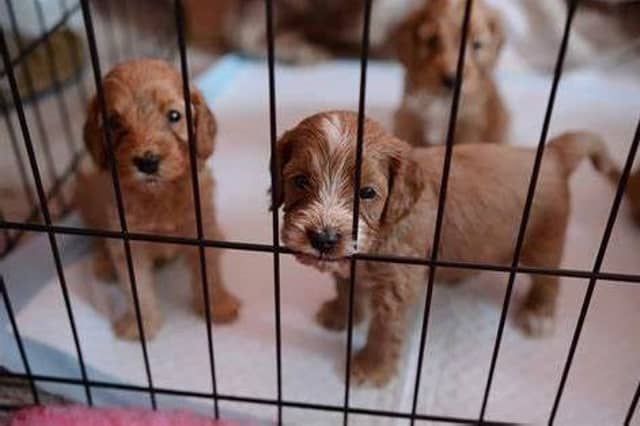

The establishment in question exports puppies to the UK, Switzerland, and France
A NUMBER OF Dog Breeding Establishments (DBEs) around County Limerick have had their licenses renewed despite serious issues, including “severe overbreeding” and puppies sleeping on wood shavings.
Records seen by the Limerick Leader, obtained via a Freedom of Information request, revealed that five Dog Breeding Establishments in County Limerick were inspected between June 15 and August 5 of 2026.
One DBE had received a complaint regarding the alleged illegal use of a nine month old puppy for mating. The complaint provided evidence from a popular dog-selling website, alleging that a registered breeder in Limerick was putting puppies through “severe physical exploitation”.
In an email thread seen by Limerick Live, the Department of Agriculture were informed of a puppy that had given birth to a litter at 11 months old, suggesting that she had been “mated at approximately 9 months old”. By the age of 19 months old, the same dog had given birth to a second litter of puppies which were being advertised for sale on social media.
When the Department inspected the premises, they found dirty water bowls and incomplete records.
The establishment in question exports puppies to the UK, Switzerland, and France, despite serious issues with microchips. Microchips scanned by inspectors showed that four puppies were registered to different owners, and two implanted microchips were “unrecognisable”.
Sleeping conditions were poor for puppies, with the inspector noting that their bedding “does not meet acceptable welfare standards,” and that the shed they resided in was “not adequately insulated or warm enough.”
The establishment retained its license to breed up to 14 bitches on the premises.
Dogs in another establishment “appeared cowardly” and required more socialisation, according to the inspection report. Yorkies and Cocker Spaniels were sleeping on wood shavings and sawdust, which the inspector noted can cause skin irritation.
Their food was stored in a milk churn with cobwebs on it, described as “old, rusty, and hard to open”.
The kennel lacked natural light, and heat lamps were recommended by the inspector as the current temperature was not suitable for puppies.
Three dogs had unregistered microchips, an offense under the Animal Health and Welfare Act.
In their report, the inspector performing the check must tick boxes and fill out pages with information, ensuring the DBE meets certain standards. The documents were significantly redacted, and so none of these establishments can be identified.
Another registered establishment’s kennel had a strong smell of urine and feces, despite being cleaned two days prior to the inspection. The Yorkies, Shih Tzus, and Bichon Frises bred by the establishment spent their day on concrete, and had no grass for walking or playing.
This kennel, among others in the report, had no evacuation plan in place in the event of an emergency.
A number of these properties also lacked isolation facilities, which are part of the DBE registration requirements.
An inspection of a different DBE in June revealed that 11 puppies and 8 bitches, sleeping in boxes with wood shavings, were receiving no lead walks and had no toys. One full-time staff member was responsible for their welfare.
The inspector noted that toxic chemicals were stored improperly, in a container that could not be locked.
In the documents retrieved through the FOI request, none of the inspected DBEs had their licenses revoked. Instead, their licenses were renewed, and operators were told to amend these issues before a specific date, mostly two months after the date of the original inspection.
In a statement to Limerick Live, the Department of Agriculture did not comment on whether any of these establishments have been revisited:
“While the Department does not comment on individual dog breeding establishments, all reports of alleged animal neglect or cruelty received by the Department are investigated and appropriate action is taken.
“As of September 30 2026, 171 inspections of dog breeding establishments were carried out by Department Veterinary Inspectors. Fifty-six of these were carried out in the Southwest region, of which 37 were unannounced inspections.”
Currently, 21 Dog Breeding Establishments around the county are registered with Limerick City and County Council. They must pay a yearly fee based on the amount of bitches they are permitted to breed and are subject to annual inspections performed by the Department of Agriculture.