
‘The sap burned the skin off my hand’: Limerick’s battle against invasive species
Hogweed is a threat to biodiversity and can cause third-degree burns if its toxic sap comes into contact with skin
IN THE rain on Barrington’s Pier in Limerick city, Nicholas Head is getting suited and booted in protective clothing.
He is the director of NPH Knotweed Services Limited, a company contracted by Limerick City and County Council to manage invasive species across the county.
Limerick Live is present to learn about his efforts to exterminate a dangerous alien invader known as giant hogweed - an invasive plant species that can be found all over the country.
If any part of the plant touches the skin, it can leave behind toxic sap which reacts with sunlight and causes extreme blistering and third-degree burns.
“I had a hole in my glove and within an hour and a half the sap burned the skin off my hand and all up my forearm was red raw. A friend of mine was burnt 20 years ago while strimming Giant hogweed. To this day if he takes off his shirt in the sunlight the burns flare up,” says Nicholas as he pulls on his gloves.
I had a hole in my glove and within an hour and a half the sap burned the skin off my hand
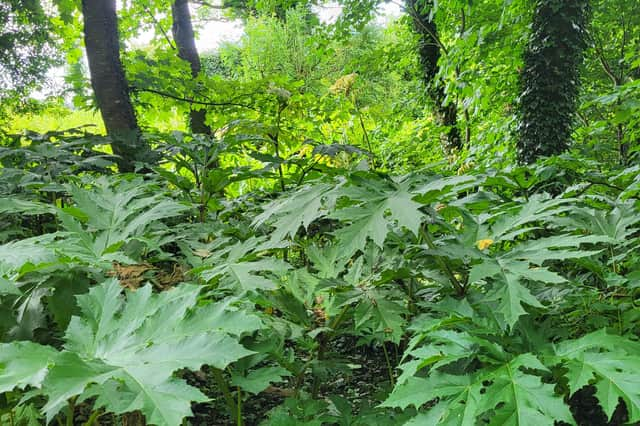
Giant hogweed commonly grows on roadsides and in tucked-away thickets in forests and fields. It is mostly found growing on the banks of Ireland's waterways, particularly along the River Shannon and the Mulkear in Limerick and Tipperary.
Its umbrella-shaped flowering heads can produce hundreds of thousands of seeds, each with the potential to become a mature six-metre tall hogweed.
Due to its sheer size and reproductive voracity, it can completely decimate local ecosystems, blocking smaller plants from the sun whilst providing little food for animals and insects.
It anchors itself to the riverbank with a massive parsnip-like taproot that can burrow up to two feet deep. It viciously leeches nutrients from the soil and can actually permanently change the chemical composition of the area, making it inhospitable to native species.
“Once the plant flowers and disperses its seed - it dies. It leaves a big hole in the bank which ends up being eroded,” comments Nicholas as he lays out his equipment.

He is now decked out in protective gloves, a jacket and waterproof pants - gear that looks more suitable for hiking rather than tackling a dangerous infestation that could cause potentially lifelong skin damage.
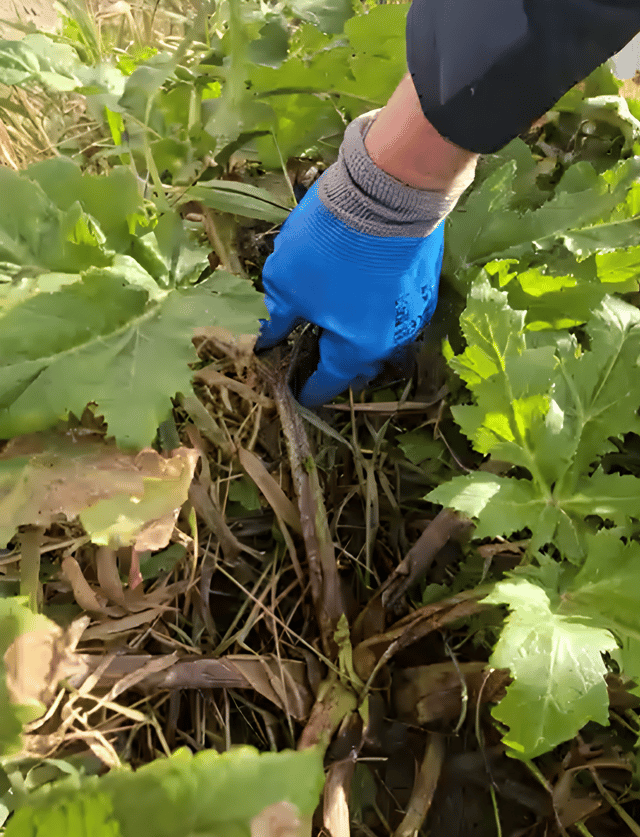
We make our way down to the water’s edge where Nicholas points out his latest victim. The specimen that lays at our feet is not the towering green behemoth one would expect. Instead, there is a small mess of thick stems sporting jagged-edged leaves. Perhaps a more apt name for it is ‘small pigletweed’.
Nicholas explains that this specimen is in its infancy and that it has spread from a much bigger infestation upstream.
He snaps open a plastic case and begins piecing together a metallic pistol-like syringe gun. Plastic tubing connects the gun to a knapsack of herbicide which he swings onto his back.
He is preparing to inject a small amount of Roundup into the main stem of the hogweed. This specialised method is an alternative to spraying herbicide. Spraying targets the plants leaves but can damage surrounding vegetation. There is also a risk of chemicals mixing into nearby bodies of water.
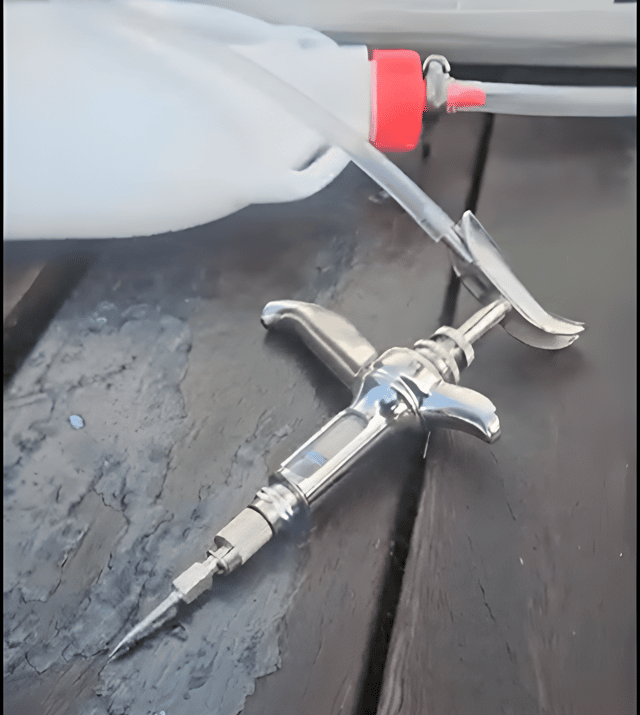
“The stems have a hollow in them. This needle has a hole in the side which releases 1.5 ml of herbicide. It’ll work for 6 or 7 weeks at killing the roots off. We would inject these young plants only once”, Nicholas explains as he calmly inserts the needle into the thickest stem.
The hogweed being injected is hard to tell apart from the surrounding weeds on the pier. Although it is small, this specimen could go on to mature and scatter its seeds into the River Shannon, potentially causing more infestations upstream.
Nicholas continues, “On some of the rivers we work on, infestations have completely killed off the native habitat. It can go on for kilometres, completely destroying riverbanks.”
The seeds can also be dispersed by humans when they get stuck on shoes and car tires.
“It originally came in from the Caucasus Mountains in the early 1800s. Big manor houses used to have exotic plants growing on their grounds. A lot of invasive plants were brought in as ornamentals in posh peoples gardens.”
Nicholas and his team often tackle much larger infestations, “In a project for Waterways Ireland we cut off 8,000 flowering heads at one site over two weeks. Just one head has 100,000 seeds.”
The seeds are quite heavy and usually fall close to the parent plant. This creates a dense towering thicket that completely dominates the surrounding habitat.
“You go in completely covered with a pruning saw to cut off the flowering heads. We then have to cut up the stems into small pieces because if they are left on the ground they still have enough energy to develop seeds. We then have to revisit and check for secondary flowering heads.
“In some places we have to walk for miles carrying water, herbicide and gear, often in 30 degree weather.”
Nicholas is contracted by the council to tackle infestations on public land. If hogweed is growing on a roadside and it spreads into private land it cannot be fully treated without permission from the landowner. The council will often treat the infestation to the land boundary and then advise the owner on further action.
Clearing hogweed on a public riverbank is useless if private land upstream is infested. Most funding streams for treatment also only apply to sites on public land.
“We could do as much work as there's funding available. We are doing our best with the budget that we have.”
Nicholas works for 6 months out of the year treating hogweed. The timing of treatment is very important as it is imperative that the plant is killed before it begins flowering in the summertime.
“We need to start work before early May because if treatment starts later there is a greater chance of flowering and seed development and then the whole project is in jeopardy. If funding was available earlier our work would be a lot more effective.”
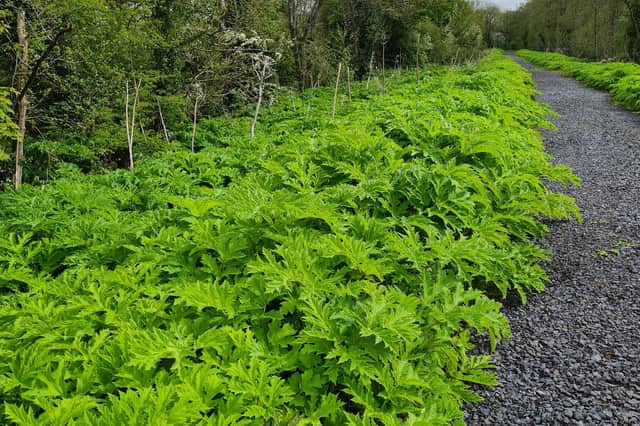
Successful hogweed exterminations can take years with contractors returning yearly to inject, spray or cut away the plants.
Approximately €10m would be needed to completely eradicate hogweed from rivers in Limerick alone. There is also a hidden cost in the removal of hogweed cuttings as it is classified as hazardous waste and must be incinerated.
“I think this is something that will always have to be maintained. Successful projects can take up to 25 years. It is a massive threat to biodiversity and public health so it has to be done.”
We leave the scandalous little plant to live out the rest of its miserable days rotting on the pier. It is one of many infantile invaders quietly growing across Limerick that Nicholas is tasked with killing - he is a very busy man.