
UHL staff urge public to 'know the signs' of heart attacks and seek help

MEMBERS of the public are being urged to ‘know your numbers’ on heart health and not to hesitate in calling 112/999 if they suspect they are having a heart attack.
"Don’t waste time in making that call", a Limerick doctor and cardiology patient at University Hospital Limerick said, after a national audit found only 44% of heart attack patients in Ireland sought medical help within an hour of the onset of symptoms.
The Irish Heart Attack Audit 2021, which has just been published by the National Office of Clinical Audit, examined the care of 1,491 patients who had a STEMI heart attack that year, 189 of whom were admitted to UHL. A STEMI (ST-elevated myocardial infarction) is among the most serious of coronary events, involving a major blockage of the artery.
Patients can be treated either through thrombolysis (a clot-busting drug) or through primary percutaneous coronary intervention (primary PCI), which involves inserting a wire into the blocked artery to open it with a balloon and stent.
UHL is one of 10 primary PCI centres in Ireland, and one of two hospitals meeting national target for timely intervention in cath lab for heart attack patients
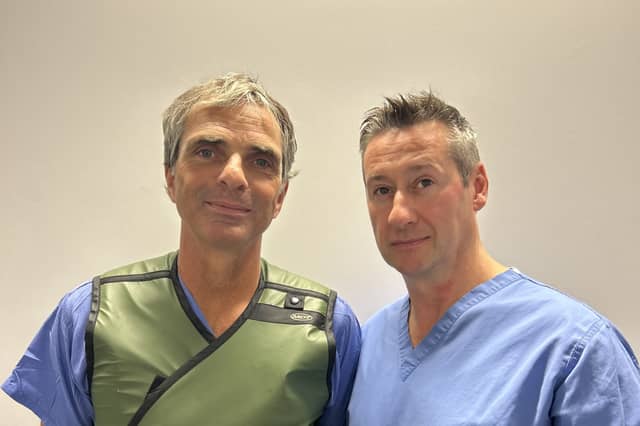
Limerick-based occupational health physician Dr Pat Lee was among the patients brought to a primary PCI centre last year and was glad to share his patient story in the national audit. Dr Lee described how his event began at home after dinner one evening with a feeling of uneasiness he initially felt was either in his upper tummy or lower chest. Thinking he may be having an atypical coronary event, and after an aspirin failed to ease the symptoms, he swiftly called an ambulance and, before he knew it, was in the cath lab at UHL.
"My advice is to err on the side of caution, and if you have any concern about any symptoms that may or may not be cardiac in nature, do not waste time. Phone 112 or 999 and let the paramedic make that call, and, if it is a STEMI, you will be treated in the right place at the right time and hopefully with as good an outcome as I had," Dr Lee said.
Dr Lee added that he considered himself medically well over the years, took regular exercise and underwent annual blood tests.
“What was against me was the family history of heart disease: we cannot change that one factor. All the other factors we can change where needed,” he explained.
Marking Irish Heart Month this September, Breda McDermott, CNM2 Cardiac Rehabilitation, University Hospital Limerick, agreed with Dr Lee that lifestyle factors are essential in reducing our risk.
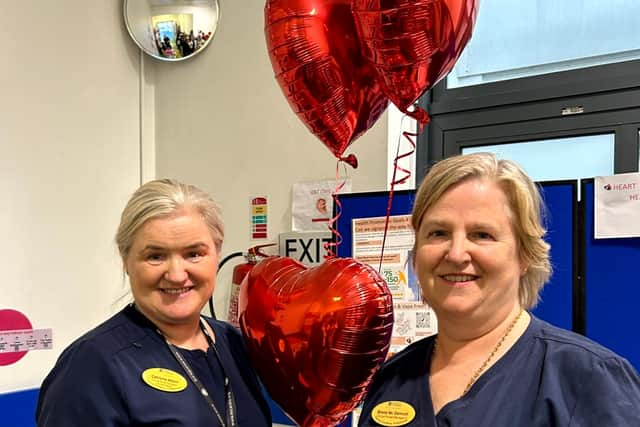
"One of the recommendations arising from the audit is a renewed public awareness campaign around the harmful impact of smoking on heart health," Ms McDermott said, who along with clinical nurse specialist colleague Catriona Ahern is one of the audit co-ordinators for the STEMI service in UHL.
Ms Ahern added: "In relation to the risk factors, we are encouraging members of the public to know your numbers – whether that is aiming to keep your blood pressure at under 120/80 or maintaining a healthy weight. There are valuable resources on knowing your numbers on the websites of the HSE and the Irish Heart Foundation and you can also discuss your numbers and what they mean with your GP."
The national audit has also looked at the performance of hospitals around the country in meeting national targets set by the national clinical programme for acute coronary syndrome.
Among the key findings for University Hospital Limerick, 94% of all STEMI patients received timely reperfusion (within 120 minutes for primary PCI patients) at UHL, one of two hospitals which exceeded the target of 90%. Timely treatment is associated with reduced patient mortality.
75% of STEMI patients transferred from another hospital got timely primary PCI compared to 41% nationally, and 79% of STEMI patients arriving by ambulance bypassed the ED and went directly to the cath lab, compared to the national average of 73% (national target 80%).
Commenting on the audit findings, Prof Tom Kieran, Consultant Interventional Cardiologist, UHL, and HSE National Lead for Primary PCI, said: “This is a very timely review for our service and for our region. One of the things to remember is that we are probably the youngest primary PCI centre in the country, having been set up in 2013.”
"The national picture shows that 82% of patients who arrive at a primary PCI centre receive timely reperfusion but that only 41% of patients who arrive at a non-primary PCI centre receive timely reperfusion. So hospital transfers is an area for improvement that colleagues around the country are focusing on."
Recommendations in the audit also focus on greater public awareness and Prof Kiernan said a new national campaign needs to encourage more patients to do as Dr Pat Lee did in making an early call to the emergency services.
“As it stands at the moment, only 44% of patients call an ambulance within an hour of symptoms. If patients are at home and if they have chest pain, they need to call us early. Time is muscle. If you get to us early, you will have a better outcome. The international evidence on that is very clear and it is something we cannot emphasise enough,” said Prof Kiernan.