
University of Limerick researchers make breakthrough molecular discovery
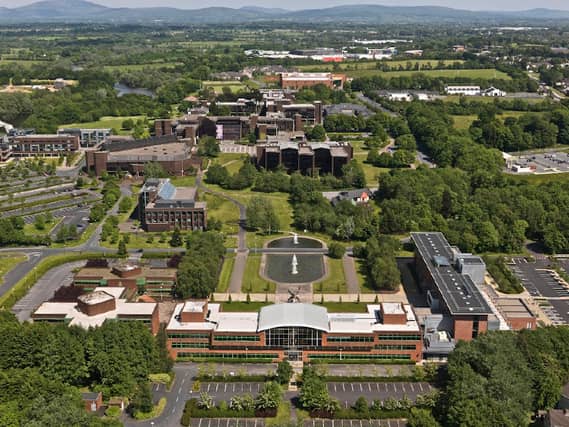

NEW RESEARCH from the University of Limerick reveals ‘brain-like computing’ at molecular level is possible.
The breakthrough discovery shows for the first time that unconventional brain-like computing at the tiniest scale of atoms and molecules is possible.
Researchers at University of Limerick’s Bernal Institute worked with an international team of scientists to create a new type of organic material that learns from its past behaviour.
The discovery of the ‘dynamic molecular switch’ that emulate synaptic behaviour is revealed in a new study in the prestigious international journal Nature Materials.
The study was led by Damien Thompson, Professor of Molecular Modelling in UL’s Department of Physics and Director of SSPC, the UL-hosted Science Foundation Ireland Research Centre for Pharmaceuticals, together with Christian Nijhuis at the Centre for Molecules and Brain-Inspired Nano Systems in University of Twente and Enrique del Barco from University of Central Florida.
Working during lockdowns, the team developed a two-nanometre thick layer of molecules, which is 50,000 times thinner than a strand of hair and remembers its history as electrons pass through it.
Professor Thompson explained that the "switching probability and the values of the on/off states continually change in the molecular material, which provides a disruptive new alternative to conventional silicon-based digital switches that can only ever be either on or off".
This breakthrough opens up a whole new range of adaptive and reconfigurable systems, creating new opportunities in sustainable and green chemistry, from more efficient flow chemistry production of drug products and other value-added chemicals to development of new organic materials for high density computing and memory storage in big data centres.
"This is just the start. We are already busy expanding this next generation of intelligent molecular materials, which is enabling development of sustainable alternative technologies to tackle grand challenges in energy, environment, and health" explained Professor Thompson.