
Exhibition titled If You’re Not Scared, The Atomic Bomb is Not Interesting opens in Tipperary
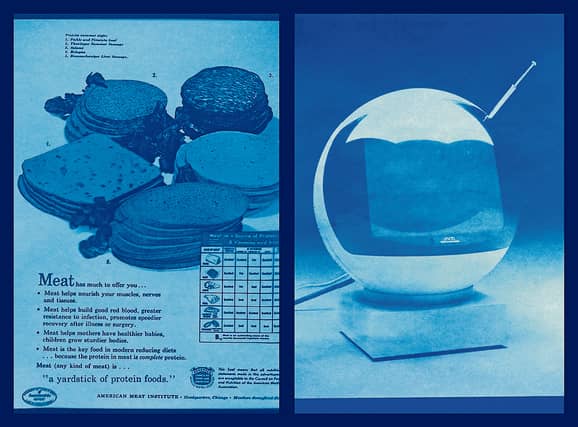

Breda Lynch is a visual artist working in a variety of media, including drawing, photography, print and digital media, video, and installation.
She engages with dialogues and discourses on - queer feminisms, the Western mystery tradition and Occulture, appropriation and the economy of the image.
Lynch engages with methodologies and approaches that respond to the history of mechanical reproduction and digital reproduction online.
The persistent circulation of images in the public domain, all the while querying our relationship with the image, its consumption, distribution, reproduction, value, ownership and forcing (re)considerations of authenticity within art. As well as engaging with strategies of ‘detournement’ and culture jamming.
The art practice reflects on the impact of the mass reproduction of images from a variety of sources, the effects of wider viewership, fluid notions of the print medium, the intersection between analogue and digital, and the transformation of the modern concepts of arts and museums thereof.
The online civilisation is, historically speaking, a relatively new space wherein pictures circulate devoid of origins.
Divorced from their maker, original purpose, function, physical properties and even family.
We are reminded of the omnipotent availability of pictures through multiple searches and googling and the ever-expanding volume of digital information.
Gertrude Stein’s 1946 essay Reflections on an Atomic Bomb, is often seen as a statement on Stein’s thinking about technology, information, and epistemology.
Given the time the essay was written and the events that unfolded at the end of the Second World War and the dropping of
Atomic Bombs in Japan, she abstains from End of the World pronouncements.
Instead of expressing opinions on the A-bomb, she, alternatively reflects on how the world has become so saturated with information and fear. In the text, Stein quotes:
“Everybody gets so much information all day long that they lose their common sense.”
Here she carefully thinks about information overload.
The atomic bomb is sometimes considered to have heralded the information age and the anxiety of information overload.
The writer Marshall McLuhan saw it as the ultimate marker of the transition from the “mechanical age” to the “electronic age.” Stein recognised the increasing difficulty in the immediate postwar period of sorting through vast amounts of information and its ability to cloud our common sense.
She also seems to suggest that the inability to process large quantities of information produces irrational fear.
It may also be drawn from the text, the emerging problem of excess and impossible-to-manage abundance, as well as the growing power of advertisers and the increasing role of mass media after the Second World War.
The artworks presented in the Source Gallery are from a larger body of cyanotype/digital work titled Fragments of a Lost Civilisation, which has been ongoing in production since 2015.
The exhibition titled, If You're Not Scared, The Atomic Bomb is Not Interesting opens on Saturday, March 2 at 2 pm in the Source Gallery and runs until Saturday, April 20.
Gallery Opening Hours: 10am to 5pm from Tuesday to Friday.2pm to 5pm on Saturdays.