
Hurling is being ruined by teams trying to ape what they see on television
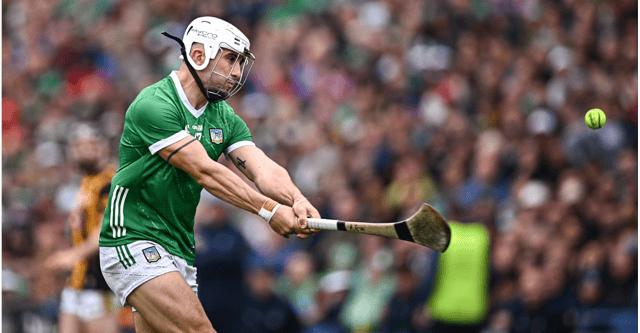


Westside brought to you in association with AAL
Reinventing the wheel is a well-known saying. It suggests foolish attempts at creating something that already exists, usually with inferior outcomes. It reminds one of modern-day hurling.
I’ll let others address the mess that is football, but the hurling fraternity has no cause for smugness here. The game is being ruined by teams trying to ape what they see on television.
The great Swiss Psychoanalyst, Carl Jung, once said, “Thinking is a difficult art. That is why the majority follow the herd”. He might well have been talking about GAA coaches.
Of course, all games evolve and develop. Styles change and tactics differ over time. Nothing ever stays the same, there is a natural, organic process of evolution that applies to all sport. Watch a rugby match from the seventies and note the difference to what you’ll see in the forthcoming World Cup in France.
However, hurling has been lured way beyond a natural dynamic of change. Fundamentals of the game are being lost because people are trying to reinvent the sport. Coaches dread being labelled old-school so they follow every fad and fashion, which often leads to disastrous outcomes.
I understand the desire to hold possession, for example. Even the great Con Houlihan back in the day used to argue that goalies should not simply aim for distance in the puck-out but should try to place it to the best advantage of their team. That’s sensible and Con was way ahead of his time in suggesting it.
But what we sometimes get now is a parody of the great sport of hurling. The goalie pops the ball out to the corner back. He handpasses across to the full back who then transfers to someone else. All the while the opposition is closing in and someone is eventually forced under pressure to attempt a clearance. Often the process breaks down.
What’s the rationale behind this? Limerick with their athleticism and skill set might be able to run the ball up the field in this fashion but your average club side hasn’t got that capacity. What about the old fundamentals of the game? Never play around in front of your own goal; move the ball fast; play the game in the opposition half.
If someone had the time and energy it would be interesting to calculate how many scores result from the breakdown of this type of game in your average club match.
Then when it comes to forward play, you’ll see the ball being pumped towards the corner flag. That’s fine if you have an Arron Gillane skipping out to collect it and score over his shoulder.
However, your average corner forward will struggle to win the leg race and even if he does what will happen next? He won’t score from there, at best he’ll try to recycle the ball back out towards midfield. Have people forgotten about the merit of a breaking ball in front of the opposition goal.
Of course, all of these newfangled methods are facilitated by two major flaws in the policing of the game today: the steps rule and the handpass. With so much running in the game now the rule on steps is routinely ignored. You can regularly get away with five, six or seven paces without playing the ball.
The handpass, of course, is central to this possession obsession and that continues to be a point of huge frustration for followers who know that the vast majority are simple thrown balls. It is extraordinary that the authorities have looked at this for so long and still sit on their hands.
The national pundits play a huge, and negative, role in all of this. They refuse to call out the handpass with any real conviction and, shamefully, they try to reinvent the game with their fancy TV graphics. What else can the poor club coaches do other than follow the herd.
BACK TO LOCAL ACTION
In the meantime, it’s back to action locally this weekend with the preliminary quarter-finals which have thrown up two fascinating pairings where Nenagh drew Sarsfields and Clonoulty are up against Mullinahone. With all four divisions involved, the games should attract a decent following.
You’d have to question whether these matches serve much purpose. If a team isn’t able to make the knock-outs from its group then what are their prospects going forward to county quarter-finals?
On known form from the championship series thus far, you’ll get generous odds on either Clonoulty or Nenagh winning the Dan Breen. It would be quite a spectacular turnaround for either to get into the final shake up. The system, I’m afraid, serves merely to appease the divisions.
For Nenagh Eire Og it’s been a turbulent championship. From the encouragement of their North win, it’s been a downward slide, the victory over Brackens their only light relief. A combination of injuries, form loss and indiscipline has brought them to this pass.
Clonoulty’s graph has been on the downward dip too. They began their campaign with a creditable draw against Borris-Ileigh but then fell to Sarsfields and Kiladangan to leave them hugging the base of an, albeit, very difficult section. The game against Kiladangan particularly highlighted their shortcomings in attack. They managed just a single goal in the three games and averaged around seventeen points. It’s a scoring rate that will win you very few games
Mullinahone have been the surprise package of the championship so they’re here very much on merit. Their opening win over Brackens raised some mild surprise but they were close to Drom/Inch in the next game and then capped it off with that win over Nenagh. Unlike Clonoulty they have scoring potential with the likes of Mikey O’Shea, Enda Keane and Jack Shelly regularly finding the target in past games.
On overall ranking – Mullinahone are 50/1 outsiders for the title against Clonoulty’s 12/1 – the West side might be favourites, but recent trends will have given hope to the southerners that an upset is possible. Sarsfields will be expected to have too much for Nenagh.
One quibble: why aren’t these games set as a double header instead of being split between Saturday and Sunday? The hard-pressed, paying public need a break and here was an ideal opportunity, which is being squandered.
MY LATE BROTHER PADDY, RIP
Finally, my thanks to those who offered condolence on the passing of my brother Paddy recently. Losing a second family member in just over a year is never easy.
Paddy emigrated in the mid-sixties – a road well-travelled by many of his generation. He won a Croke Cup medal with Cashel CBS in 1962 in the company of our eldest brother, Donal. My memories from back then are understandably sketchy though I do recall what was possibly his last game with the club.
He was handy with the hurley though prone at times to test the patience of referees. In the 1966 U21 West final with Eire Og I remember he had, let’s say, a disagreement with an Annacarty opponent and I can still recall John Moloney, the greatest referee of them all, dispatch the pair to the sideline.
Emigration meant that he missed out on the remainder of that championship where Kickhams lost the county final by a point to Lorrha. They made amends the following year defeating Toomevara in the decider. Incidentally the inspiration behind that team was the Dundrum Station Master of the time, Limerick man Patsy Fitzgerald. His son Danny later became a Limerick dual-player of note in the eighties.
Anyway, Paddy found both love and livelihood in Manchester, which became his adopted home for the remainder of his life. He lived in the shadow of Old Trafford at one stage but became an avid Man City supporter. Life is full of small ironies.
He was laid to rest last week in Brooklands Cemetery. Eternal peace to his kind soul.