
Looking back in Tipperary: Taking tea to the meadows in a bygone age

How important is it that children have good memories which will sustain them in the dark hours of adulthood?
In childhood, impressions are always so real, enduring and ever-present. In the days of my youth, one of the most pleasant of memories was saving the hay withmy father and uncles up in Stradavoher and in Cabra just outside Thurles.
Wow, the thrill of getting up on the hay car as it trundled off from 1 Cabra Terrace up Stradavoher behind the horse.
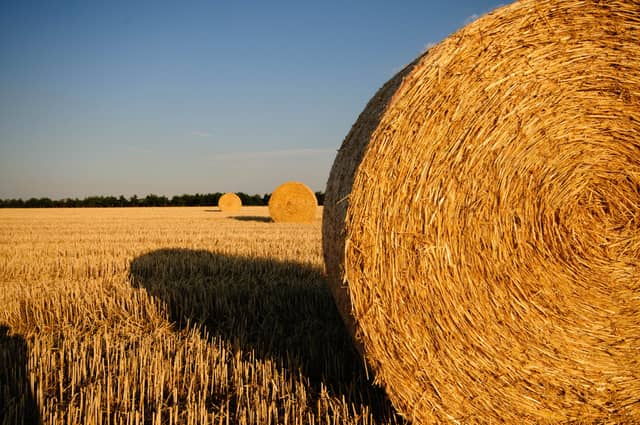
On those balmy days of summer, the smell of the new-mown hay, the freedom of the fields, the taste of the tea from the porter or whiskey bottle plugged with paper stopper, the sounds of summer under blue skies and occasional light clouds, the feeling of well-being and that all was well with the world.
Not to mention the few pence earned which would enable you to take in the latest movie in Delahunty’s Cinema or the Capitol Cinema (the “Wan Below” and the “Wan Above”, if you like).
The North Tipperary mountain village of Upperchurch once recreated for the youth and for misty-eyed adults, the feel of the fields of yesterday.
The National Open Hay-picking competitions were held in conjunction with the Ned of the Hill festival in the village.
This event, organised by the Drombane/ Upperchurch Community Development Association involved among other things, instigating and promoting Agri-tourism as an alternative enterprise, for rural dwellers of the upland areas at the time.
Mr Con Harrington, Chairman of the Association, then also had many memories of making tea in the meadow and ‘trammin’ hay.
“It is strange but true that the practices of farming which were commonplace in Upperchurch/Drombane and amongst farmers across the county twenty years ago are fast becoming a folklore feature for young adults and a source of amusement and hilarity to a young generation who never heard of ‘talkin’ tea to the meadow’ or experienced the smell and taste of new-mown hay,” said Mr Harrington.
He added:
“Of course older folks, both men and women, who sweated in the heat ofmany a July day to gather up and make cocks or pikes or trams before the rains came, cannot and will not forget.
“In fact, amongst that generation, there is a feeling of great nostalgia and fondness for the memories. Hard enough the work was, there was great sense of achievement when all the hay was “up.”
Farmers enquired from each other and lamented if their neighbour was caught in the rains with a few acres “down.”
And Con Harrington goes back to the most elemental things in our lives.
“The hay-making must have been related to the contest between man and the elements, which capped the sense of achievement when the hay was saved.
“Here in Tipperary, a contest was seen to be hard-earned, just as winning a hurling match against old rivals Cork, was a pinnacle on the sporting front.
“The world was a brighter place, and our rural folk developed a spring in their step when the hay was saved and cork be ‘t”, said Con.
Con Harrington is adamant that hay-making is an art form.
“It is a source of wonderment and pride to young people to witness the art of piking hay.
“To watch the technique of building it into a cone-shaped structure capable of free-standing and with neatness, tidiness and the compactness to withstand up to two weeks being exposed under Irish weather conditions.
While timing restrictions apply in our hay-piking finals, the rules give greater cognisance to the quality of the finished product and particularly to the skill of competitors in incorporating a given quantity of hay into each cock, avoiding waste and securing it so that it does not take or be blown away by the wind”, said Mr Harrington.
The principal instrument involved in hay-piking was the two-sprong fork which resembled the one-sprong pike used in the 18th century in the 1798 rebellion for less leisurely pursuits.