
Margaret Rossiter Column: The rescuers and the restorers
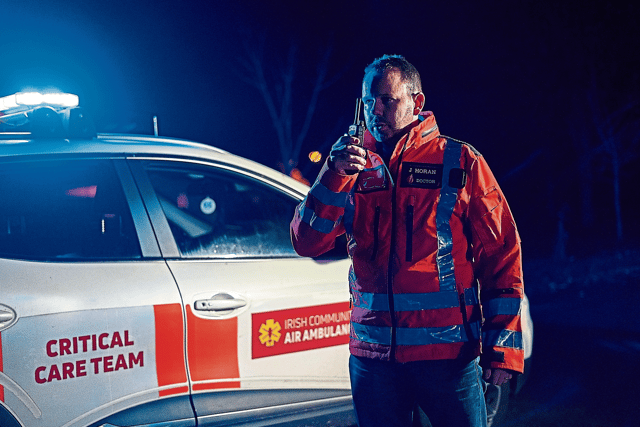

It often takes terrible natural events or personal tragedies to make many of us immediately conscious of the vital work done by groups of our fellow citizens. This work, or more accurately urgent service, was a feature of the response to the recent tragic accidents on our roads in south Tipperary. It was a response which required sensitivity and compassion with the expertise of knowing what to do and how to do it. And because these tragedies happened almost on our doorsteps, many of us became aware of that expertise and dedication, for the first time.
Columnist Margaret Rossiter
All of this entails the visual experience of possibly seeing terrible injuries and even deaths, but it is part of police work - a day’s work which has to be done, but nevertheless it must leave scarring memories, which again have to be re-called at a subsequent inquest and possibly even months or years away should court proceedings ultimately ensue. All of this has to be done professionally, but nevertheless it must entail the personal human emotions which are naturally a part of our humanity but which must be put temporarily aside while the necessary work has to be done.
All of the above applies to the ambulance and medical and para-medical team essential in any serious accident. And it has to be done with professional expertise; taking victims from vehicles without causing extra injuries; trying to give immediate relief and reassurance where this is possible; working carefully but with speed; getting seriously injured victims to hospital as quickly as possible. This is work which has already necessitated training and practice and the management of crisis in very difficult circumstances.
Then there is the priest or clergyman, who is called to give spiritual aid, and since many accidents occur at night, have had to be woken from their sleep. They are often the people who hear the last words of a dying person.
These are all the people who come to the immediate scene of terrible human suffering, which must leave permanent images on the memory. They are undertaken willingly and clearly inspired by a strong sense of service to humanity. And the rest of us only really become conscious of it when terrible tragedies occur within the ambit of our communities.
Many other services have to be mobilised if the necessity arises - the Fire Brigade, the helicopter, hospital medical and nursing staffs, the skilled people who have to remove vehicles and restore order and function to the scene. Then, people come and stand and stare, mourn, lay flowers and pray. And life goes on…
It will never again go on in the same way for those bereaved, but for the rest of us we will have seen the extraordinary dedication of people who work so expertly and sensitively and promptly in circumstances of tragedy, and at a cost, no doubt, of deep personal emotions for themselves. And for that we should all be grateful.