
Tipperary TD highlights 'despair' of nurses at local hospital due to delayed day surgeries
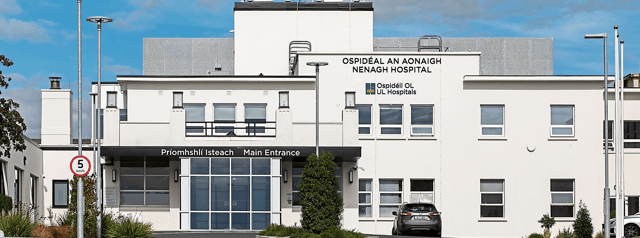

Deputy Michael Lowry has said that theatre nurses at Nenagh Hospital have expressed “serious concerns” over the ongoing disruption and cancellation of day surgeries at Nenagh General Hospital.
“Members of the theatre nursing staff at the hospital have informed me that an estimated 432 patients have had their day surgery procedures at the UL Group Hospital cancelled as a result of the overall medical surge in the UL Hospital Group in the first three months of this year. This compares to a total of 116 cancelled procedures in Nenagh throughout 2022,” said Deputy Lowry.
A UHLG spokesman said that the decision to reschedule appointments in line with the group’s escalation measures, was not taken lightly, especially those patients who have already faced long waits for treatment.
“We’re sorry for these impacts, and we endeavour to reschedule all cancel appointments at the earliest possible opportunity.”
Deputy Lowry said that staff members in Nenagh have stated that it appeared as though cancelling day surgery at Nenagh was the UL Group’s answer to solving the ongoing medical surge problems in the group.
Patients requiring hospitalisation in the region were being accommodated in day wards in the UL Hospital Group, which included Nenagh Hospital, Ennis Hospital and St John’s Hospital in Limerick as University Hospital Limerick was unable to accommodate them, he said.
“Filling up the day wards in the smaller hospital means that day surgery must be cancelled,” said Deputy Lowry.
Theatre staff members in Nenagh Hospital have told Deputy Lowry that the continual cancellation of procedures results in them being assigned to work in other areas of the hospital.
“They have stated that Nenagh will lose its highly qualified theatre staff due to the uncertainty of their positions in the hospital, as they will be forced to seek employment elsewhere,” said the Thurles TD.
He said that morale was very low among theatre nursing staff at present.
“They feel that they are the only nursing group within the hospital that suffers continual disruption to their work and, while they are willing to assist in other areas if required, they feel that this obligation is becoming the norm as day surgery cancellations increase,” he said.
Deputy Lowry said that the nurses were also very mindful of the patients whose surgeries are cancelled.
According to Deputy Lowry, they say that many eye surgery patients are availing of the National Treatment Purchase Fund, and some have been languishing on eye surgery waiting lists for three to five years for this day surgery procedure.
“Many of these patients are elderly and have very little sight left as they are waiting to have cataracts removed from both eyes. They are all prepared for the day surgery procedure to take place and they have had their pre-op assessment carried out. Then they receive a phone call the evening before they are due to have surgery telling them that it has been cancelled.
This week alone, 10 patients have received a last-minute cancellation call. It is soul-destroying for them,” he said.
The Independent TD said that the underlying fear among theatre nursing staff was that cataract eye surgery will be discontinued.
“This would be a tragedy and one that must be avoided,” he said.
Deputy Lowry said that he ill be raising this issue as a matter of urgency with the Minister and the Department of Health, both from the perspective of securing the future of theatre staff at Nenagh Hospital and also to ensure the continuation of all day surgery, including cataract eye surgery, at the hospital.
Meanwhile, UHLG said that rescheduling of planned surgical procedures was “an action of last resort; a decision that no hospital system wishes to make”.
They said UHLG was managing sustained high levels of ED attendance, which must be balanced with the needs of admitted patients within the group, many of whom were very ill, while safely maintaining time-critical and cancer procedures.
During March, a daily average of 226 patients attended the ED, exceeding by 16% the average 195 daily attendances recorded in 2019, the last full year prior to the pandemic. The general rise in demand for emergency care persists into this month.
Generally speaking, they said, reductions in scheduled care early in the new year had been a feature of the group’s winter plan in recent years to allow them manage surges in medical patients associated with winter viruses and illness.
They pointed out that in addition, this year’s record surge in emergency presentations was such that additional reductions in scheduled care were necessary. This delayed the resumption of day surgery in Model 2 hospitals, where beds on the day wards were used as additional capacity for medical inpatients. It also resulted in significant reductions in scheduled surgical procedures at UHL.
The spokesperson said that as highlighted in the Deloitte Report, the shortage of acute bed capacity was the fundamental driver of hospital overcrowding in the Mid-West.
“We’re grateful for the support of Government for the increase in bed capacity since the start of the pandemic, with an additional 98 inpatient beds and 10 critical care beds at UHL.
“In addition, construction of a new 96-bed block development is ongoing at UHL. However, this will take two years to complete, and approximately half the new beds will be additional bed stock, with the remainder replacing beds currently in the multi-occupancy nightingale wards in the older parts of UHL,” they said.
The spokesperson said that UHLG welcomed comments of the Taoiseach recently towards a second 96-bed block that’s provided for in the UHL site masterplan.
This block is currently being planned with HSE Capital & Estates.
“We expect that plans will be submitted to the HSE nationally for the second 96-bed block in the first quarter of this year,” they said.