
Tipperary’s John Doyle, Vincent O’Brien and Pat O’Callaghan feature in new book on Irish sport
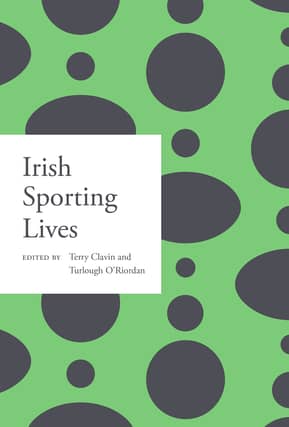

Irish Sporting Lives is published by the Royal Irish Academy and will be available to buy from ria.ie/irish-sporting-lives
Holycross Ballycahill’s John Doyle and long-time Tipperary residents Vincent O’Brien and
Pat O’Callaghan are among the sixty figures brought to life in the newly published
Irish Sporting Lives (Royal Irish Academy, 2022).
A new collection of biographical essays drawn from the Dictionary of Irish
Biography, Irish Sporting Lives spans 200 years of history and seeks to illustrate
the drama and diversity of the Irish sporting experience.
The book is edited by Dictionary of Irish Biography researchers Terry Clavin and Turlough O’Riordan,
and it also includes an introductory essay by Professor Paul Rouse of UCD.
An eight-time All-Ireland winner with the Tipperary hurlers, John Doyle (1930–
2010) thrilled onlookers with his rampaging charges out of defence. He preferred
to go through rather than around opponents exposed himself to constant
punishment, which he bore contemptuously. Towards the end of his career, the
‘Holycross Hercules’ formed part of a full-back-line that became known as ‘Hell’s
Kitchen’ for its unscrupulous physicality. He was the hurler of the year for 1964
and voted left-corner-back for the hurling teams of the century and of the
millennium. Later in life he one terms in Seanad Eireann, acted as selector and
manager of the Tipperary hurling team, and represented Tipperary on the GAA’s
central council.
From his base at Coolmore, near Ballydoyle, legendary horse trainer Vincent
O’Brien (1917–2009) revolutionised the bloodstock industry. Having identified
the key bloodlines, he relied on the financial backing of the British tycoon Robert
Sangster to acquire some of the world’s finest colts.
He sent out a succession of champion racehorses from Coolmore, then syndicated them as stallions for
millions. By these means, he brought about a surge in world bloodstock prices
and brought Ireland to the pinnacle of thoroughbred breeding. He was
voted the greatest national hunt trainer of the twentieth century and the greatest
flat trainer of the twentieth century.
The first athlete to win a gold medal at the Olympic while representing Ireland,
Pat O’ Callaghan (1906–91) lived in Clonmel from 1931 until his death. He
won gold in the hammer throw at the 1928 Amsterdam Olympics and again at the
1932 Los Angeles Olympics, and for many years held the unofficial world record
for the hammer throw.
An outstanding all-round athlete, he also won national titles in the discus, shot-put and high-jump, amongst others. Later, he managed Clonmel Commercials to three consecutive Tipperary county championship in
Gaelic football from 1965 to 1967 and became a freeman of Clonmel in 1984.
The biographies in Irish Sporting Lives encompass serial winners and glorious
losers, heroes and villains, role models and rogues, enduring legends and
forgotten or overlooked greats.
The main disciplines—Gaelic games, soccer, rugby, athletics, horse racing and boxing—are well represented, but so too are
minority sports such as croquet, cricket, tennis and hockey.
Others featured include:
Dave Gallaher (1873–1916), New Zealand’s most revered rugby captain, he led
the ‘Invincibles’ tour of Britain and Ireland in 1905–6 that established his country
as rugby’s superpower.
Lady Mary Heath (1896–1939), a pioneer of woman’s athletics, she moved
into aviation and became a media sensation with her high-flying publicity stunts.
Fay Taylour (1904–1983), a daredevil speedway racer, eventually banned from
competing against men in motorcycle races; she achieved notoriety for her
uncompromising support for Germany’s Nazi regime.
Dan Donnelly (1788–1820), this hard-living, bareknuckle brawler became
Ireland’s first sporting celebrity by conquering English opponents in well-hyped
prize fights.
May Hezlett (1882–1978), the best woman golfer of her generation; she wrote
an influential book encouraging other women to take up the sport.
Terry Mullen (1938–89), who won a Paralympic gold medal in bowls in heroic
circumstances.
Vere Goold (1853–1909), the first notable lawn tennis player to emerge from
Ireland; he is also the only Wimbledon finalist to be convicted of murder—so far.
Mabel Cahill (1863–1905), this determined competitor, criticised for her
‘masculine’ playing style, dominated women’s tennis in the US from 1890 to
1893.
George Best (1946–2005), soccer’s first pop celebrity, his attacking virtuosity
delivered European glory for Manchester United before his talent succumbed
prematurely to fame and addiction.
Six new biographies were specially commissioned for the book, including:
• Brede Arkless (1939–2006), a mountaineer and rock climber of extraordinary
longevity, she was the first woman to become an internationally recognised
mountain guide.
• Jack Charlton (1935–2020), this hugely popular Republic of Ireland soccer
manager led his team to the world cups of 1990 and 1994, sparking mass
outbreaks of national celebration.
• Clara ‘Ma’ Copley (1865–1949), a doyenne of Belfast boxing who, aged
seventy, became the first woman boxing promoter in either Ireland or Britain.