
'Voice of the stroke survivor is the most important voice,' says Tipperary survivor
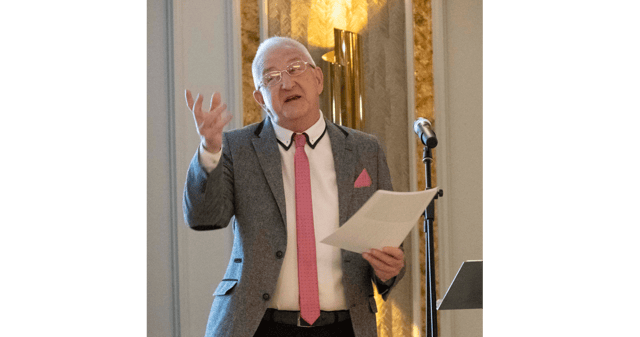

Tipp stroke victim calls for National Stroke Strategy to be implemented in full
I was delighted to have the opportunity to address the Second Regional Stroke Conference at the Talbot Hotel, Clonmel, on Monday, June 26.
As a stroke survivor and one of the organisers of the Conference I spoke about my work as a stroke advocate and the reasons that I started to advocate.
In my address to the conference I said: "My main reason for doing that was from my own experience of the poor standard of hospital care that I received as a stroke patient, of the lack of follow up and of the lack of access to basic rehabilitation services and community support.
"I found that I was not alone in this experience and I was determined to do whatever I could to highlight these issues and to bring them to the attention of those in power. Remember that the voice of the stroke survivor is the most important voice around the table and it should be front and centre of anything that is happening in stroke care.
"I must acknowledge that there have been vast improvements in stroke care since my stroke occurred. We now have dedicated stroke units and teams in most hospitals and we have access to the very best in procedures for thrombolysis and thrombectomy and we have the roll out of the National Stroke Programme.
"While all of what I have outlined is very welcome there are still major shortcomings in the provision of stroke care in this country.
"Stroke deaths have fallen by almost 30% in less than a decade and direct discharge to long-term care is also down significantly but at the same time the number of strokes in Ireland has increased by a quarter and the stroke rate is predicted to rise by 59% by 2035.
"It is vital therefore that the National Stroke Strategy is implemented in full to meet current needs and to begin future proofing services to meet what is predicted to be a tsunami of stroke cases coming in the years ahead. It is worth also reflecting on the psychological impact of stroke.
"A recent pan-European study found that one in eight people have suicidal thoughts after a stroke. And a 2018 survey by the Irish Heart Foundation found that 72% of survivors felt isolated, 75% depressed and 95% suffered anxiety following their stroke.
"However just one in five hospitals have access to clinical psychology as part of stroke unit care. This needs to be addressed both in the hospital system and in the community where stroke survivors continue to suffer tremendously.
"Falling death rates and the rising numbers affected by stroke means that more survivors than ever are returning home after their hospital treatment. But there has been no significant corresponding State investment in community services and supports that promote recovery and wellbeing among stroke survivors. Lives are being saved, but recoveries of many stroke survivors are being squandered," I concluded.
MINISTER ADDRESS
The Minister of State at the Department of Health, Mary Butler, TD, opened the Conference. The Minister began by thanking all the members of the South Tipperary Stroke Communications Group for running the event and for the supports offered to people after they suffer a stroke, particularly those suffering from aphasia.
"We know that people suffering from aphasia can feel extremely vulnerable and disconnected from their friends and families and you offer vital support to help members build their confidence again and reintegrate into their communities.
"Many of you here have either survived a stroke, support family members to recover from stroke or indeed support stroke survivors through your work as healthcare professionals.
"You are all aware of the devastating impacts that stroke can have, and events like these are absolutely vital to raise further awareness and support stroke survivors who are struggling to readjust to life due to the effects of stroke.
"I am very aware of the impact of stroke on Irish people. Data available indicates that stroke is the second leading cause of death, and it is the leading cause of acquired neurological disability in the developed world and a major cause of dementia, depression, falls, loss of independent living and institutionalisation in later life.
"The Irish National Audit of Stroke shows there has been an incremental increase in the number of patients with a stroke admitted to hospital, from 4,727 in 2013 to 5,789 in 2021.
"Approximately 5,800 adults were admitted to hospitals in Ireland with a stroke in 2020 and this figure does not include the estimated 1,500-2,000 evaluated urgently for a suspected stroke and who had a threatened stroke or transient ischaemic attack (or TIA). This highlights the critical importance of events such as these to raise awareness of the supports available," said the Minister.
GUEST SPEAKERS
Speakers at the Conference included Professor Rónán Collins (Clinical Lead) and Sinéad Coleman (Programme Manager) who gave an overview of the National Clinical Programme for Stroke and the National Stroke Strategy, Yolane Fenton and Mary Fitzgerald of the Speech and Language Therapy Service South Tipperary Primary Care who presented on Communication and Swallowing After Stroke, Danny Dineen of Munster Music Therapy who gave a presentation on music therapy and aphasia, Julie Garvey, Stroke Services Manager with the Irish Heart Foundation gave an overview of the IHF’s Stroke Services, Annie Costelloe, Head of Patient Community Engagement Croí, presented on Heart & Stroke Voice Ireland, Edel Burton BPharm MPharm MPSI gave a presentation on Medication management after stroke and photographer and stroke survivor Kieron O’Connor spoke about suffering a stroke and his struggles with aphasia and physical deficits.
There was a large number of support stands on the day from different organisations and health related bodies and grateful thanks was extended to TASK Community Care and to Home Instead Ireland who sponsored the event and to the Tipperary Volunteer Centre for their support and assistance with the Conference.