
'We need more communities involved in energy projects' says Tipperary based wind farmer

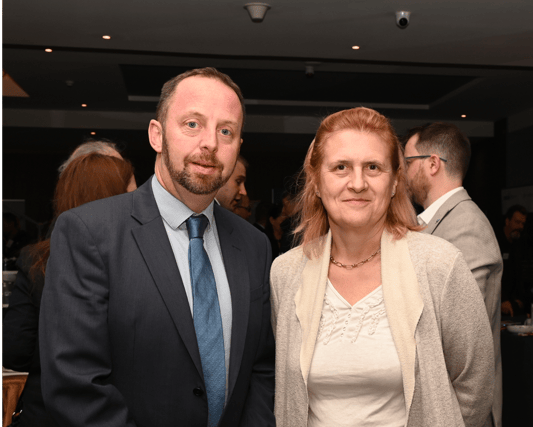

Members of the Irish Wind Farmers Association (IWFA) told conference out-of-touch policies need urgent reform
Members of the Irish Wind Farmers Association (IWFA) attending its Annual Conference on Thursday November 28, voiced their concern at the slow progress of community wind energy schemes in Ireland due to bureaucratic policies.
The IWFA welcomes the proposed Small Renewable Energy Support Scheme (SRESS) and is calling on the new Government to be proactive and properly support Ireland’s small onshore wind energy sector.
The proposals made at the conference were:
- Remove the bureaucracy and simplify the regulatory processes, both timeline and cost, to allow communities and small enterprises to engage more easily in renewable energy projects.
- Bring the proposed tariffs for wind projects in line with the 20 per cent top up provided to solar projects.
- Reduce the 100% community ownership stipulation in the Small Renewable Electricity Support Scheme (SRESS) to facilitate community led partnerships with experienced developers. Revert to 51% community led projects model.
The announcement by the Department for the Environment, Climate and Communications (DECC) in February 2021, mandating that community category projects under the Renewable Electricity Support Scheme (RESS) be 100% community owned made the challenges of locally owned wind farms significantly more difficult according to the IWFA.
"That decision has set back the progress of onshore and wind community initiatives by at least five years," a spokesperson for the IWFA, Pat Blount, commented at today's annual conference, “It makes sense for locally owned wind farms to partner with experienced developers and make the transition to a locally owned models viable, rather than relying solely on larger scale developers or multinationals.
Without reform to the regulations there is a high risk of not achieving the 500MW target for 2030." He concluded.
The strict requirements and planning mire have rendered the development of onshore community projects nearly impossible, exacerbated by a lower price tariff than large RESS for wind.
Tommy Cooke is a Tipperary based wind farmer, from Ballincurry Wind Farm and former IWFA Chair. He has been involved in wind energy for more than 20 years. Speaking at the IWFA Annual Conference he explained,
“My main concern for the future is making sure people get more involved in building sustainable communities. We all know the benefits are there, cleaner energy, lower costs, and energy independence —but we need more communities involved in energy projects.
"We’re here at our Annual Conference to see if the Government would create more certainty around some of the policies that would deliver those projects. One thing we’ve learned as small wind farm developers is that it’s very risky business and if we’re going to get communities involved we need to de-risk those critical areas for those projects.”