
Almost 500 children attend RNLI water safety workshops in Nenagh
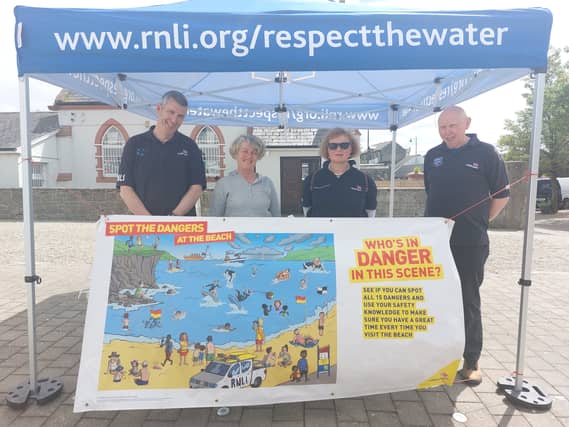

A total of 493 pupils attended RNLI water safety workshops in Nenagh last week.
Pupils from five primary schools in Nenagh, totalling seven classes over two days visited the Nenagh Tourist Office for water safety messaging.
The Tipperary Star sat in on one of the workshops and spoke with the education team afterwards. Water Safety Education Manager Killian O’Kelly said it’s the perfect time to teach water safety.
“The messaging is timely because we are coming into the summer, and it was all about advice to keep the kids safe in the water and around the water and a little bit of skills on what to do if somebody falls in and how to rescue them.
In half an hour slots, the team showed the children how to float, wear a life jacket and spot dangers on the water.
“The kids were great, really receptive, and they had great questions. Always great questions,” said Killian.
And, of course, it’s not just children who get into difficulty on the water. Helm and Press Officer for Lough Derg RNLI, Eleanor Hooker saidthey help mostly adults.
“In the main it’s cruisers and people getting into difficulty. We have had the last couple of summers swimmers who cramp or fall off a boat or whatever but I think in the main it’s people with engine breakdown or people in a storm, and they don’t know what to do and just want us to come and help them,” said Eleanor.
According to Killian, during covid, swimming groups became very popular, and some of those people underestimate the weather in winter and get into bother.
“It’s great to swim in winter. It’s healthy and great for the body and mind, but you have to check the weather.
“You have to make sure the conditions are safe. Even if a particular beach is safe 200 days of the year, it doesn’t mean it will be tomorrow or the next day,” said Killian.
INFLATABLES
According to the RNLI, one popular beach toy may present a common, but unexpected risk.
Despite advertisements showing happy families floating on beaches, Killian says inflatables are very dangerous. Lifeguard stations in the UK and Ireland get 100s of call outs about inflatables.
“Lifeboats in the UK and Ireland rescue people who have drifted offshore away on inflatables.
“They are the most innocent things and the most dangerous,” said Killian.
The problem with inflatables is that people drift away, panic and try to swim back.
But Killain says if they stay with the inflatable, the chances are higher that someone will notice and call for help.
“Inflatables have been found half a mile offshore with children on them. They can float quite quickly, and the farther from shore you go, the stronger the wind gets.
“They are very dangerous. Best advice, use them in the swimming pool or an enclosed area. But definitely not in open waters like Lough Derg or beaches on the coast.
“We don’t like inflatables,” said Killian. The RNLI are actively working with companies to change the perception of inflatables, through advertisements.
Advice
The RNLI wants to get four messages out this summer. Firstly, sit down and talk to your children about water safety.
Secondly, decide if the beach is safe. Thirdly, stay together, and when you are on an unfamiliar beach, introduce yourself to the lifeguard. And if you get into difficulty, float and call 999.
“As long as they’re floating and they have a means to call for help, the chances are 99% of the time they will be rescued,” said Killian.
If you don’t know how to float search RNLI and float, and video should come up with instructions.
“If somebody gets into difficulty, it’s going to get worse. They are going to drift further away. It is going to escalate. Always have the emergency services on the way.
“This is what I would love every parent to tell every kid,” said Killian. Additionally, Eleanor advises asking the locals for advice.
She said some areas have particular dangers which local people can warn you about. For example, swimmers in Killaloe can get into difficulty if the turbine is active at Ardnacrusha.
“I wouldn’t get into the water there. Even when we are doing a rescue, we call ahead and ask if you can turn off the turbines. We have divers in the water because the divers can’t operate in that area.
“So, ask the locals because they will know, and people love to tell you,” said Eleanor. She says when out on the water, keep your boat serviced and fuelled up and always have a means of communication.
“Know your boat, know the water and know your skill. If you are not a good sailor, don’t go out in a storm. Be a fair weather sailor.
“And if you end up in the water, stay with your vessel because you are easier to find,” said Eleanor.
Killian says for families, stick to areas that have a lifeboat station.
“If in doubt, don’t go out on the water. Most drownings are people falling off things. It’s not what you think, it’s not in the middle of the lake.
“It’s as mundane and boring as a slip and fall and not wearing a lifejacket. And the RNLI don’t just rescue people but animals too.
“We rescued a horse, a beautiful horse, a thoroughbred and they very much wanted him back, but he was determined to swim to Killaloe so we got him back.
“Animals, creatures and humans often end up in water when they don’t intend to be,”said Eleanor.
“We rescue a lot of animals. And the reason we rescue animals is so we don’t have to rescue the animal owner five minutes later.
“If we get a call for a dog, we go because we know sooner or later, the person will also go in. People will go in after the dog. They love the dog,” said Killian.
Supporting the RNLI
Eleanor, Killian and Trevor ask that you consider supporting the RNLI. Eleanor said they are dependent on public support and volunteers. “We can stay afloat. We can do what we do because of public support.”
Killian said you can join the RNLI at 17 with parental consent, and there are plenty of roles available, from being a lifeguard to raising funds and education.
“It is a phenomenal organisation to be part of and volunteer for and give back to your community. We are always looking for volunteers,” said Eleanor.
If you would like to volunteer with the RNLI, get in touch with your local station or on social media.